Wang Ji, Chen Chao, Wang Lu, Xie Mingjun, Ge Xinyang, Wu Sufan, He Yong, Mou Xiaozhou, Ye Chenyang, Sun Yi
Center for Plastic & Reconstructive Surgery, Department of Plastic & Reconstructive Surgery, Zhejiang Provincial People's Hospital (Affiliated People's Hospital, Hangzhou Medical College), Hangzhou, China.
Department of Colorectal Surgery and Oncology, Key Laboratory of Cancer Prevention and Intervention, Ministry of Education, The Second Affiliated Hospital, Zhejiang University School of Medicine, Hangzhou, China.
Front Oncol. 2022 Apr 5;12:872531. doi: 10.3389/fonc.2022.872531. eCollection 2022.
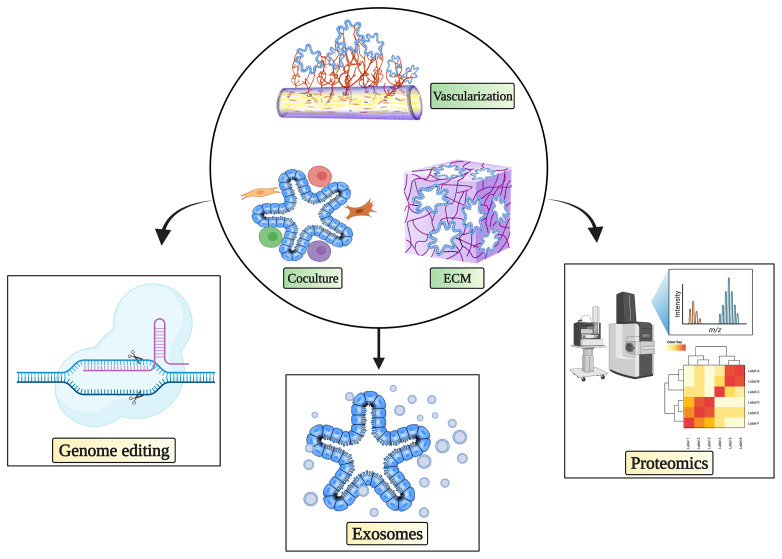
Cancer immunotherapy has revolutionized the field of cancer treatment in recent years. However, not all patients receiving cancer immunotherapy exhibit durable responses, and reliable, high-throughput testing platforms are urgently needed to guide personalized cancer immunotherapy. The ability of patient-derived tumor organoids to recapitulate pivotal features of original cancer tissues makes them useful as a preclinical model for cancer research and precision medicine. Nevertheless, many challenges exist in the translation of tumor organoid research to clinical decision making. Herein we discuss the applications of patient-derived tumor organoid models and the advances and potential of using complex immune-organoid systems as testing platforms to facilitate precision cancer immunotherapy. In addition, we highlight intriguing applications of tumor organoids with novel multi-omics in preclinical cancer research, highlighting genetic editing, proteomics, and liquid biopsy.
近年来,癌症免疫疗法彻底改变了癌症治疗领域。然而,并非所有接受癌症免疫疗法的患者都表现出持久的反应,因此迫切需要可靠的高通量检测平台来指导个性化癌症免疫疗法。患者来源的肿瘤类器官能够重现原始癌组织的关键特征,这使其成为癌症研究和精准医学的临床前模型。尽管如此,将肿瘤类器官研究转化为临床决策仍存在许多挑战。在此,我们讨论患者来源的肿瘤类器官模型的应用,以及使用复杂的免疫类器官系统作为检测平台以促进精准癌症免疫疗法的进展和潜力。此外,我们重点介绍了肿瘤类器官与新型多组学技术在临床前癌症研究中的有趣应用,包括基因编辑、蛋白质组学和液体活检。