School of Nursing, University of Campinas, Sao Paulo, Brazil.
Laboratory of Cell Signaling, Yokohama, Japan.
PLoS One. 2021 Oct 26;16(10):e0259134. doi: 10.1371/journal.pone.0259134. eCollection 2021.
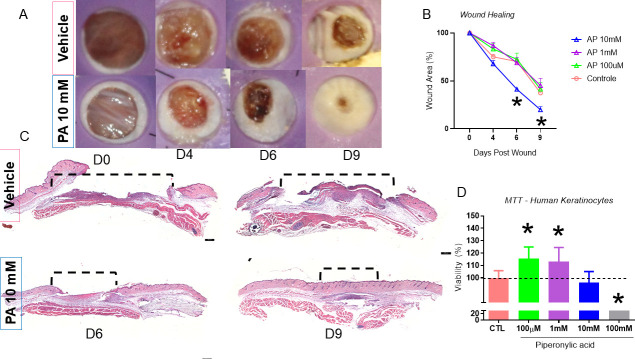
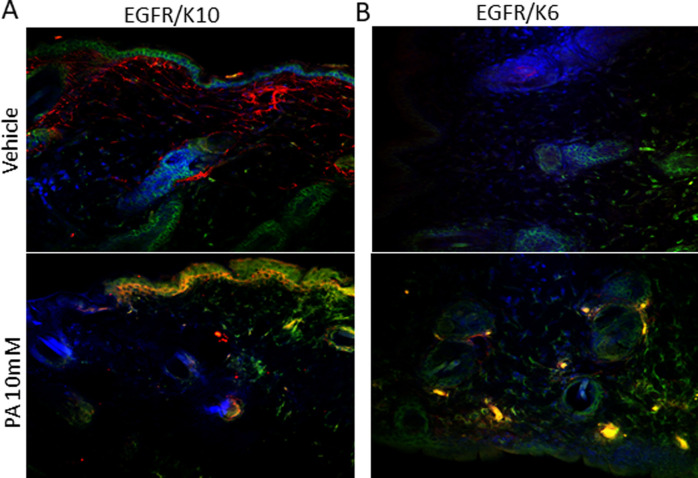
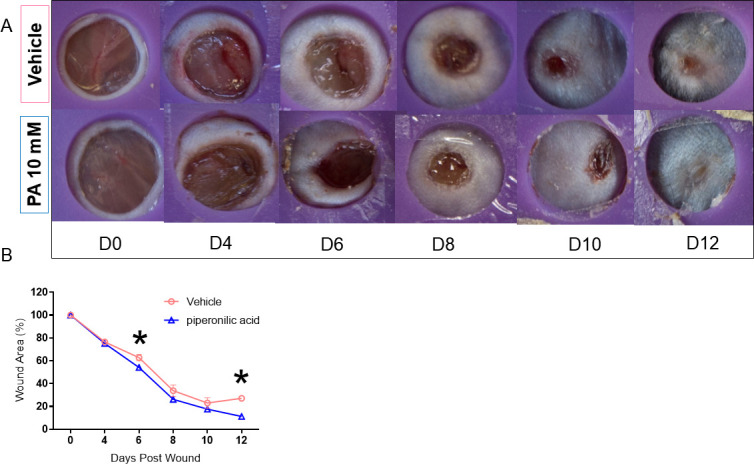
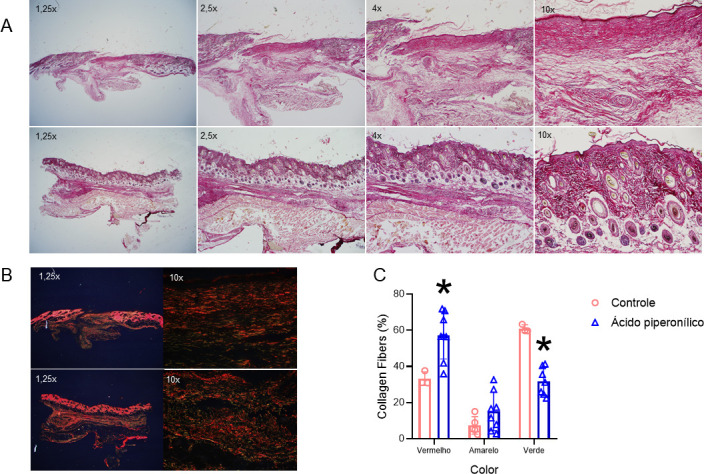
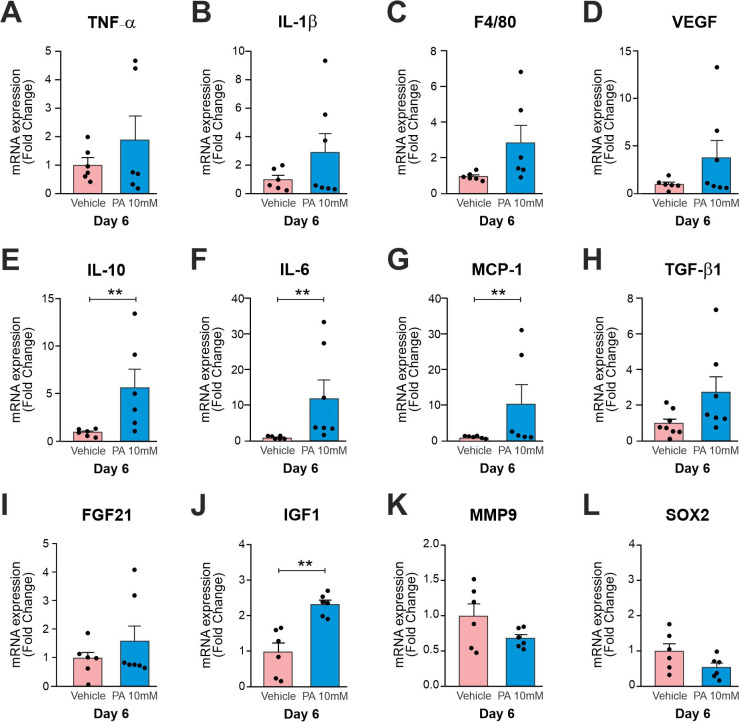
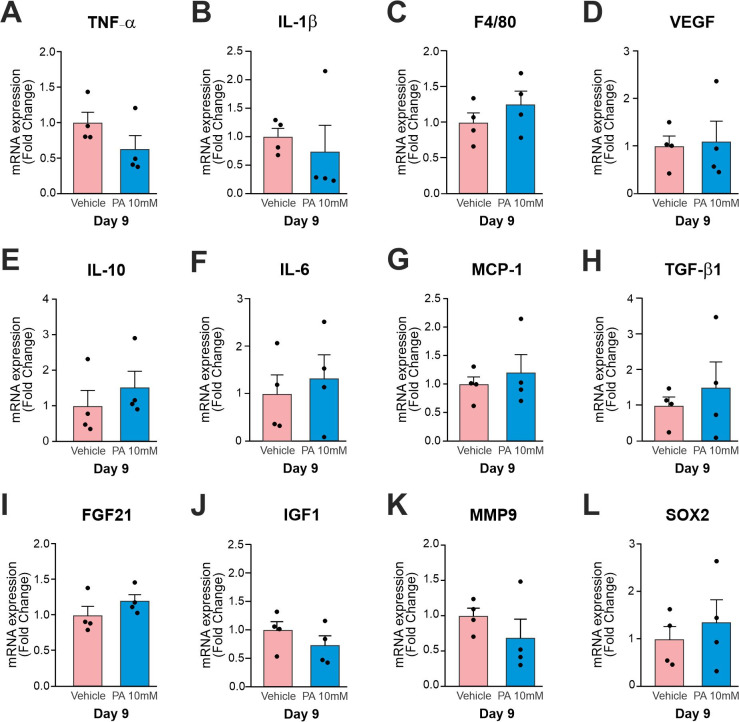
Epidermal growth factor (EGF) promotes cell growth, proliferation, and survival in numerous tissues. Piperonylic acid, a metabolite present in peppers (Piper nigrum L. and Piper longum L.), can bind to the epidermal growth factor receptor (EGFR) and induce an intracellular signaling cascade leading to the transcription of genes responsible for these actions, especially in keratinocytes. These cells are fundamental in maintaining cutaneous homeostasis and are the first to be damaged in the case of a wound. Thus, we hypothesized that piperonylic acid improves wound healing. C57BL6/J male mice were submitted to dorsal skin wounds caused by a 6 mm punch and treated topically with piperonylic acid or vehicle. The wounds were evaluated macro- and microscopically, and tissue samples were collected for immunofluorescence and real-time PCR analyses on days 6, 9 and 19 post-injury. Topical piperonylic acid improved wound healing from day 6 post-injury until closure. This phenomenon apparently occurred through EGFR activation. In addition, piperonylic acid modulated the gene expression of interleukin (Il)-6, il-1β, tumor necrosis factor (Tnf)-α, il-10, monocyte chemoattractant protein (Mcp)-1 and insulin-like growth factor (Igf)-1, which are important for the healing process. By day 19 post-injury, the new tissue showed greater deposition of type I collagen and a morphology closer to intact skin, with more dermal papillae and hair follicles. We conclude that piperonylic acid may be a viable option for the treatment of skin wounds.
表皮生长因子(EGF)促进许多组织中的细胞生长、增殖和存活。胡椒基酸是辣椒(Piper nigrum L. 和 Piper longum L.)中的一种代谢物,可以与表皮生长因子受体(EGFR)结合,并诱导细胞内信号级联反应,导致负责这些作用的基因转录,特别是在角质细胞中。这些细胞是维持皮肤内稳态的基础,是在伤口情况下首先受到损伤的细胞。因此,我们假设胡椒基酸可以改善伤口愈合。C57BL6/J 雄性小鼠背部皮肤用 6mm 打孔器造成皮肤损伤,然后用胡椒基酸或载体进行局部处理。在第 6、9 和 19 天对伤口进行宏观和微观评估,并采集组织样本进行免疫荧光和实时 PCR 分析。局部胡椒基酸从受伤后第 6 天开始改善伤口愈合直至闭合。这种现象显然是通过 EGFR 激活发生的。此外,胡椒基酸调节白细胞介素(IL)-6、IL-1β、肿瘤坏死因子(TNF)-α、IL-10、单核细胞趋化蛋白(MCP)-1 和胰岛素样生长因子(IGF)-1 的基因表达,这些对于愈合过程很重要。到受伤后第 19 天,新组织中 I 型胶原蛋白的沉积增加,形态更接近完整皮肤,真皮乳头和毛囊更多。我们得出结论,胡椒基酸可能是治疗皮肤伤口的一种可行选择。