Animal Science Unit, Institute for Agricultural, Fisheries and Food Research, Melle 9090, Belgium; Department of Nutrition, Genetics and Ethology, Faculty of Veterinary Medicine, Ghent University, Merelbeke 9820, Belgium.
Animal Science Unit, Institute for Agricultural, Fisheries and Food Research, Melle 9090, Belgium.
Poult Sci. 2021 Dec;100(12):101479. doi: 10.1016/j.psj.2021.101479. Epub 2021 Sep 17.
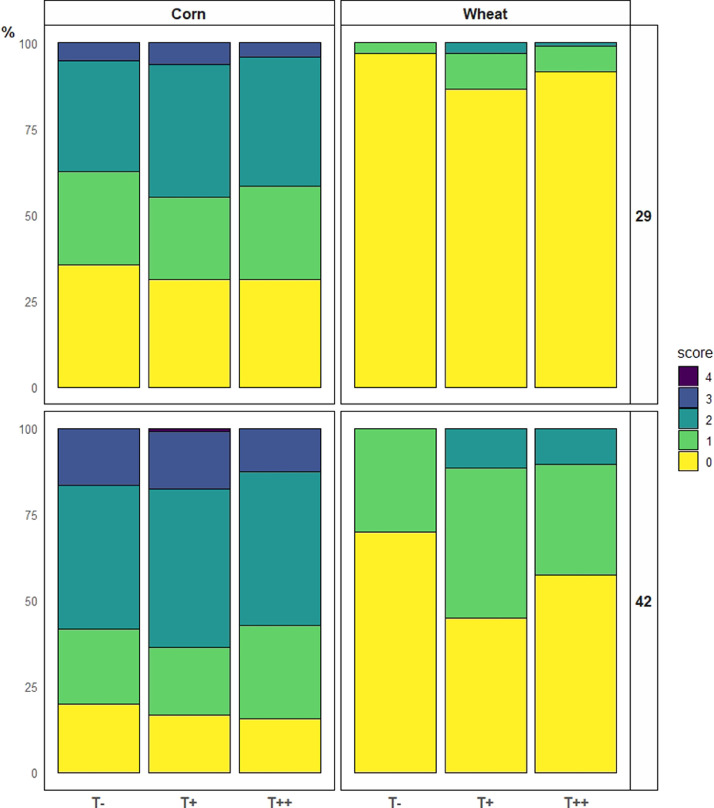
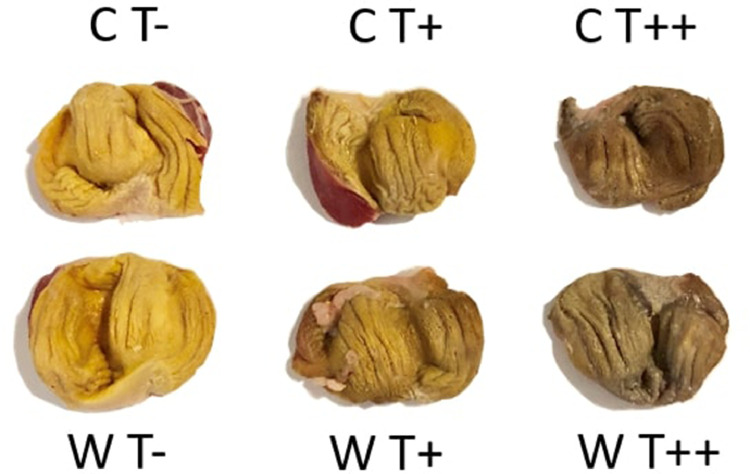
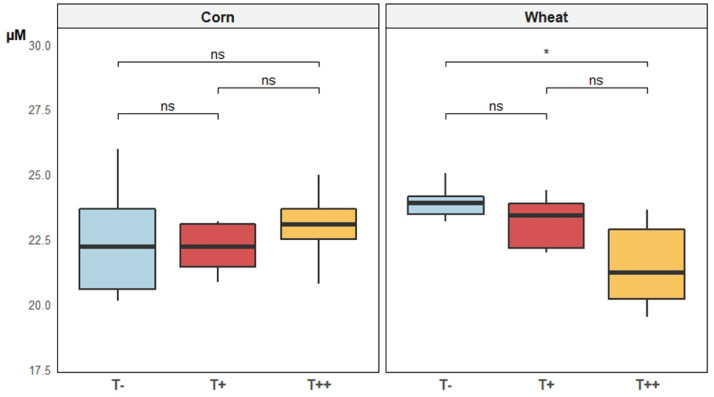
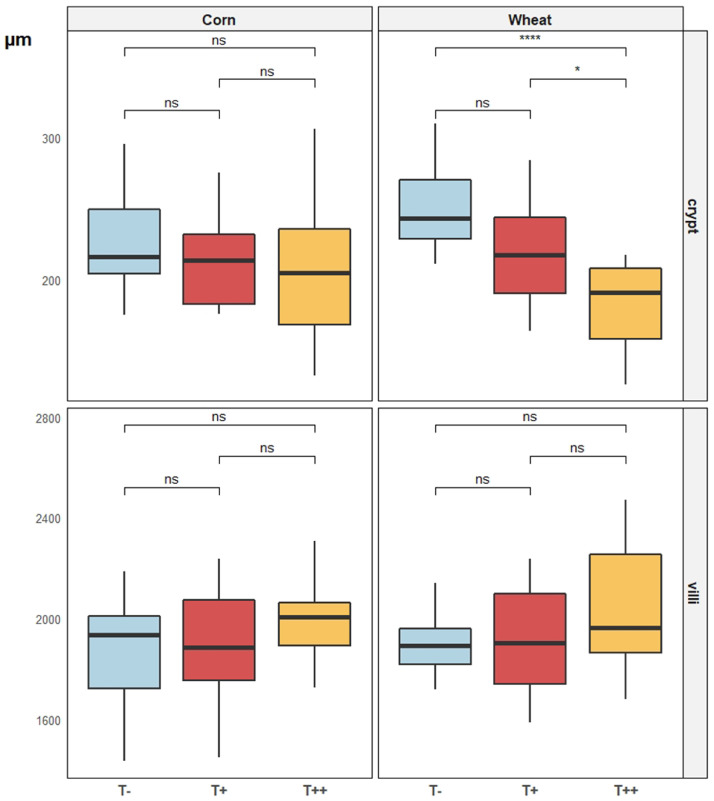
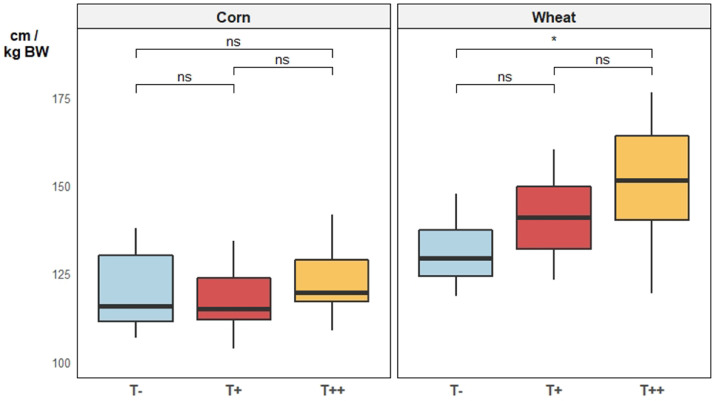
In 2 broiler trials, the effects of chestnut tannins on performance and meat quality (trial 1), and digestion (trial 2) were evaluated. In both trials, Ross 308 broilers received one of 2 basal diets: one basal diet contained corn and soy as main feed ingredients, while the challenge basal diet contained wheat, palm oil, and rapeseed meal. The composition of the basal diets was chosen to assess the interaction between chestnut tannins and diet composition. To both basal diets, chestnut tannins were added at 3 doses: 0 mg/kg (T-), 500 mg/kg (T+), or 2,000 mg/kg (T++), resulting in a total of 6 treatments. In trial 1, both basal diets containing 2,000 mg/kg chestnut tannins lowered broiler performance in grower and finisher phases. A tannin dose of 500 mg/kg had no effect on performance in either basal diet. Corn-based diets resulted in lower meat pH compared to wheat diets. Further, addition of chestnut tannins resulted in increased meat pH, and caused proportionally a lower meat drip loss and shear force for both basal diets. During the digestibility study (trial 2), blood was also collected. None of the treatments affected digestibility or blood parameters (glucose, non-esterified fatty acids, and triacylglycerols). Malondialdehyde (MDA) was measured in plasma to assess antioxidative properties of chestnut tannins. In wheat diets, chestnut tannins significantly lowered plasma MDA demonstrating its antioxidative nature. Regarding gut health, crypt depth decreased proportionally with the dosage of chestnut tannins in both basal diets with significantly shallower crypts for the wheat diets compared to the corn diets. Relative intestinal growth was stimulated in the wheat diets proportionally to the tannin dose based on the larger relative gut length. In conclusion, chestnut tannins did not influence digestive metabolism, yet they lowered performance at higher doses regardless of feed ingredients used in the diet. Tannins positively affected meat quality and when added to wheat diets, intestinal growth was stimulated and the antioxidative status of the broilers improved.
在两项肉鸡试验中,评估了板栗单宁对性能和肉质(试验 1)以及消化(试验 2)的影响。在这两项试验中,罗斯 308 肉鸡接受了两种基础日粮中的一种:一种基础日粮以玉米和大豆为主要饲料成分,而挑战基础日粮则包含小麦、棕榈油和菜籽粕。基础日粮的组成选择是为了评估板栗单宁与日粮组成之间的相互作用。在两种基础日粮中,分别添加 3 个剂量的板栗单宁:0mg/kg(T-)、500mg/kg(T+)或 2000mg/kg(T++),共 6 个处理。在试验 1 中,两种含有 2000mg/kg 板栗单宁的基础日粮均降低了生长期和育肥期肉鸡的生产性能。在两种基础日粮中,500mg/kg 的单宁剂量对性能均无影响。基于玉米的日粮与基于小麦的日粮相比,肉的 pH 值较低。此外,添加板栗单宁会导致肉的 pH 值升高,并使两种基础日粮的肉滴水损失和剪切力相应降低。在消化率研究(试验 2)期间,还采集了血液。处理均未影响消化率或血液参数(葡萄糖、非酯化脂肪酸和三酰基甘油)。测量血浆中的丙二醛(MDA)以评估板栗单宁的抗氧化特性。在小麦日粮中,板栗单宁显著降低了血浆 MDA,证明了其抗氧化特性。关于肠道健康,两种基础日粮中,板栗单宁的剂量与隐窝深度成比例下降,小麦日粮的隐窝比玉米日粮更浅。基于较大的相对肠道长度,小麦日粮中,单宁剂量与相对肠道生长成正比,刺激了相对肠道生长。总之,板栗单宁不影响消化代谢,但在更高剂量下,无论日粮中使用何种饲料成分,都会降低性能。单宁对肉质有积极影响,当添加到小麦日粮中时,刺激了肠道生长,改善了肉鸡的抗氧化状态。