Deer Timothy R, Esposito Michael F, Cornidez Eric G, Okaro Udoka, Fahey Marie E, Chapman Kenneth B
Spine and Nerve Center of the Virginias, Charleston, WV, USA.
Florida Pain Institute, Melbourne, FL, USA.
J Pain Res. 2021 Oct 14;14:3259-3265. doi: 10.2147/JPR.S332966. eCollection 2021.
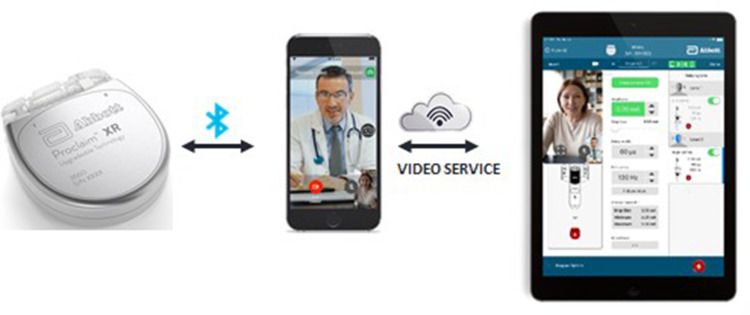
Chronic pain patients implanted with a neurostimulation device typically require follow-up and device programming visits to address changes in symptoms or treatment. Follow-up visits require access to specialty care and necessitate patients to take time off work, commute long distances, arrange for travel, and/or work with a caregiver's schedule. Telemedicine was adopted for some patient management as a result of the Sars-Cov-2 pandemic; however, remote optimization for neuromodulation still required an in-person visit to adjust device parameters. An FDA-approved digital platform enables remote programming of an implanted neuromodulation device using a real-time audio-video link from the clinical programmer to the patient controller. The Remote Optimization, Adjustment, and Measurement for Chronic Pain Therapy (ROAM-CPT) is a multi-center, prospective study that is currently underway to access the effectiveness of the teleprogramming system in fulfilling patients' clinical demands.
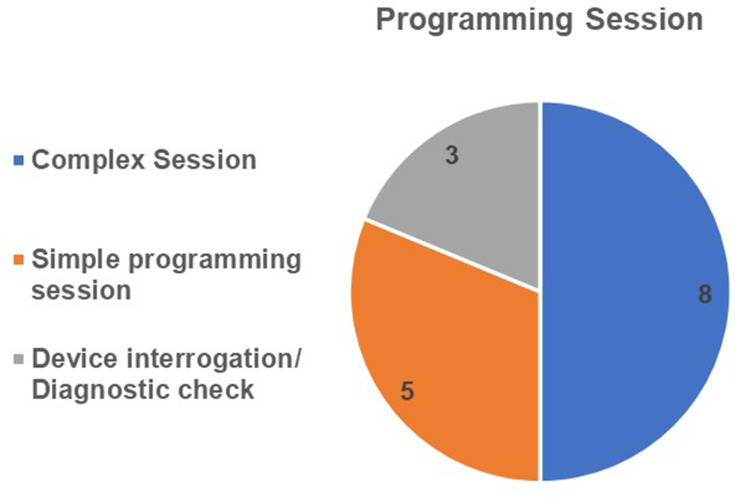
This pilot study surveyed 16 patients to determine the ability of the teleprogramming platform to provide a rapid solution safely and effectively for patient's chronic pain. Data were collected using a questionnaire that asked 6 clinician-centric questions and 5 patient-centric questions.
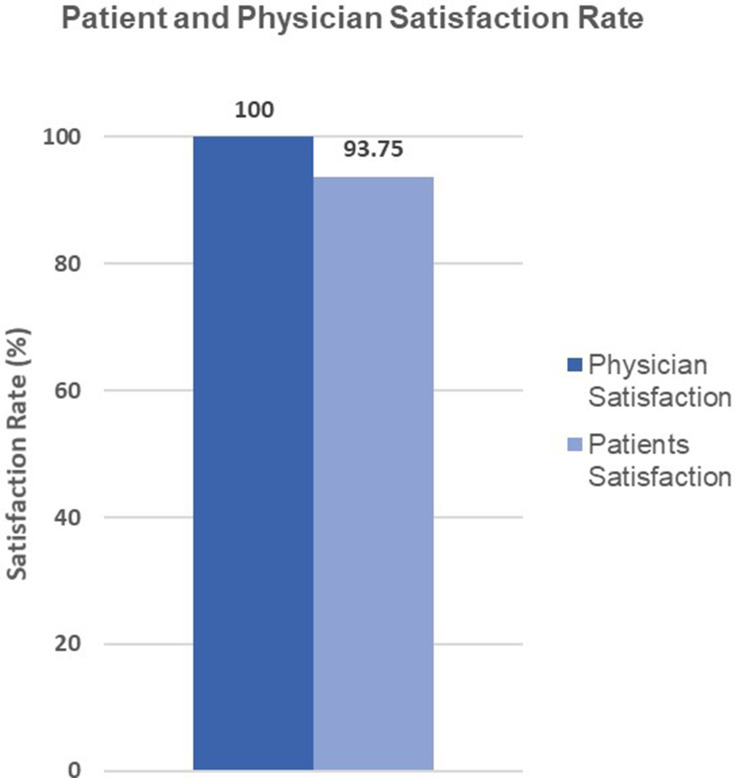
4/4 surveyed physicians were able to address patients' needs. 16/16 surveyed patients reported a quick resolution to pain and 15/16 did not require additional follow-up. Data curated from this pilot study show that the teleprogramming application greatly improves patient care, is preferred by both clinicians and patients with minimal disruptions to patients' everyday lives.
Teleprogramming provides real-time virtual programming capabilities and optimizes patients' therapy.
This article describes remote device programming and analysis as an alternative to in-person programming/treatment sessions for neuromodulation patients. This remote option gives patients access to timely and clinically appropriate device management when in-person care may not be available.
植入神经刺激装置的慢性疼痛患者通常需要随访和设备编程就诊,以应对症状或治疗的变化。随访就诊需要获得专科护理,患者需要请假、长途通勤、安排行程,和/或根据护理人员的时间表进行调整。由于新冠疫情,远程医疗被用于一些患者管理;然而,神经调节的远程优化仍需要亲自就诊来调整设备参数。一个获得美国食品药品监督管理局(FDA)批准的数字平台,能够使用从临床编程器到患者控制器的实时音频-视频链接对植入的神经调节装置进行远程编程。慢性疼痛治疗的远程优化、调整和测量(ROAM-CPT)是一项多中心前瞻性研究,目前正在进行,以评估远程编程系统满足患者临床需求的有效性。
这项试点研究调查了16名患者,以确定远程编程平台为患者的慢性疼痛安全有效地提供快速解决方案的能力。使用一份问卷收集数据,该问卷包含6个以临床医生为中心的问题和5个以患者为中心的问题。
4名接受调查的医生都能够满足患者的需求。16名接受调查的患者均报告疼痛得到快速缓解,16名中有15名不需要额外随访。从这项试点研究中整理的数据表明,远程编程应用极大地改善了患者护理,受到临床医生和患者的青睐,对患者日常生活的干扰最小。
远程编程提供实时虚拟编程功能并优化患者治疗。
本文描述了远程设备编程和分析,作为神经调节患者亲自进行编程/治疗会话的替代方案。当无法获得亲自护理时,这种远程选项使患者能够获得及时且临床合适的设备管理。