Zebley Benjamin, Wolk Danielle, McAllister Mary, Lynch Charles J, Mikofsky Rachel, Liston Conor
Department of Psychiatry and the Brain and Mind Research Institute, Weill Cornell Medicine, New York, New York.
Biol Psychiatry Glob Open Sci. 2021 Dec;1(4):336-344. doi: 10.1016/j.bpsgos.2021.08.008. Epub 2021 Oct 21.
We investigated the evolving prevalence of mood and anxiety symptoms among health care workers from May 2020 to January 2021, risk factors for adverse outcomes, and characteristic modes of affective responses to pandemic-related stressors.
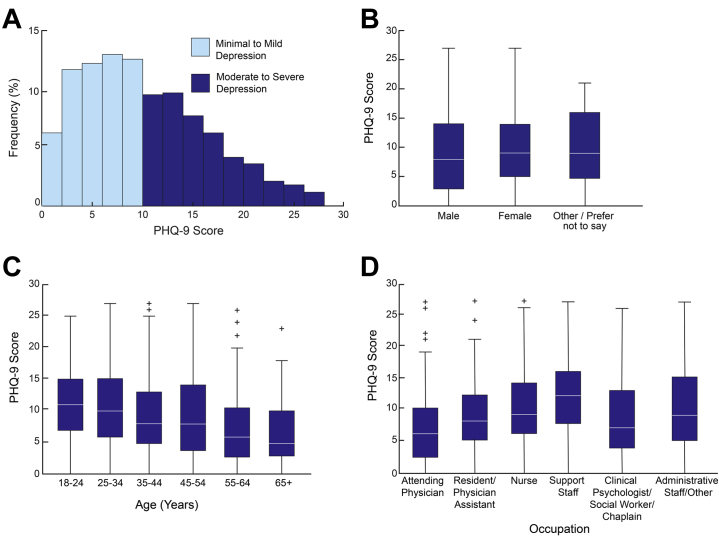
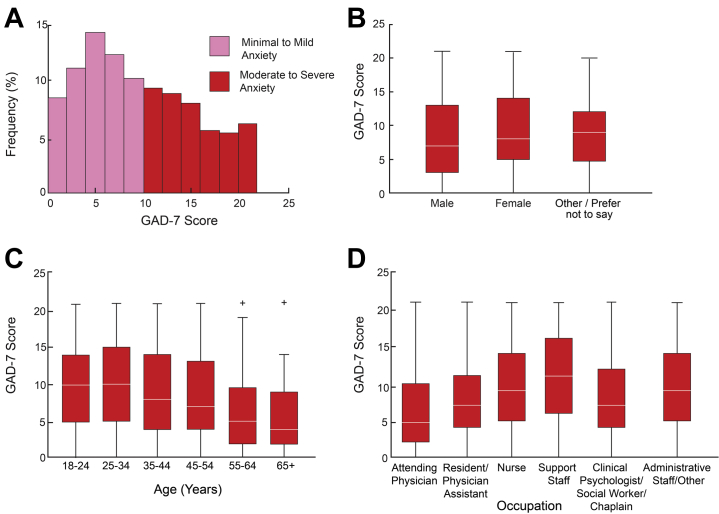
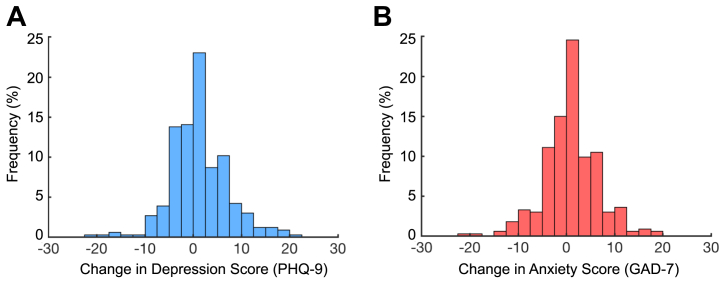
A total of 2307 health care workers (78.9% female, modal age 25-34 years) participated in an online survey assessing depression (Patient Health Questionnaire-9) and anxiety (Generalized Anxiety Disorder-7 scale) symptoms, demographic variables, and self-reported impact of pandemic-related stressors. A total of 334 subjects were reassessed ∼6 months later.
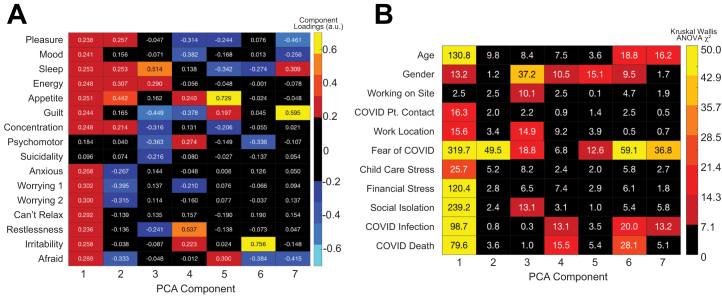
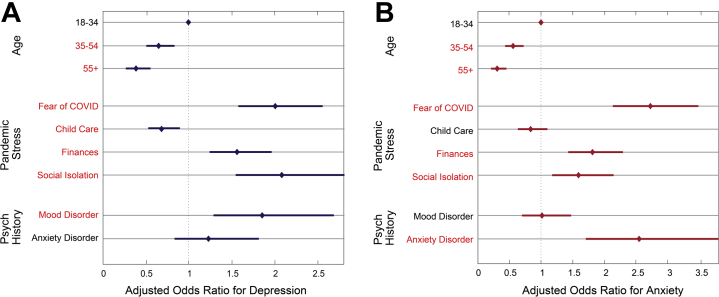
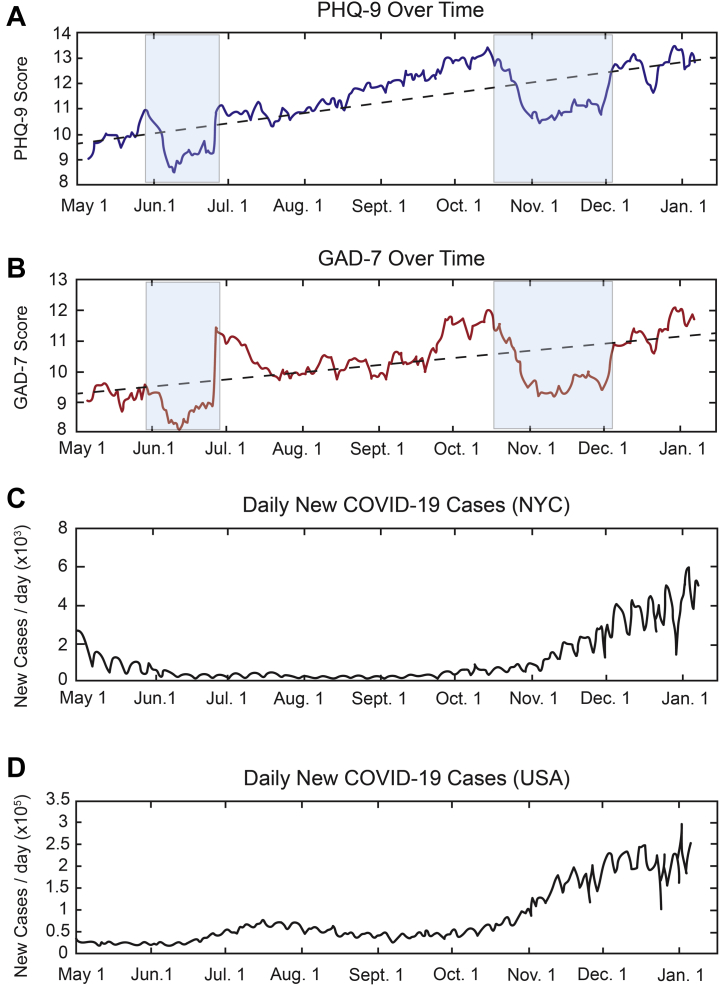
The prevalence of clinically significant depression and anxiety was 45.3% and 43.3%, respectively, and a majority (59.9%-62.9%) of those individuals had persistent significant symptoms at 6-month follow-up. Younger age, female gender, and specific occupations (support staff > nurses > physicians) were associated with increased depressive and anxiety symptoms. The most important risk factors were social isolation and fear of contracting COVID-19. The prevalence of clinically significant mood and anxiety symptoms increased by 39.8% from May 2020 to January 2021. Patient Health Questionnaire-9 and Generalized Anxiety Disorder-7 scores were highly correlated and associated with nearly identical risk factors, suggesting that they are not capturing independent constructs in this sample. Principal component analysis identified seven orthogonal symptom domains with unique risk factors.
Clinically significant mood and anxiety symptoms are highly prevalent and persistent among health care workers, and are associated with numerous risk factors, the strongest of which are related to pandemic stressors and potentially modifiable. Interventions aimed at reducing social isolation and mitigating the impact of fear of infection warrant further study.
我们调查了2020年5月至2021年1月期间医护人员中情绪和焦虑症状的演变患病率、不良结局的危险因素以及对大流行相关压力源的情感反应特征模式。
共有2307名医护人员(78.9%为女性,年龄中位数为25 - 34岁)参与了一项在线调查,该调查评估抑郁(患者健康问卷 - 9)和焦虑(广泛性焦虑障碍 - 7量表)症状、人口统计学变量以及自我报告的大流行相关压力源的影响。约6个月后对334名受试者进行了重新评估。
具有临床意义的抑郁和焦虑患病率分别为45.3%和43.3%,并且这些个体中的大多数(59.9% - 62.9%)在6个月随访时仍有持续的显著症状。年龄较小、女性以及特定职业(辅助人员 > 护士 > 医生)与抑郁和焦虑症状增加相关。最重要的危险因素是社会隔离和对感染新冠病毒的恐惧。从2020年5月到2021年1月,具有临床意义的情绪和焦虑症状患病率增加了39.8%。患者健康问卷 - 9和广泛性焦虑障碍 - 7得分高度相关,且与几乎相同的危险因素相关,这表明在该样本中它们并未捕捉到独立的结构。主成分分析确定了七个具有独特危险因素的正交症状领域。
具有临床意义的情绪和焦虑症状在医护人员中高度普遍且持续存在,并与众多危险因素相关,其中最强烈的因素与大流行压力源有关且可能是可改变的。旨在减少社会隔离和减轻对感染恐惧影响的干预措施值得进一步研究。