Department of Rehabilitation Medicine in Jönköping, Jönköping Region, and Department of Health, Medicine and Caring Sciences, Linköping University, Linköping, Sweden
Department of Rehabiliation Medicine in Linköping, and Department of Health, Medicine and Caring Sciences, Linköping University, Linköping, Sweden.
BMJ Open. 2021 Oct 27;11(10):e055164. doi: 10.1136/bmjopen-2021-055164.
To report findings on brain MRI and neurocognitive function, as well as persisting fatigue at long-term follow-up after COVID-19 hospitalisation in patients identified as high risk for affection of the central nervous system.
Ambidirectional observational cohort study.
All 734 patients from a regional population in Sweden with a laboratory-confirmed COVID-19 diagnosis admitted to hospital during the period 1 March to 31 May 2020.
A subgroup (n=185) with persisting symptoms still interfering with daily life at a telephone follow-up 4 months after discharge were invited for a medical and neuropsychological evaluation. Thirty-five of those who were assessed with a neurocognitive test battery at the clinical visit, and presented a clinical picture concerning for COVID-19-related brain pathology, were further investigated by brain MRI.
Findings on brain MRI, neurocognitive test results and reported fatigue.
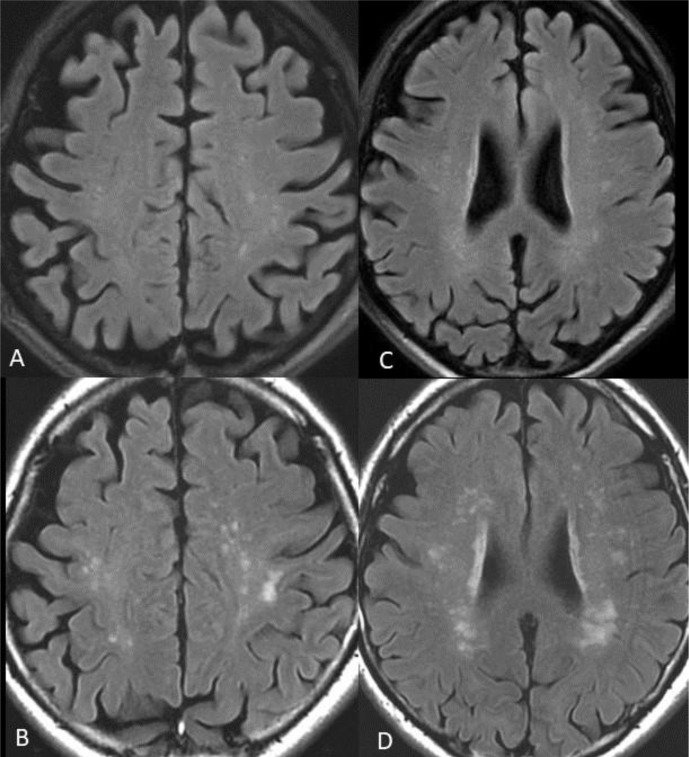
Twenty-five patients (71%) had abnormalities on MRI; multiple white matter lesions were the most common finding. Sixteen patients (46%) demonstrated impaired neurocognitive function, of which 10 (29%) had severe impairment. Twenty-six patients (74%) reported clinically significant fatigue. Patients with abnormalities on MRI had a lower Visuospatial Index (p=0.031) compared with the group with normal MRI findings.
In this group of patients selected to undergo MRI after a clinical evaluation, a majority of patients had abnormal MRI and/or neurocognitive test results. Abnormal findings were not restricted to patients with severe disease.
报告 COVID-19 住院患者中中枢神经系统受累高风险人群在长期随访中脑 MRI 与神经认知功能以及持续性疲劳的发现。
双向观察性队列研究。
2020 年 3 月 1 日至 5 月 31 日期间,瑞典一个地区人群中所有 734 例经实验室确诊的 COVID-19 住院患者。
在出院后 4 个月的电话随访中,仍存在持续性症状且仍对日常生活造成干扰的患者(n=185)被邀请进行医学和神经心理学评估。在临床就诊时接受神经认知测试的 35 例患者中,有 16 例(46%)表现出神经认知功能障碍,且存在与 COVID-19 相关脑病理学相符的临床表现,进一步进行了脑 MRI 检查。
脑 MRI 结果、神经认知测试结果和报告的疲劳情况。
25 例患者(71%)的 MRI 存在异常,最常见的是多发性脑白质病变。16 例患者(46%)存在神经认知功能障碍,其中 10 例(29%)有严重的障碍。26 例患者(74%)报告有明显的疲劳。与 MRI 检查结果正常的患者相比,MRI 异常患者的视空间指数较低(p=0.031)。
在经过临床评估选择进行 MRI 检查的这组患者中,大多数患者的 MRI 和/或神经认知测试结果异常。异常发现不限于病情严重的患者。