Ullah Smi, Trethowan Richard, Bramley Helen
School of Life and Environmental Sciences, Plant Breeding Institute, Sydney Institute of Agriculture, The University of Sydney, Narrabri, NSW, Australia.
School of Life and Environmental Sciences, Plant Breeding Institute, Sydney Institute of Agriculture, University of Sydney, Cobbitty, NSW, Australia.
Front Plant Sci. 2021 Oct 7;12:739246. doi: 10.3389/fpls.2021.739246. eCollection 2021.
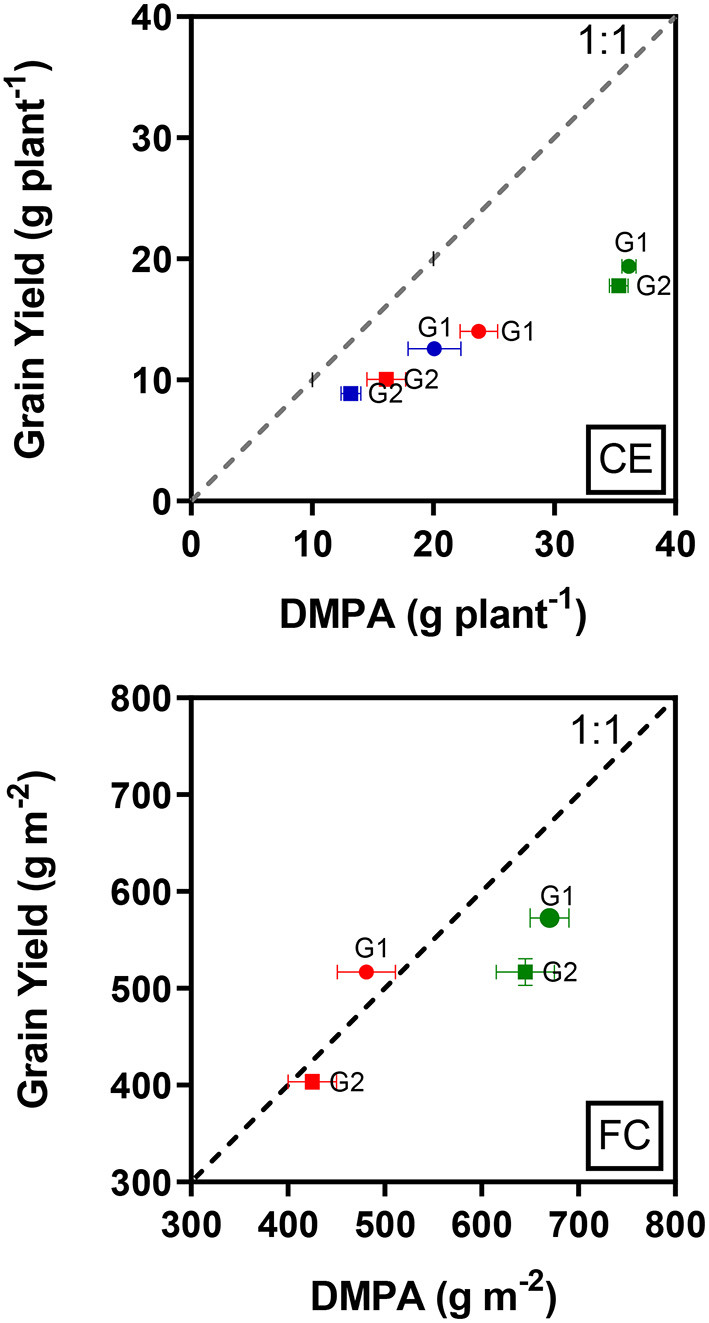
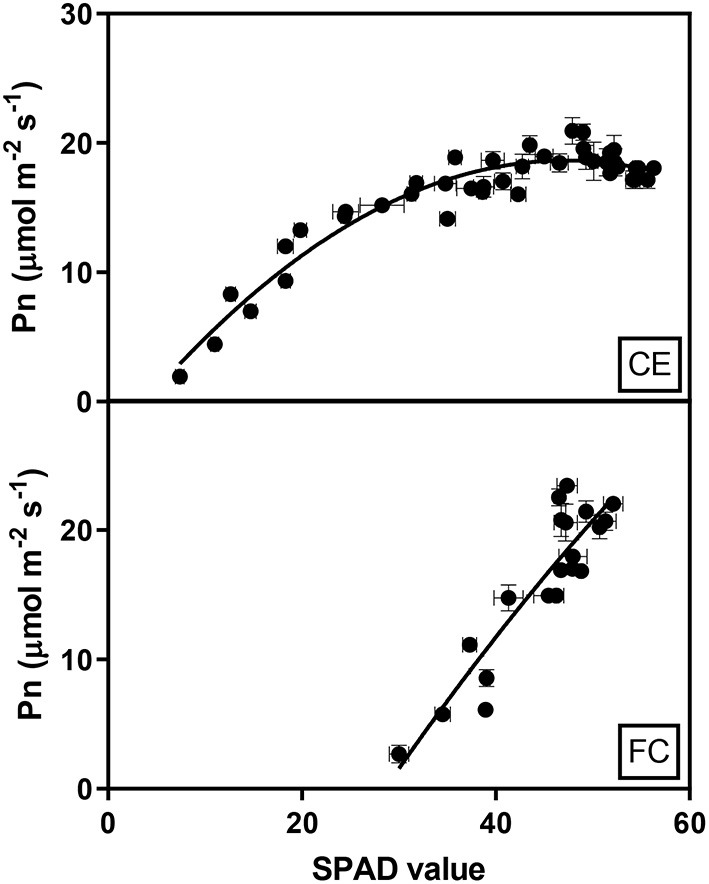
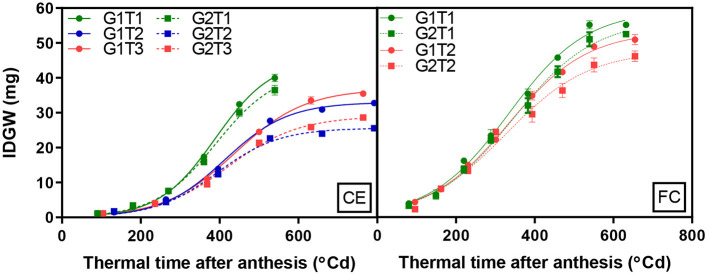
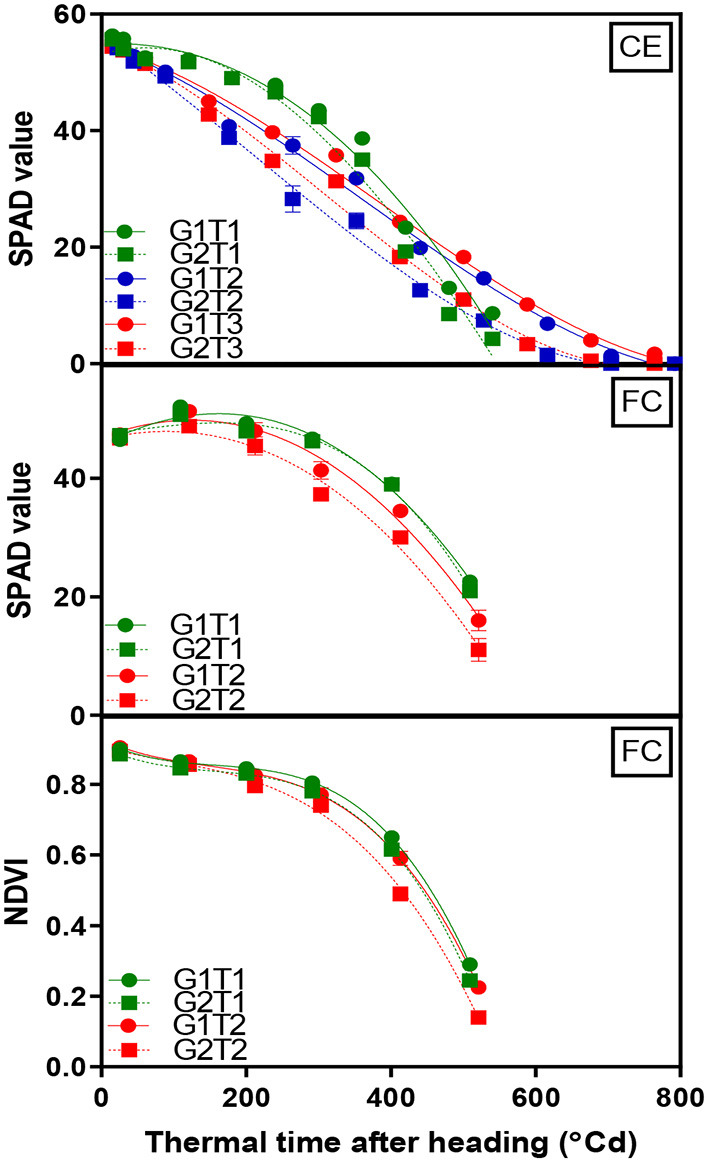
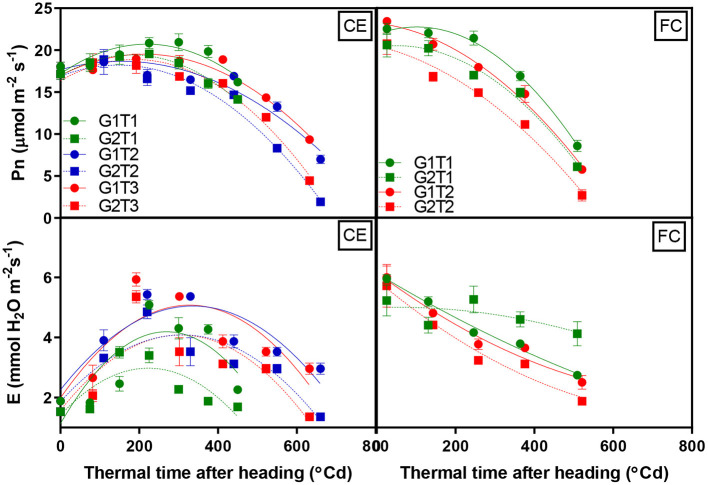
Wheat is sensitive to high-temperature stress with crop development significantly impaired depending on the severity and timing of stress. Various physiological mechanisms have been identified as selection targets for heat tolerance; however, the complex nature of the trait and high genotype × temperature interaction limits the selection process. A three-tiered phenotyping strategy was used to overcome this limitation by using wheat genotypes developed from the ancient domesticated wheat, emmer ( Schrank), which was considered to have a wide variation for abiotic stress tolerance. A contrasting pair of emmer-based hexaploid lines (classified as tolerant; G1 and susceptible; G2) developed from a backcross to the same recurrent hexaploid parent was chosen based on heat stress responses in the field and was evaluated under controlled glasshouse conditions. The same pair of contrasting genotypes was also subsequently exposed to a short period of elevated temperature (4 days) at anthesis under field conditions using in-field temperature-controlled chambers. The glasshouse and field-based heat chambers produced comparable results. G1 was consistently better adapted to both extended and short periods of heat stress through slow leaf senescence under heat stress, which extended the grain filling period, increased photosynthetic capacity, increased grain filling rates, and resulted in greater kernel weight and higher yield. The use of a combination of phenotyping methods was effective in identifying heat tolerant materials and the mechanisms involved.
小麦对高温胁迫敏感,作物发育会因胁迫的严重程度和时间而显著受损。各种生理机制已被确定为耐热性的选择目标;然而,该性状的复杂性以及高基因型×温度互作限制了选择过程。通过使用从古老的驯化小麦二粒小麦(Schrank)培育出的小麦基因型,采用了一种三层表型分析策略来克服这一限制,二粒小麦被认为对非生物胁迫耐受性具有广泛变异。基于在田间的热应激反应,从与同一个轮回六倍体亲本的回交后代中选择了一对对比鲜明的基于二粒小麦的六倍体系(分类为耐受型;G1和敏感型;G2),并在可控温室条件下进行评估。随后,还使用田间温度控制箱在田间条件下使同一对对比基因型在花期暴露于短期高温(4天)。温室和田间热箱产生了可比的结果。G1通过在热胁迫下叶片衰老缓慢,始终能更好地适应长时间和短时间的热胁迫,这延长了灌浆期,提高了光合能力,增加了灌浆速率,并导致更大的粒重和更高的产量。使用多种表型分析方法相结合有效地鉴定了耐热材料及其涉及的机制。