Appunni Sandeep, Rubens Muni, Ramamoorthy Venkataraghavan, Tonse Raees, Saxena Anshul, McGranaghan Peter, Kaiser Adeel, Kotecha Rupesh
Government Medical College, Kozhikode, India.
Department of Biochemistry, All India Institute of Medical Sciences, New Delhi, India.
Front Nutr. 2021 Oct 11;8:718389. doi: 10.3389/fnut.2021.718389. eCollection 2021.
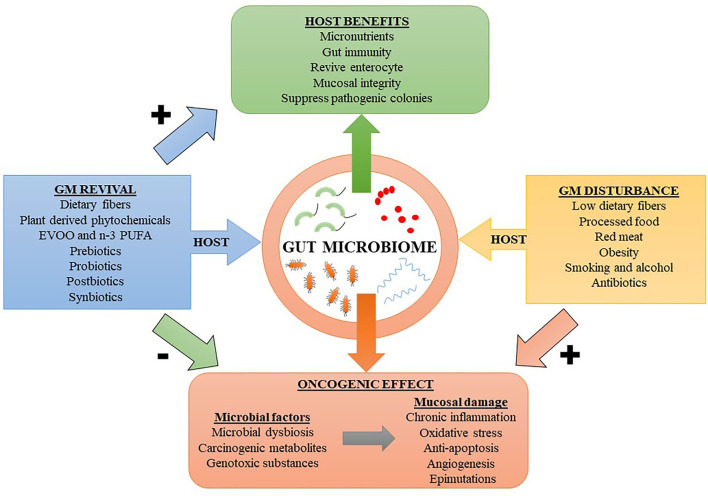
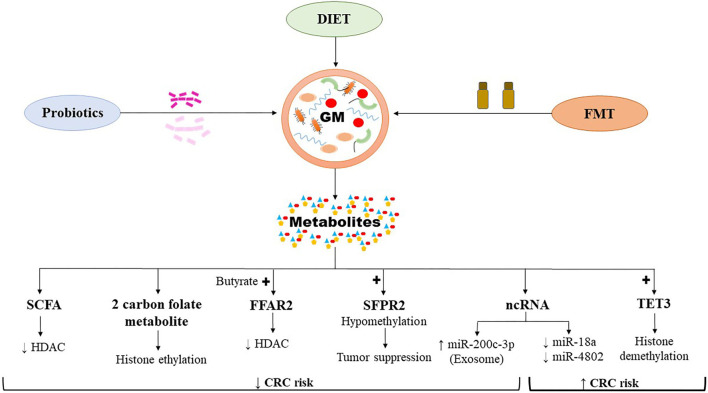
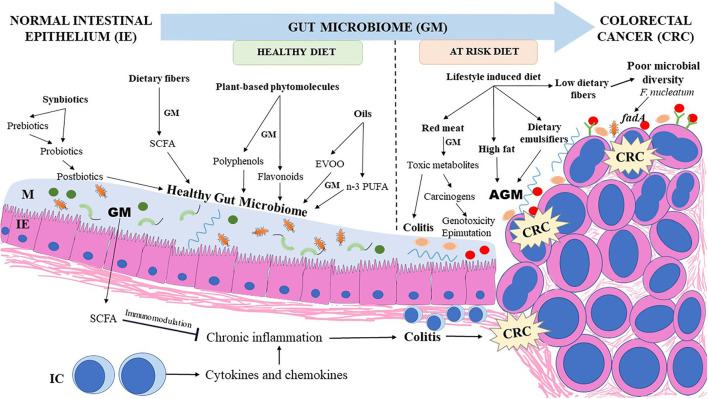
Dietary factors have important role in modulating the gut microbiome, which in-turn regulates the molecular events in colonic mucosa. The composition and resulting metabolism of the gut microbiome are decisive factors in colorectal cancer (CRC) tumorigenesis. Altered gut microbiome is associated with impaired immune response, and the release of carcinogenic or genotoxic substances which are the major microbiome-induced mechanisms implicated in CRC pathogenesis. Diets low in dietary fibers and phytomolecules as well as high in red meat are important dietary changes which predispose to CRC. Dietary fibers which reach the colon in an undigested form are further metabolized by the gut microbiome into enterocyte friendly metabolites such as short chain fatty acid (SCFA) which provide anti-inflammatory and anti-proliferative effects. Healthy microbiome supported by dietary fibers and phytomolecules could decrease cell proliferation by regulating the epigenetic events which activate proto-oncogenes and oncogenic pathways. Emerging evidence show that predominance of microbes such as can predispose the colonic mucosa to malignant transformation. Dietary and lifestyle modifications have been demonstrated to restrict the growth of potentially harmful opportunistic organisms. Synbiotics can protect the intestinal mucosa by improving immune response and decreasing the production of toxic metabolites, oxidative stress and cell proliferation. In this narrative review, we aim to update the emerging evidence on how diet could modulate the gut microbial composition and revive colonic epithelium. This review highlights the importance of healthy plant-based diet and related supplements in CRC prevention by improving the gut microbiome.
饮食因素在调节肠道微生物群方面发挥着重要作用,而肠道微生物群又反过来调节结肠黏膜中的分子事件。肠道微生物群的组成及其代谢产物是结直肠癌(CRC)肿瘤发生的决定性因素。肠道微生物群的改变与免疫反应受损以及致癌或基因毒性物质的释放有关,这些是CRC发病机制中微生物群诱导的主要机制。膳食纤维和植物分子含量低以及红肉含量高的饮食是导致CRC的重要饮食变化。以未消化形式到达结肠的膳食纤维会被肠道微生物群进一步代谢为对肠上皮细胞有益的代谢产物,如短链脂肪酸(SCFA),其具有抗炎和抗增殖作用。由膳食纤维和植物分子支持的健康微生物群可以通过调节激活原癌基因和致癌途径的表观遗传事件来减少细胞增殖。新出现的证据表明,某些微生物的优势可能使结肠黏膜易于发生恶性转化。饮食和生活方式的改变已被证明可以限制潜在有害的机会性生物体的生长。合生元可以通过改善免疫反应、减少有毒代谢产物的产生、氧化应激和细胞增殖来保护肠黏膜。在这篇叙述性综述中,我们旨在更新关于饮食如何调节肠道微生物组成和恢复结肠上皮的新证据。这篇综述强调了健康的植物性饮食和相关补充剂在通过改善肠道微生物群预防CRC方面的重要性。