Institute of Systems, Molecular and Integrative Biology, University of Liverpool, Liverpool L69 7ZB, U.K.
Chromatin Dynamics and Disease Epigenetics Group, Institute of Molecular and Cell Biology, Agency for Science, Technology and Research (A*STAR), Singapore, Singapore.
Biochem J. 2021 Oct 29;478(20):3791-3805. doi: 10.1042/BCJ20210412.
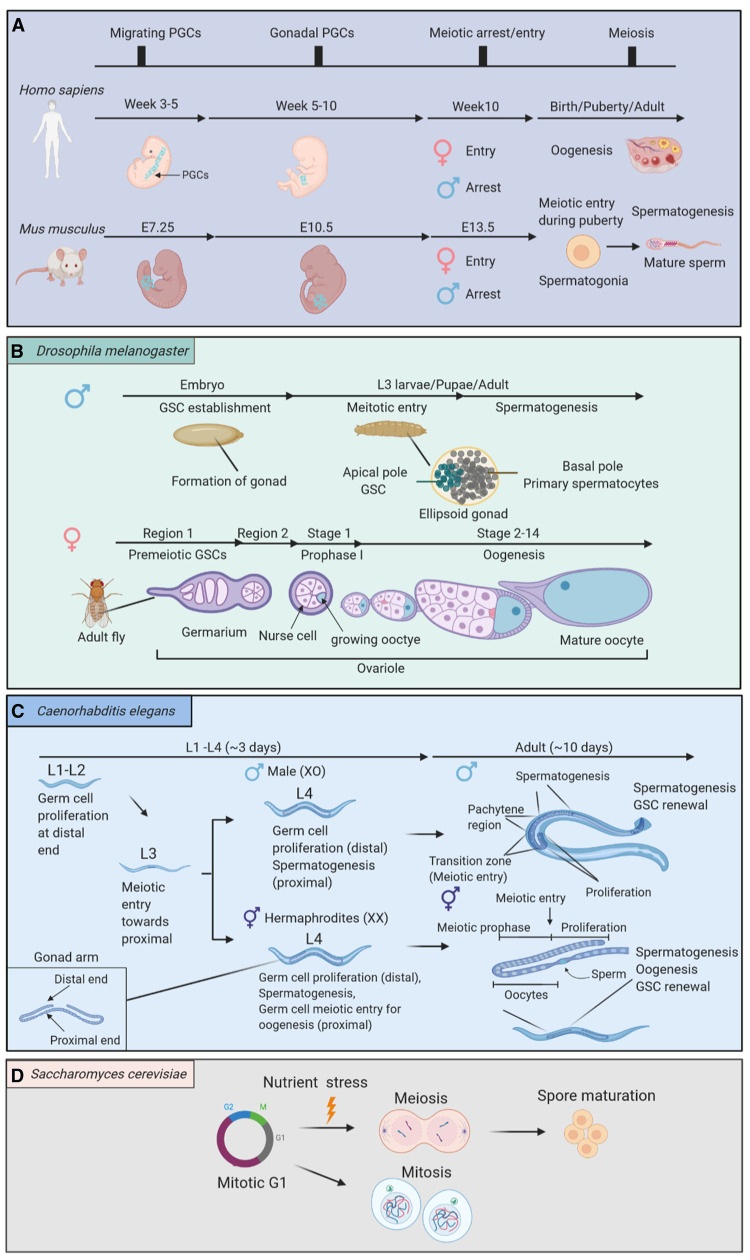
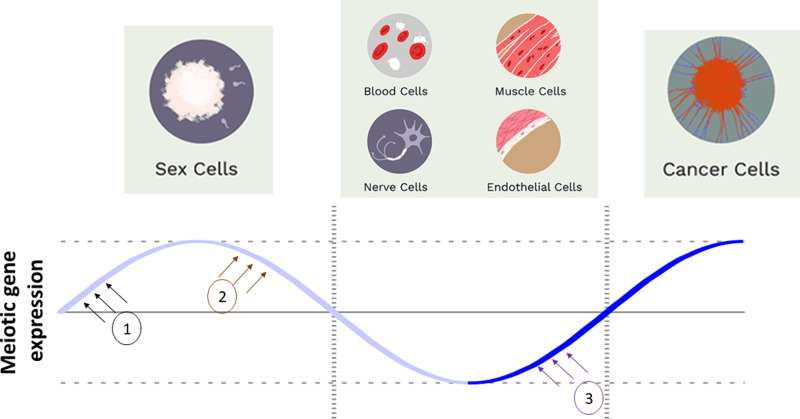
Meiosis facilitates diversity across individuals and serves as a major driver of evolution. However, understanding how meiosis begins is complicated by fundamental differences that exist between sexes and species. Fundamental meiotic research is further hampered by a current lack of human meiotic cells lines. Consequently, much of what we know relies on data from model organisms. However, contextualising findings from yeast, worms, flies and mice can be challenging, due to marked differences in both nomenclature and the relative timing of meiosis. In this review, we set out to combine current knowledge of signalling and transcriptional pathways that control meiosis initiation across the sexes in a variety of organisms. Furthermore, we highlight the emerging links between meiosis initiation and oncogenesis, which might explain the frequent re-expression of normally silent meiotic genes in a variety of human cancers.
减数分裂促进了个体之间的多样性,是进化的主要驱动力。然而,由于性别和物种之间存在的根本差异,减数分裂的起始过程很难理解。基础减数分裂研究进一步受到当前缺乏人类减数分裂细胞系的阻碍。因此,我们所知道的大部分内容都依赖于来自模式生物的数据。然而,由于酵母、蠕虫、苍蝇和老鼠在命名法和减数分裂相对时间上存在显著差异,将这些发现置于背景下是具有挑战性的。在这篇综述中,我们旨在结合目前关于控制各种生物体中减数分裂起始的信号和转录途径的知识。此外,我们还强调了减数分裂起始与致癌作用之间的新联系,这可能解释了在各种人类癌症中通常沉默的减数分裂基因的频繁重新表达。