Seckinger Dominik, Ritter Oliver, Patschan Daniel
Klinik Für Kardiologie, Angiologie und Nephrologie, Klinikum Brandenburg, Medizinische Hochschule Brandenburg, Hochstraße 29, 14770, Brandenburg, Germany.
Int Urol Nephrol. 2022 Jul;54(7):1591-1601. doi: 10.1007/s11255-021-03036-w. Epub 2021 Oct 28.
In cardiorenal syndrome (CRS) type 1, acute cardiac failure or acute decompensation of chronic heart failure causes acute kidney injury (AKI). Every individual AKI episode increases the risk for chronic kidney disease (CKD) in the long term. In this study, we aimed to evaluate epidemiological characteristics and outcome variables of CRS type 1 individuals from the nephrologist's perspective.
The study was performed in a retrospective, observational manner. All AKI patients treated at the Brandenburg Hospital of the Medical School of Brandenburg between January and December 2019 were screened for diagnostic criteria of CRS type 1. Endpoints were in-hospital death, need for dialysis, and renal recovery.
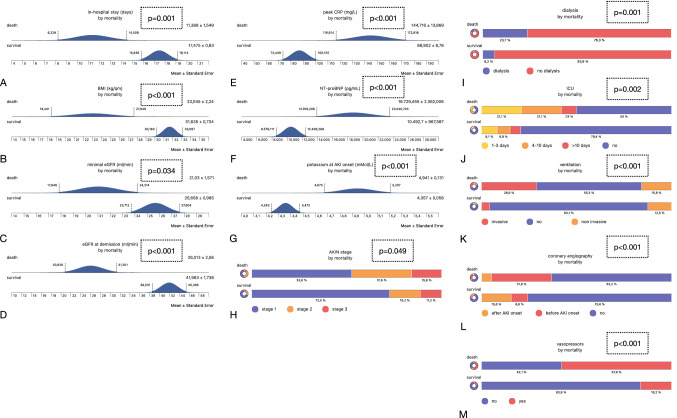
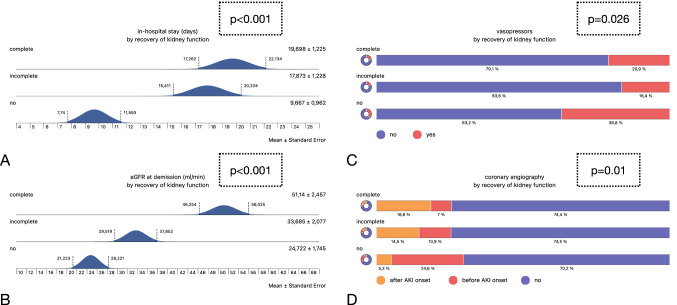
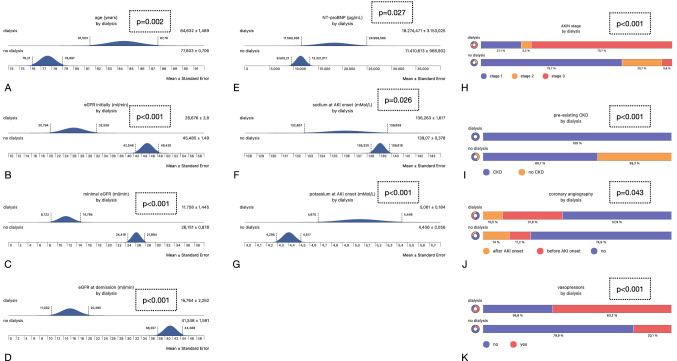
During the screening, 198 out of 1189 (16.6%) AKI subjects were assigned to the diagnosis CRS type 1. The overall in-hospital mortality was 19.2%; 9.6% of the patients required dialysis due to AKI. Complete recovery of kidney function was observed in 86 individuals (43.4%); incomplete recovery occurred in 55 patients (27.8%). Mortality-predictive variables were AKIN stage 2, longer ICU treatment, and insulin-dependent diabetes. Regarding dialysis, AKIN stage 3 and higher potassium at the time of diagnosis were predictive. Subjects with longer in-hospital stay recovered more often from CRS type 1.
The incidence of CRS type 1 is high (∼16% of all in-hospital AKI subjects) and the mortality is higher than the average mortality of AKI in general. At the same time, complete recovery of kidney function occurs less frequent. The kidney-related follow-up management of CRS type 1 needs to be significantly optimized to improve the long-term outcome of affected patients.
在1型心肾综合征(CRS)中,急性心力衰竭或慢性心力衰竭急性失代偿会导致急性肾损伤(AKI)。每一次AKI发作长期来看都会增加慢性肾脏病(CKD)的风险。在本研究中,我们旨在从肾脏病学家的角度评估1型CRS患者的流行病学特征和结局变量。
本研究采用回顾性观察方法。对2019年1月至12月在勃兰登堡医学院勃兰登堡医院接受治疗的所有AKI患者进行1型CRS诊断标准筛查。终点指标为住院死亡、透析需求和肾功能恢复情况。
筛查期间,1189例AKI患者中有198例(16.6%)被诊断为1型CRS。总体住院死亡率为19.2%;9.6%的患者因AKI需要透析。86例患者(43.4%)肾功能完全恢复;55例患者(27.8%)恢复不完全。死亡预测变量为急性肾损伤网络(AKIN)2期、较长的重症监护病房(ICU)治疗时间和胰岛素依赖型糖尿病。关于透析,AKIN 3期和诊断时较高的血钾水平具有预测性。住院时间较长的患者从1型CRS中恢复的情况更常见。
1型CRS的发病率较高(约占所有住院AKI患者的16%),死亡率高于一般AKI的平均死亡率。同时,肾功能完全恢复的情况较少见。1型CRS的肾脏相关后续管理需要显著优化,以改善受影响患者的长期结局。