Department of Oncology, The First Affiliated Hospital of Soochow University, Suzhou, Jiangsu 215006, China.
Department of Oncology, The Second People's Hospital of Lianyungang (The Oncology Hospital of Lianyungang), No 161, XinFu Road, Lianyungang, Jiangsu 222000, China.
Anal Cell Pathol (Amst). 2021 Oct 19;2021:9290372. doi: 10.1155/2021/9290372. eCollection 2021.
Esophageal cancer (EC) is a common malignant tumor, which brings heavy economic burden to patients and society. Therefore, it is important to understand the molecular mechanism of recurrence, metastasis, and drug resistance of esophageal cancer.
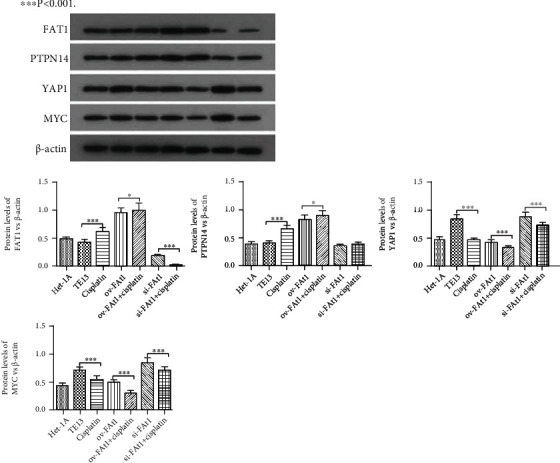
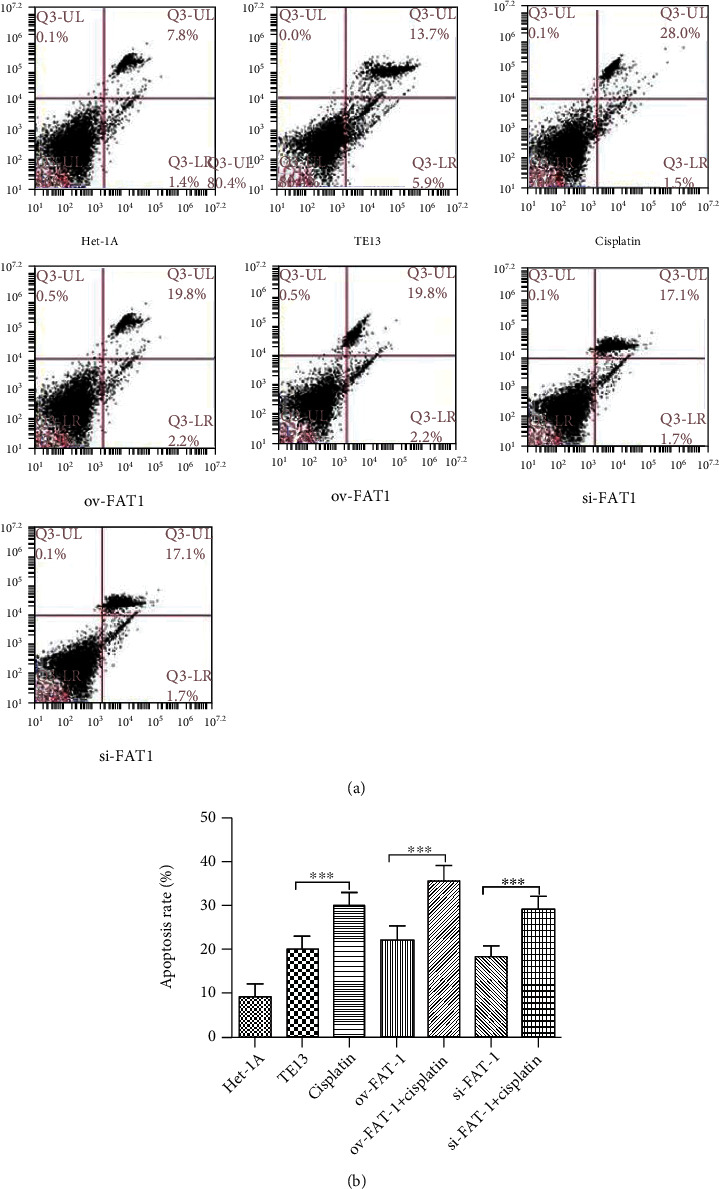
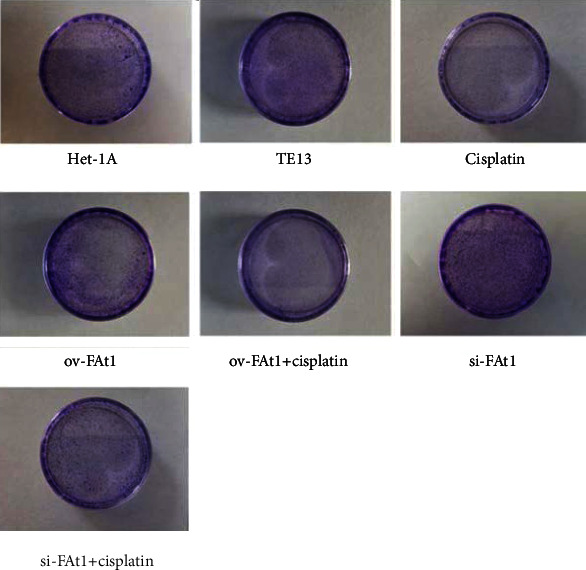
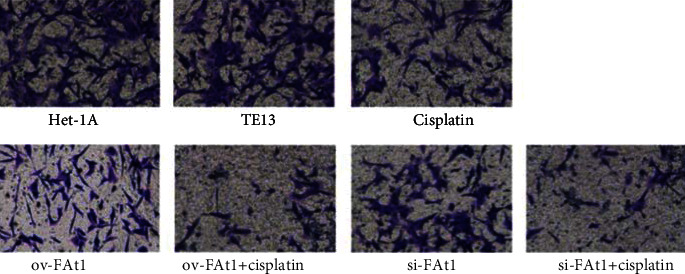
Human esophageal cancer cell line TE13 (poorly differentiated squamous cell carcinoma) and normal human esophageal epithelial cell line het-1a were selected for aseptic culture. At the same time, 6 bottles of TE13 cell line were inoculated in logarithmic phase. Cell apoptosis was analyzed by flow cytometry (FCM). Cell clone formation assay was used to analyze the proliferation. Fibronectin-coated dishes were used to detect the characteristics of cell adhesion to extracellular matrix. The Transwell method was used to detect the cell invasion ability. Western blot was used to analyze the expression of Yap1, PTPN14, FAT1, and Myc.
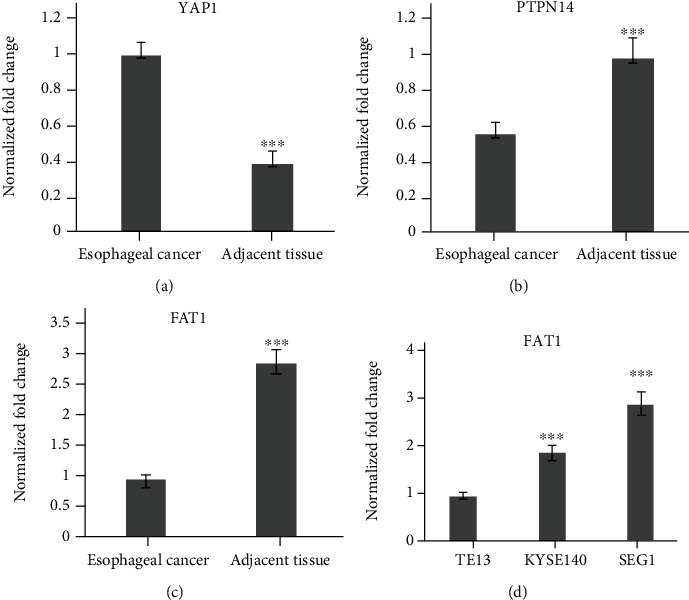
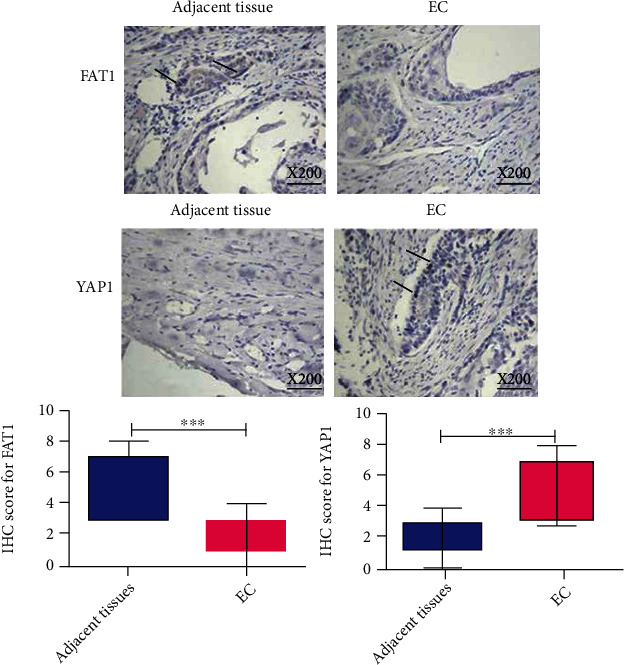
Results showed that FAT1 and PTPN14 were downregulated, while Yap1 was upregulated in esophageal cancer tissues. FAT1 inhibited the proliferation, adhesion, and invasion of human esophageal cancer cell lines, which might be associated with the upregulation of PTPN14 and the inhibition of Yap1 and Myc.
The results suggested that PTPN14 and FAT1 could regulate malignant progression and chemotherapy resistance of esophageal cancer based on the Hippo signaling pathway.
食管癌(EC)是一种常见的恶性肿瘤,给患者和社会带来了沉重的经济负担。因此,了解食管癌复发、转移和耐药的分子机制非常重要。
选择人食管癌细胞系 TE13(低分化鳞状细胞癌)和正常的人食管上皮细胞系 het-1a 进行无菌培养。同时,在对数生长期接种 6 瓶 TE13 细胞系。采用流式细胞术(FCM)分析细胞凋亡。细胞克隆形成实验分析细胞增殖。用纤维连接蛋白包被的培养皿检测细胞对细胞外基质黏附的特性。采用 Transwell 方法检测细胞的侵袭能力。Western blot 分析 Yap1、PTPN14、FAT1 和 Myc 的表达。
结果表明,FAT1 和 PTPN14 在食管癌组织中表达下调,而 Yap1 表达上调。FAT1 抑制人食管癌细胞系的增殖、黏附和侵袭,可能与 PTPN14 的上调以及 yap1 和 Myc 的抑制有关。
这些结果表明,PTPN14 和 FAT1 可以通过 Hippo 信号通路调节食管癌的恶性进展和化疗耐药性。