Zouré Abdou Azaque, Amegnona Lanyo Jospin, Zongo Nayi, Kiendrebeogo Isabelle Touwendpoulimdé, Sorgho Pegdwendé Abel, Zongo Fabienne Ingrid, Yonli Albert Théophane, Sombié Herman Karim, Bambara Aboubacar Hierrhum, Sawadogo Alexis Yobi, Ouedraogo Marie N L, Traoré Lassina, Zongo Sidnooma Véronique, Lallogo Doriane Tatiana, Bazié Bapio Valery Jean Télesphore Elvira, Zohoncon Théodora M, Dijgma Florencia W, Simpore Jacques
Departement of Biochemistry and Microbiology, Laboratory of Molecular Biology and Genetics (LABIOGENE), UFR/SVT, University Joseph KI-ZERBO, 03 P.O. Box 7021, Ouagadougou 03, Burkina Faso.
Departement of Molecular Biology, Pietro Annigoni Biomolecular Research Center (CERBA), 01 P.O. Box 364, Ouagadougou 01, Burkina Faso.
Open Life Sci. 2021 Oct 11;16(1):1101-1110. doi: 10.1515/biol-2021-0113. eCollection 2021.
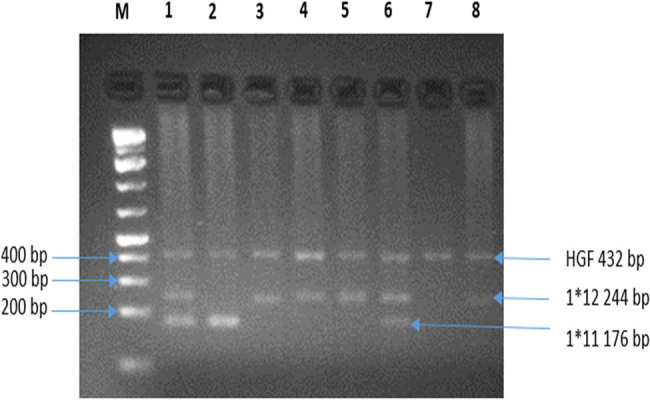
Several factors contribute to the development of breast cancer, including the immune system. This study is aimed to characterize the carriage of human leukocyte antigen (HLA)-DRB111 and 112 alleles in patients with breast cancer. This case-control study consisted of 96 histologically diagnosed breast cancer cases and 102 controls (cases without breast abnormalities). A multiplex polymerase chain reaction (PCR) was used to characterize the carriage of HLA-DRB111 and 112 alleles. The HLA-DRB111 allele was present in 26.59% of cases and 22.55% of controls. The HLA-DRB112 allele was present in 56.63% of cases and 55.88% of controls. This study found no direct association between the carriage of the HLA-DRB111 and HLA-DRB112 alleles and the occurrence of breast cancer. In addition, the deletion of the HLA-DRB111 allele is associated (beneficial effect) with obesity/overweight (OR = 0.13; 95% CI [0.01-1.14]; and 0.03) which is a risk for breast cancer. No direct association was found between the carriage of HLA-DRB111 and 1*12 alleles and breast cancer risk. However, further investigation of other HLA alleles involved in the occurrence of breast cancer may provide more information.
多种因素会导致乳腺癌的发生,包括免疫系统。本研究旨在对乳腺癌患者中人类白细胞抗原(HLA)-DRB111和112等位基因的携带情况进行特征分析。这项病例对照研究包括96例经组织学诊断的乳腺癌病例和102名对照(无乳腺异常的病例)。采用多重聚合酶链反应(PCR)来分析HLA-DRB111和112等位基因的携带情况。HLA-DRB111等位基因在26.59%的病例和22.55%的对照中存在。HLA-DRB112等位基因在56.63%的病例和55.88%的对照中存在。本研究发现HLA-DRB111和HLA-DRB112等位基因的携带与乳腺癌的发生之间没有直接关联。此外,HLA-DRB111等位基因的缺失与肥胖/超重(OR = 0.13;95% CI [0.01 - 1.14];以及0.03)相关(有益作用),而肥胖/超重是乳腺癌的一个风险因素。未发现HLA-DRB111和1*12等位基因的携带与乳腺癌风险之间存在直接关联。然而,对其他与乳腺癌发生相关的HLA等位基因进行进一步研究可能会提供更多信息。