National Center for Soybean Improvement, Key Laboratory of Biology and Genetics and Breeding for Soybean, Ministry of Agriculture, State Key Laboratory of Crop Genetics and Germplasm Enhancement, Nanjing Agricultural University, Nanjing, 210095, China.
Jagannath University, Dhaka, 1100, Bangladesh.
BMC Plant Biol. 2021 Oct 29;21(1):497. doi: 10.1186/s12870-021-03268-z.
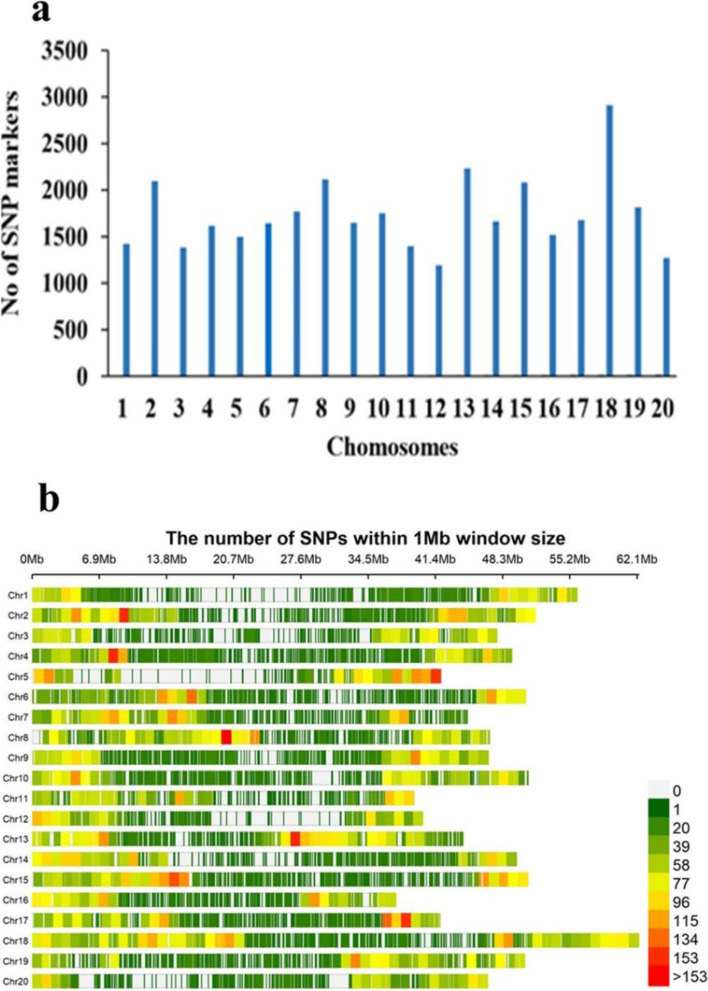
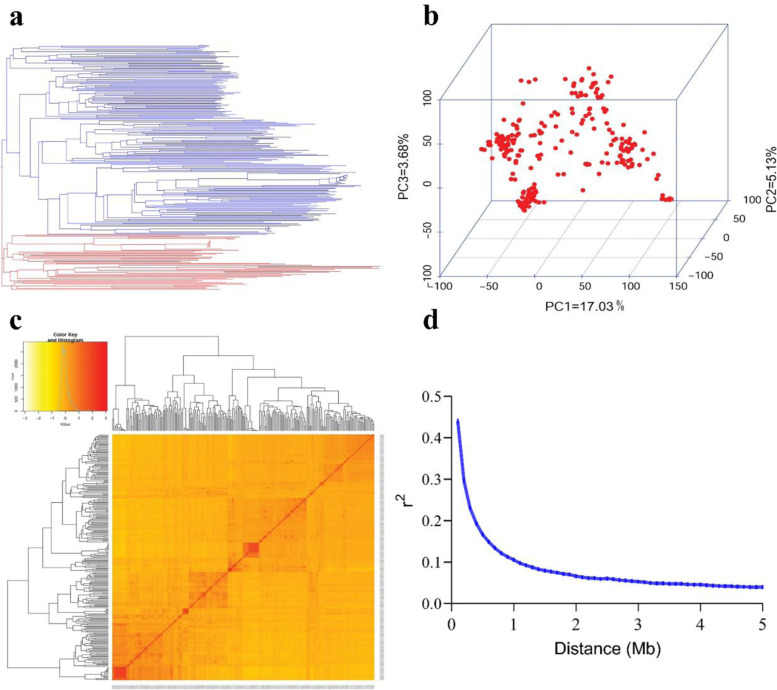
Seed flooding stress is one of the threatening environmental stressors that adversely limits soybean at the germination stage across the globe. The knowledge on the genetic basis underlying seed-flooding tolerance is limited. Therefore, we performed a genome-wide association study (GWAS) using 34,718 single nucleotide polymorphism (SNPs) in a panel of 243 worldwide soybean collections to identify genetic loci linked to soybean seed flooding tolerance at the germination stage.
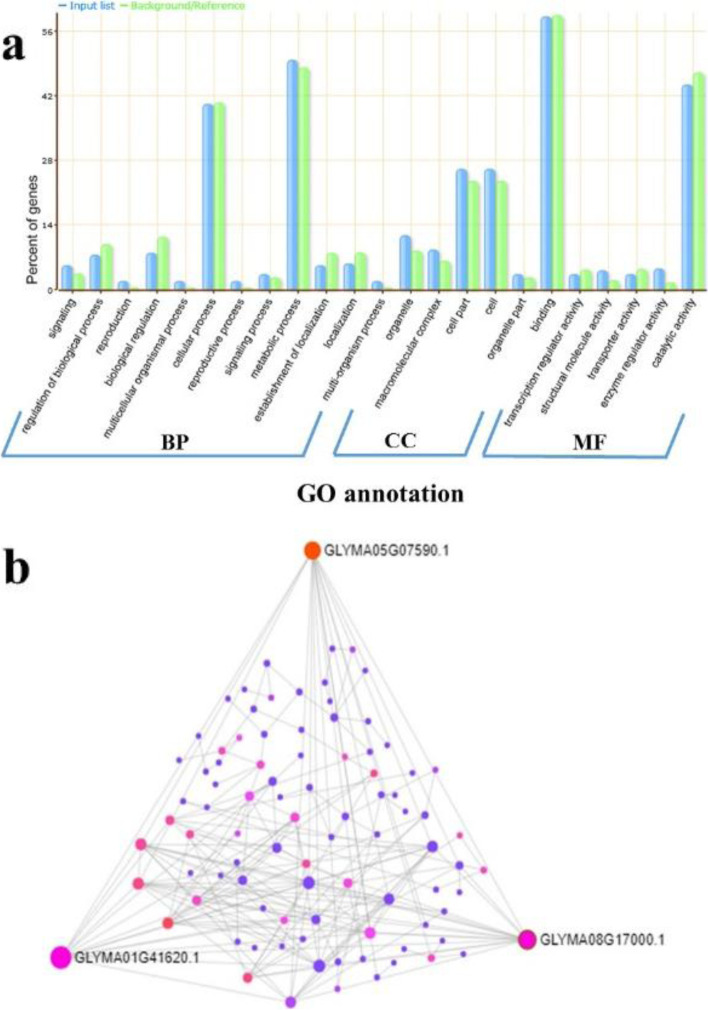
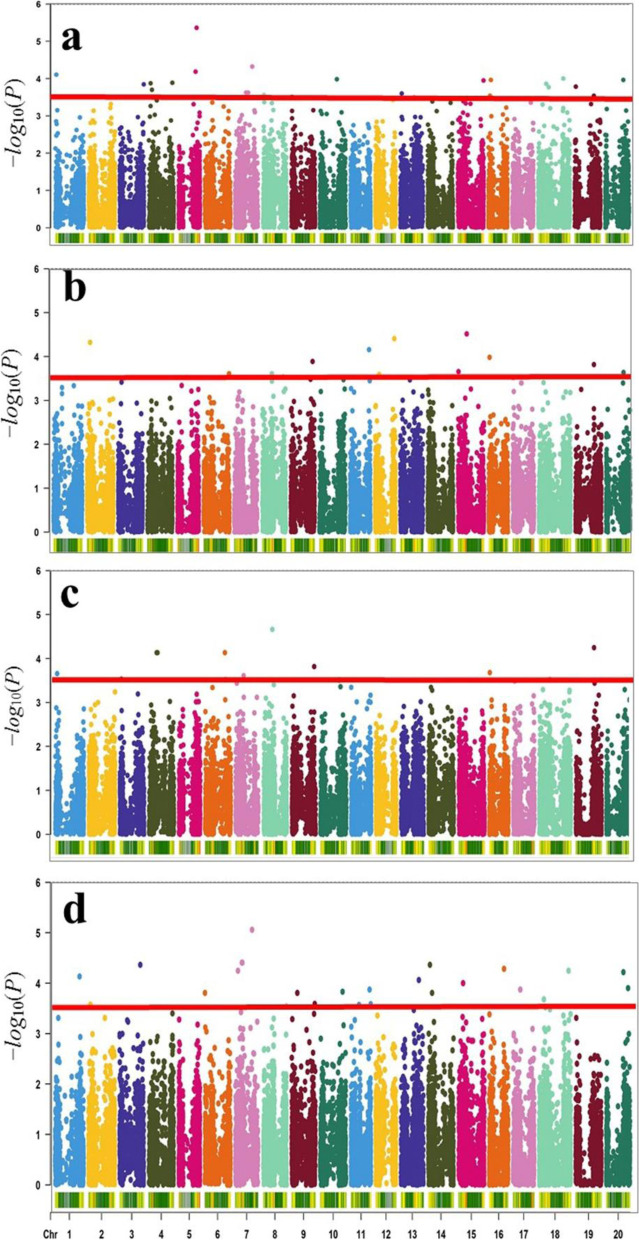
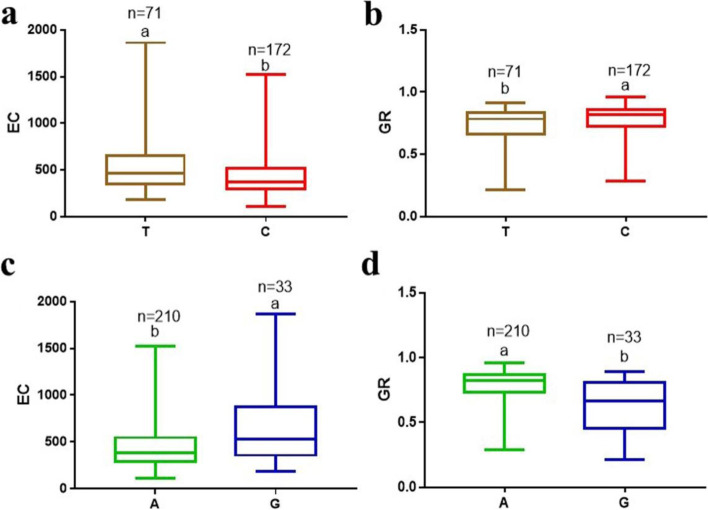
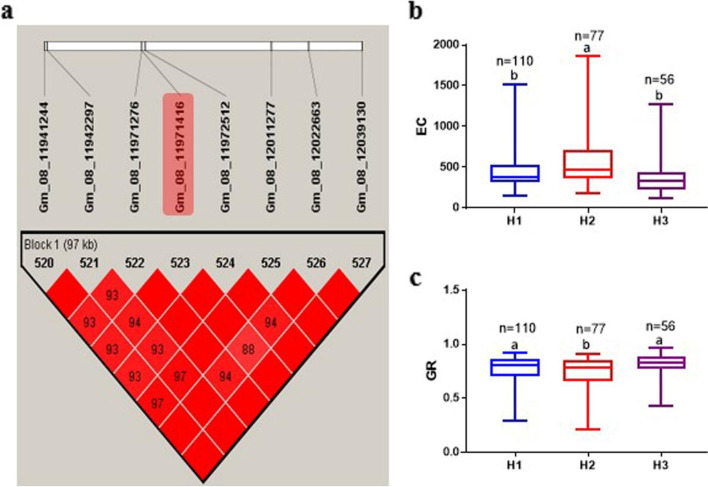
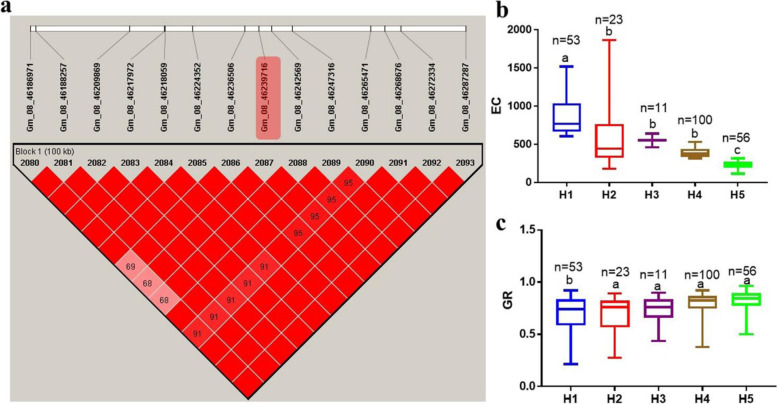
In the present study, GWAS was performed with two contrasting models, Mixed Linear Model (MLM) and Multi-Locus Random-SNP-Effect Mixed Linear Model (mrMLM) to identify significant SNPs associated with electrical conductivity (EC), germination rate (GR), shoot length (ShL), and root length (RL) traits at germination stage in soybean. With MLM, a total of 20, 40, 4, and 9 SNPs associated with EC, GR, ShL and RL, respectively, whereas in the same order mrMLM detected 27, 17, 13, and 18 SNPs. Among these SNPs, two major SNPs, Gm_08_11971416, and Gm_08_46239716 were found to be consistently connected with seed-flooding tolerance related traits, namely EC and GR across two environments. We also detected two SNPs, Gm_05_1000479 and Gm_01_53535790 linked to ShL and RL, respectively. Based on Gene Ontology enrichment analysis, gene functional annotations, and protein-protein interaction network analysis, we predicted eight candidate genes and three hub genes within the regions of the four SNPs with Cis-elements in promoter regions which may be involved in seed-flooding tolerance in soybeans and these warrant further screening and functional validation.
Our findings demonstrate that GWAS based on high-density SNP markers is an efficient approach to dissect the genetic basis of complex traits and identify candidate genes in soybean. The trait associated SNPs could be used for genetic improvement in soybean breeding programs. The candidate genes could help researchers better understand the molecular mechanisms underlying seed-flooding stress tolerance in soybean.
种子淹没胁迫是全球范围内限制大豆发芽阶段生长的威胁性环境胁迫因素之一。关于种子耐淹没性的遗传基础的知识有限。因此,我们使用来自 243 个全球大豆收集品系的 34718 个单核苷酸多态性(SNP)进行了全基因组关联研究(GWAS),以鉴定与大豆种子耐淹没性相关的遗传位点。
在本研究中,我们使用混合线性模型(MLM)和多基因随机 SNP 效应混合线性模型(mrMLM)两种对照模型进行 GWAS,以鉴定与发芽阶段大豆电导率(EC)、发芽率(GR)、茎长(ShL)和根长(RL)性状相关的显著 SNP。使用 MLM,总共鉴定到与 EC、GR、ShL 和 RL 分别相关的 20、40、4 和 9 个 SNP,而在同一顺序中,mrMLM 检测到 27、17、13 和 18 个 SNP。在这些 SNP 中,两个主要 SNP,Gm_08_11971416 和 Gm_08_46239716,被发现与种子淹没胁迫相关性状,即 EC 和 GR 在两个环境中始终相关。我们还检测到与 ShL 和 RL 分别相关的两个 SNP,Gm_05_1000479 和 Gm_01_53535790。基于基因本体论富集分析、基因功能注释和蛋白质-蛋白质相互作用网络分析,我们预测了四个 SNP 区域内的八个候选基因和三个枢纽基因,这些基因在启动子区域内具有顺式元件,可能参与大豆种子淹没胁迫,并需要进一步筛选和功能验证。
我们的研究结果表明,基于高密度 SNP 标记的 GWAS 是解析复杂性状遗传基础和鉴定大豆候选基因的有效方法。与性状相关的 SNP 可用于大豆遗传改良。候选基因可以帮助研究人员更好地理解大豆种子耐淹没胁迫的分子机制。