Department of Social Epidemiology, Graduate School of Medicine and School of Public Health, Kyoto University, Floor 2, Science Frontier Laboratory, Yoshida-Konoecho, Sakyo-ku, Kyoto-shi, Kyoto, 606-8315, Japan.
Department of Environmental Preventive Medical Sciences, Center for Preventive Medical Sciences, Chiba University, 1-33 Yayoi-cho, Inage-ku, Chiba, 263-8522, Chiba-shi, Japan.
Int J Behav Nutr Phys Act. 2021 Oct 29;18(1):140. doi: 10.1186/s12966-021-01212-w.
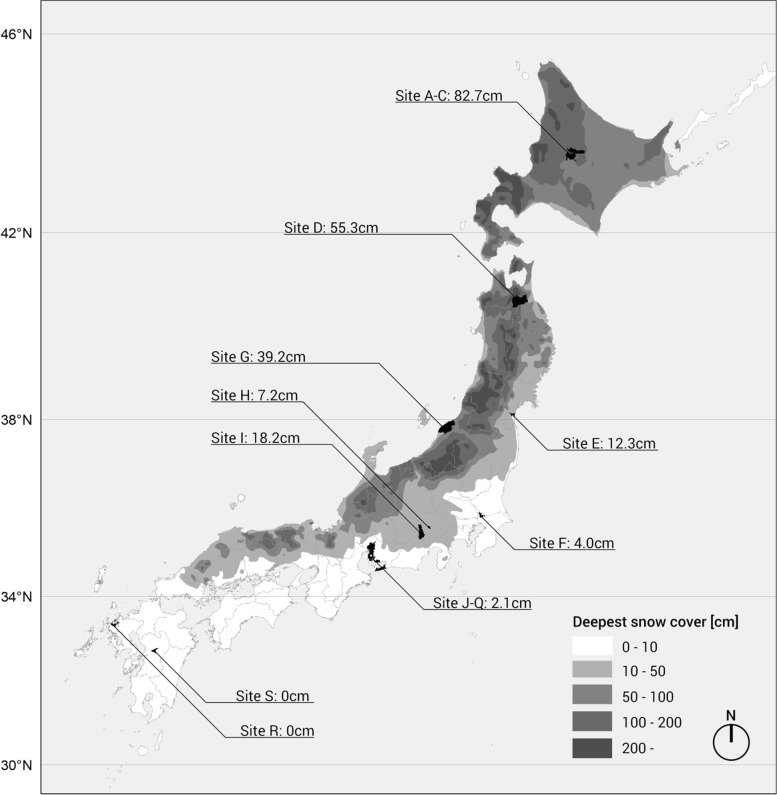
The causal effect of physical activity on reducing dementia risk has been questioned due to the possibility of reverse causation. This study examined the potential causal effects of physical activity on reducing dementia risk using residency in a snowy area as an instrumental variable (IV) representing the physical activity of older adults.
We used cohort data from the Japan Gerontological Evaluation Study, a longitudinal cohort enrolling people aged 65 or older who were physically and cognitively independent in 2013; study participants were followed for an average of 5.7 years. Participants in the present study included 73,260 individuals living in 19 municipalities in Japan. Physical activity was measured by self-report questionnaires and the incidence of dementia was ascertained by linking participants to the public registries of long-term care insurance. IV estimation was obtained from a piecewise Cox proportional hazard model using a two-stage regression procedure.
During the study period, we ascertained 8714 cases (11.9%) of dementia onset. In the IV analysis, we found that the frequency of physical activity per week was negatively associated with dementia risk, though the association weakened over time (Year 1: hazard ratio = 0.53, 95% confidence interval: 0.39-0.74; Year 4: 0.69, 0.53-0.90; Year 6: 0.85, 0.66-1.10).
Our IV analysis indicated a potential causal effect of physical activity on reducing dementia risk that persisted for at least 4 years of follow-up. Thus, we conclude that physical activity should be recommended for older adults to reduce dementia risk.
由于可能存在反向因果关系,体育活动对降低痴呆风险的因果效应一直受到质疑。本研究使用居住在多雪地区作为代表老年人体育活动的工具变量(IV),考察了体育活动对降低痴呆风险的潜在因果效应。
我们使用了来自日本老年评估研究的队列数据,这是一项在 2013 年招募身体和认知功能独立的 65 岁或以上人群的纵向队列研究;研究参与者的平均随访时间为 5.7 年。本研究的参与者包括居住在日本 19 个市的 73260 人。体育活动通过自我报告问卷进行测量,痴呆的发病率通过将参与者与长期护理保险的公共登记处相联系来确定。IV 估计是通过两阶段回归程序从分段 Cox 比例风险模型中获得的。
在研究期间,我们确定了 8714 例(11.9%)痴呆发病病例。在 IV 分析中,我们发现每周体育活动的频率与痴呆风险呈负相关,尽管这种关联随时间减弱(第 1 年:风险比=0.53,95%置信区间:0.39-0.74;第 4 年:0.69,0.53-0.90;第 6 年:0.85,0.66-1.10)。
我们的 IV 分析表明,体育活动对降低痴呆风险可能存在因果效应,这种效应至少持续了 4 年的随访。因此,我们得出结论,体育活动应该被推荐给老年人,以降低痴呆风险。