National Research Centre for the Working Environment, Copenhagen, Denmark.
Comprehensive Pneumology Center (CPC)/Institute of Lung Biology and Disease (ILBD) Helmholtz Zentrum München, Neuherberg, Germany.
Part Fibre Toxicol. 2021 Oct 30;18(1):40. doi: 10.1186/s12989-021-00432-z.
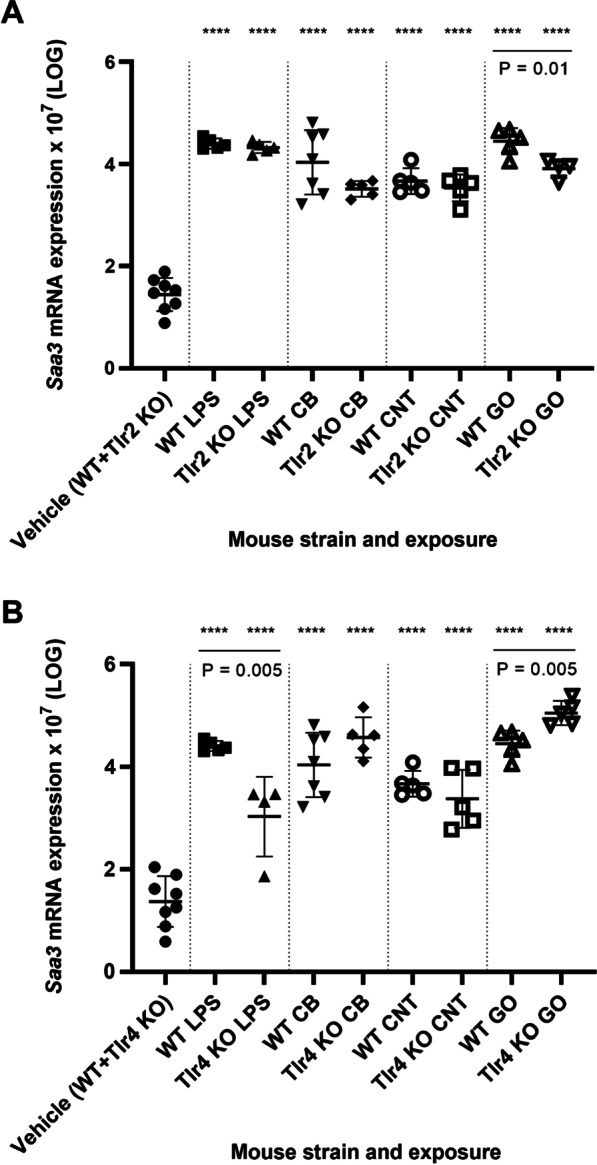
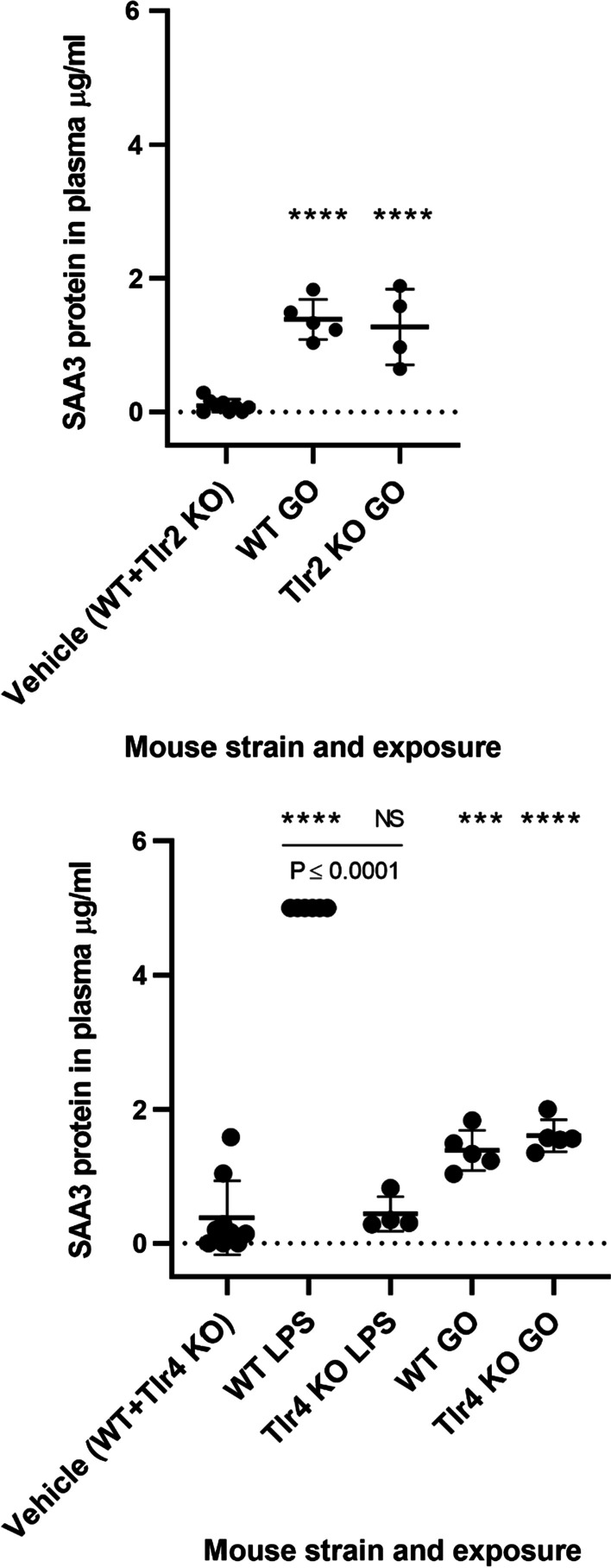
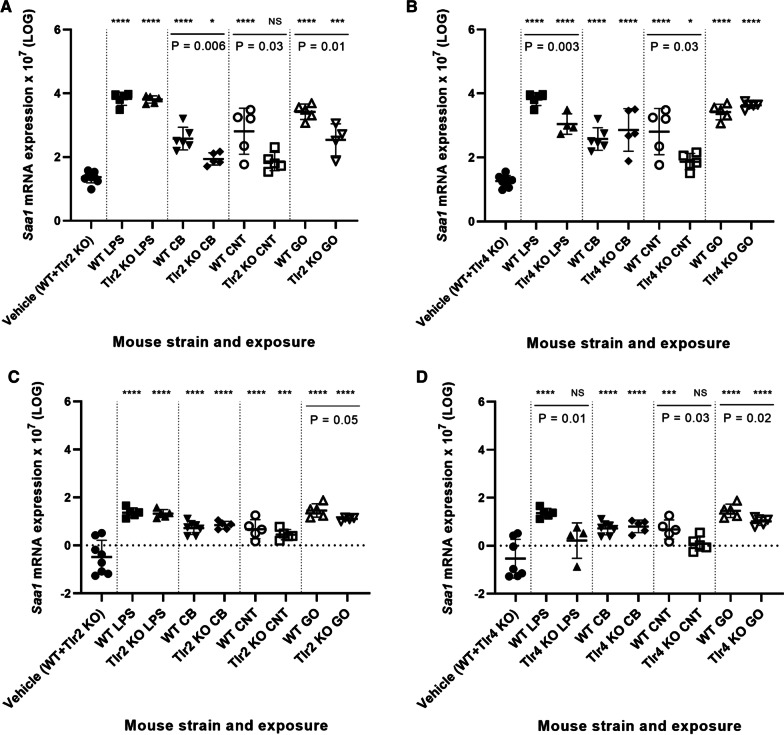
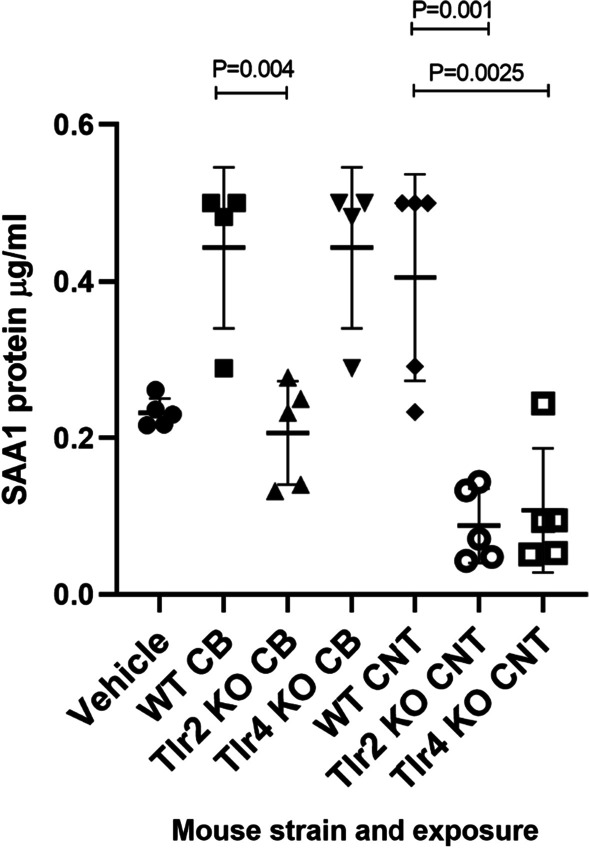
Pulmonary exposure to high doses of engineered carbonaceous nanomaterials (NMs) is known to trigger inflammation in the lungs paralleled by an acute phase response. Toll-like receptors (TLRs), particularly TLR2 and TLR4, have recently been discussed as potential NM-sensors, initiating inflammation. Using Tlr2 and Tlr4 knock out (KO) mice, we addressed this hypothesis and compared the pattern of inflammation in lung and acute phase response in lung and liver 24 h after intratracheal instillation of three differently shaped carbonaceous NMs, spherical carbon black (CB), multi-walled carbon nanotubes (CNT), graphene oxide (GO) plates and bacterial lipopolysaccharide (LPS) as positive control.
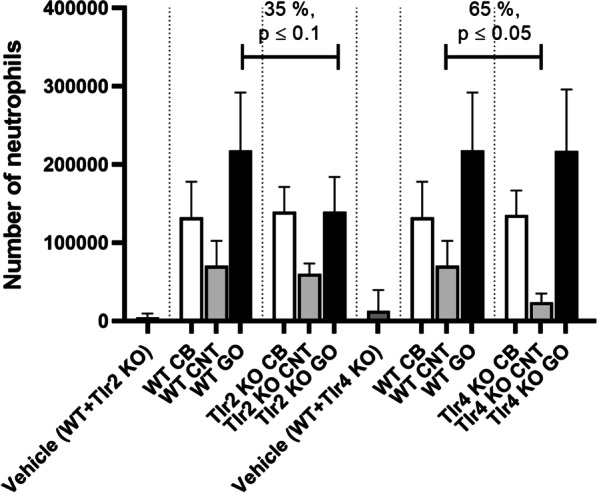
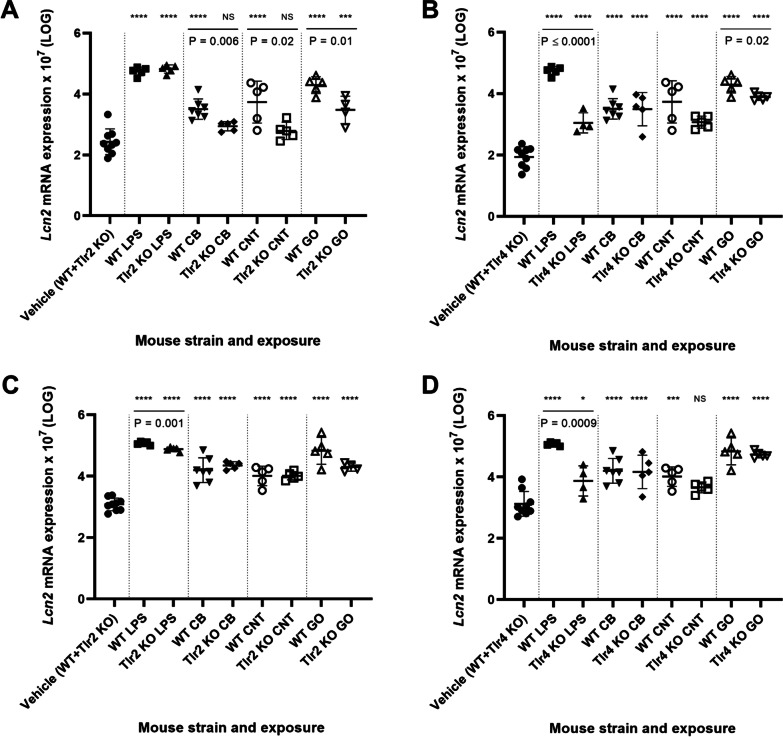
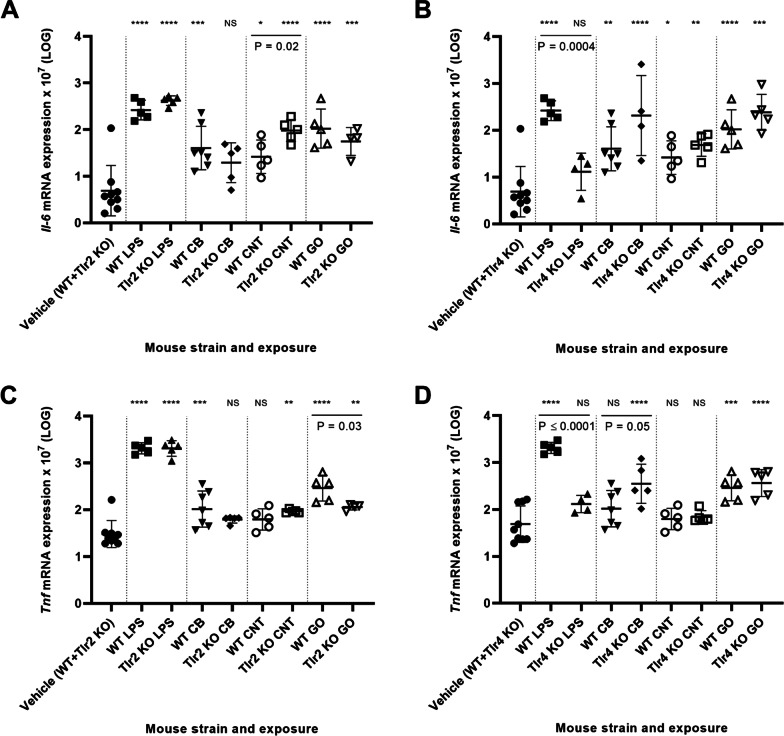
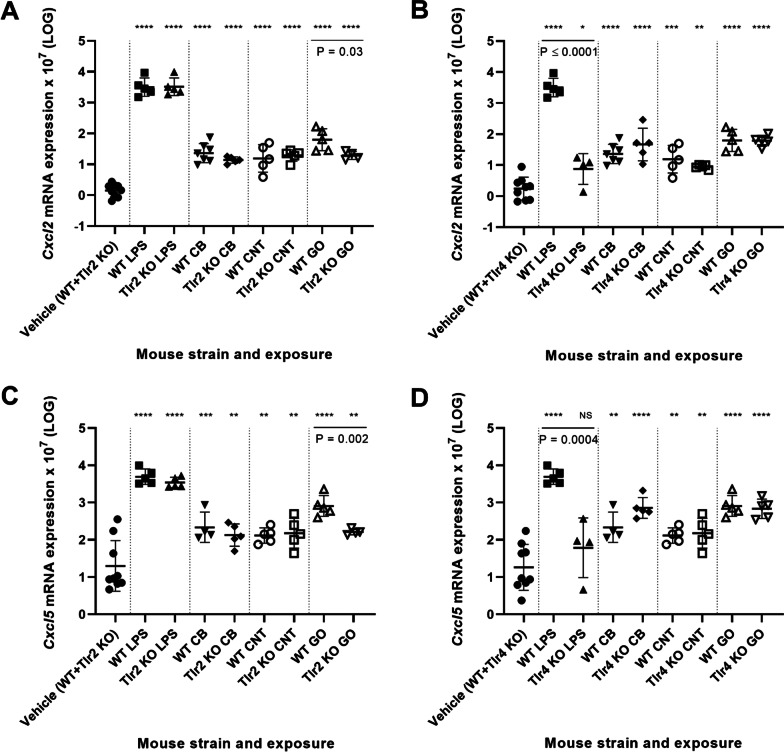
The LPS control confirmed a distinct TLR4-dependency as well as a pronounced contribution of TLR2 by reducing the levels of pulmonary inflammation to 30 and 60% of levels in wild type (WT) mice. At the doses chosen, all NM caused comparable neutrophil influxes into the lungs of WT mice, and reduced levels were only detected for GO-exposed Tlr2 KO mice (35%) and for CNT-exposed Tlr4 KO mice (65%). LPS-induced gene expression was strongly TLR4-dependent. CB-induced gene expression was unaffected by TLR status. Both GO and MWCNT-induced Saa1 expression was TLR4-dependent. GO-induced expression of Cxcl2, Cxcl5, Saa1 and Saa3 were TLR2-dependent. NM-mediated hepatic acute phase response in terms of liver gene expression of Saa1 and Lcn2 was shown to depend on TLR2 for all three NMs. TLR4, in contrast, was only relevant for the acute phase response caused by CNTs, and as expected by LPS.
TLR2 and TLR4 signaling was not involved in the acute inflammatory response caused by CB exposure, but contributed considerably to that of GO and CNTs, respectively. The strong involvement of TLR2 in the hepatic acute phase response caused by pulmonary exposure to all three NMs deserves further investigations.
已知肺部暴露于高剂量工程碳质纳米材料(NM)会引发肺部炎症,并伴有急性期反应。Toll 样受体(TLR),特别是 TLR2 和 TLR4,最近被认为是潜在的 NM 传感器,可引发炎症。使用 Tlr2 和 Tlr4 敲除(KO)小鼠,我们验证了这一假说,并比较了三种不同形状的碳质 NM(球形炭黑(CB)、多壁碳纳米管(CNT)、氧化石墨烯(GO)板和细菌脂多糖(LPS)作为阳性对照)在气管内滴注 24 小时后,肺部炎症的模式和肺部及肝脏的急性期反应。
LPS 对照证实了 TLR4 的明显依赖性,以及 TLR2 的显著贡献,将肺部炎症水平降低至 WT 小鼠的 30%和 60%。在所选择的剂量下,所有 NM 均导致 WT 小鼠肺部的中性粒细胞流入量相当,仅在 GO 暴露的 Tlr2 KO 小鼠(35%)和 CNT 暴露的 Tlr4 KO 小鼠(65%)中检测到降低水平。LPS 诱导的基因表达强烈依赖于 TLR4。CB 诱导的基因表达不受 TLR 状态的影响。GO 和 MWCNT 诱导的 Saa1 表达均依赖于 TLR4。GO 诱导的 Cxcl2、Cxcl5、Saa1 和 Saa3 表达依赖于 TLR2。NM 介导的肝脏急性期反应在 Saa1 和 Lcn2 的肝脏基因表达方面,被证明依赖于所有三种 NM 的 TLR2。相反,TLR4 仅与 CNT 引起的急性期反应有关,这与 LPS 的预期一致。
TLR2 和 TLR4 信号通路不参与 CB 暴露引起的急性炎症反应,但分别对 GO 和 CNT 引起的炎症反应有很大贡献。TLR2 在所有三种 NM 引起的肺部暴露引起的肝脏急性期反应中的强烈参与值得进一步研究。