Keerthiga Rajendiran, Pei De-Sheng, Fu Ailing
College of Pharmaceutical Sciences, Southwest University, Chongqing, China.
School of Public Health and Management, Chongqing Medical University, Chongqing, 400016, China.
Cell Biosci. 2021 Oct 30;11(1):186. doi: 10.1186/s13578-021-00696-0.
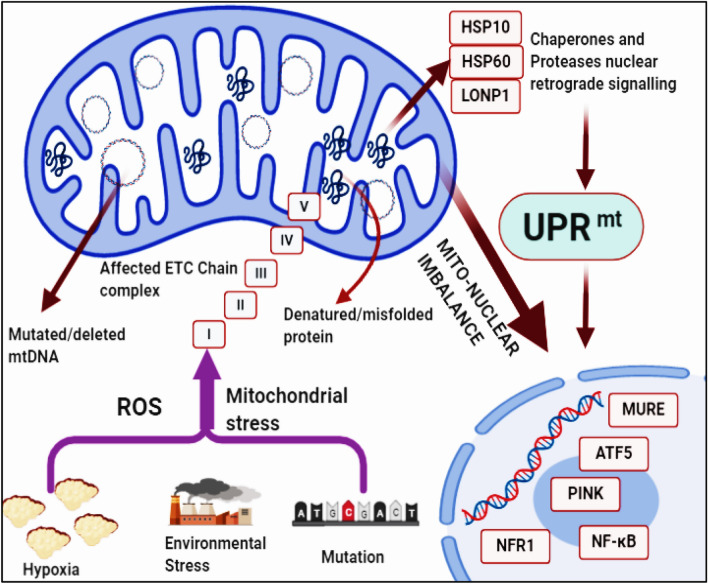
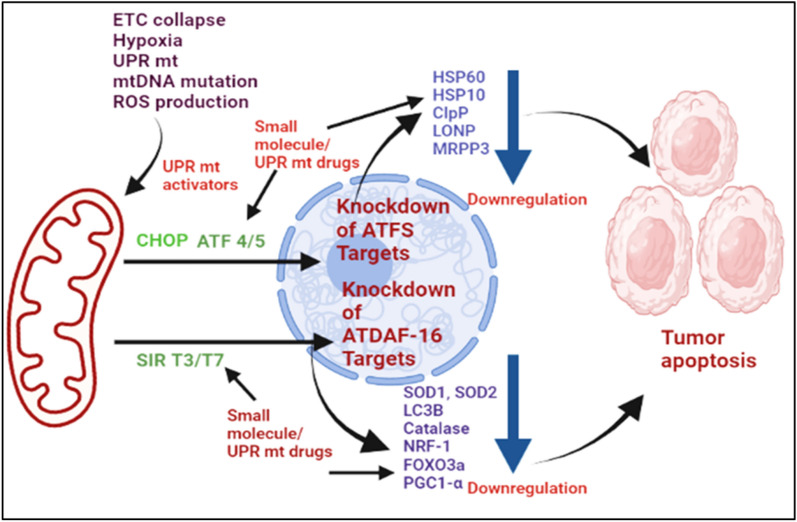
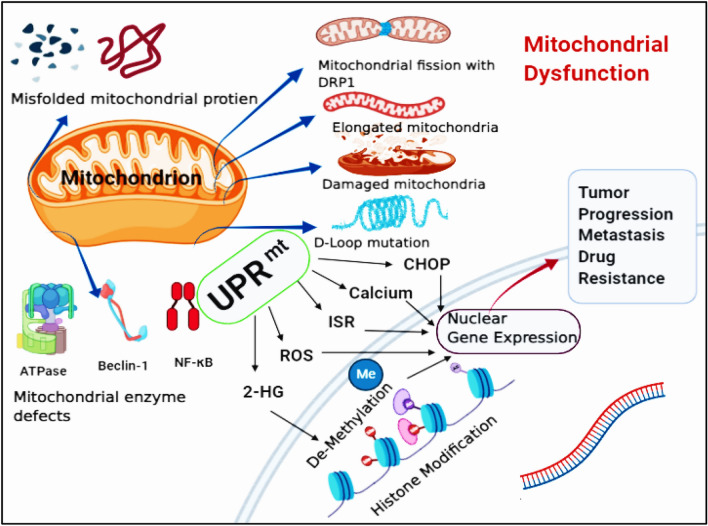
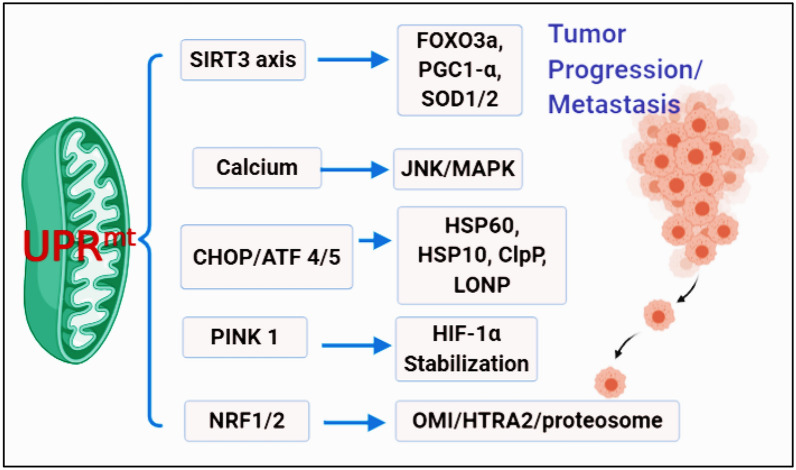
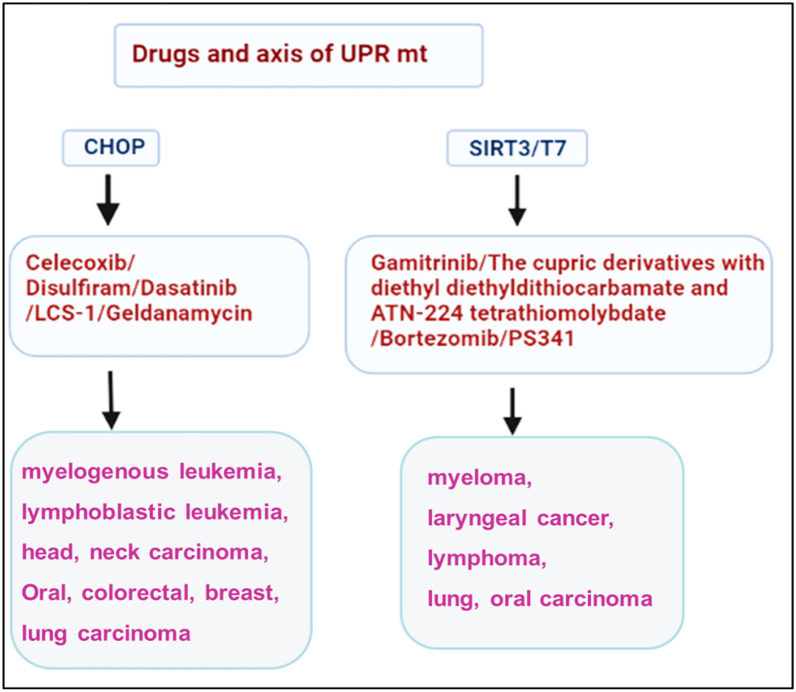
In modern research, mitochondria are considered a more crucial energy plant in cells. Mitochondrial dysfunction, including mitochondrial DNA (mtDNA) mutation and denatured protein accumulation, is a common feature of tumors. The dysfunctional mitochondria reprogram molecular metabolism and allow tumor cells to proliferate in the hostile microenvironment. One of the crucial signaling pathways of the mitochondrial dysfunction activation in the tumor cells is the retrograde signaling of mitochondria-nucleus interaction, mitochondrial unfolded protein response (UPR), which is initiated by accumulation of denatured protein and excess ROS production. In the process of UPR, various components are activitated to enhance the mitochondria-nucleus retrograde signaling to promote carcinoma progression, including hypoxia-inducible factor (HIF), activating transcription factor ATF-4, ATF-5, CHOP, AKT, AMPK. The retrograde signaling molecules of overexpression ATF-5, SIRT3, CREB, SOD1, SOD2, early growth response protein 1 (EGR1), ATF2, CCAAT/enhancer-binding protein-d, and CHOP also involved in the process. Targeted blockage of the UPR pathway could obviously inhibit tumor proliferation and metastasis. This review indicates the UPR pathways and its crucial role in targeted therapy of metastasis tumors.
在现代研究中,线粒体被认为是细胞中更为关键的能量工厂。线粒体功能障碍,包括线粒体DNA(mtDNA)突变和变性蛋白积累,是肿瘤的一个常见特征。功能失调的线粒体可重新编程分子代谢,并使肿瘤细胞在恶劣的微环境中增殖。肿瘤细胞中线粒体功能障碍激活的关键信号通路之一是线粒体-细胞核相互作用的逆行信号,即线粒体未折叠蛋白反应(UPR),它由变性蛋白积累和过量活性氧生成引发。在UPR过程中,各种成分被激活以增强线粒体-细胞核逆行信号,从而促进癌症进展,包括缺氧诱导因子(HIF)、激活转录因子ATF-4、ATF-5、CHOP、AKT、AMPK。过表达的ATF-5、SIRT3、CREB、SOD1、SOD2、早期生长反应蛋白1(EGR1)、ATF2、CCAAT/增强子结合蛋白δ和CHOP的逆行信号分子也参与了这一过程。靶向阻断UPR通路可明显抑制肿瘤增殖和转移。本综述阐述了UPR通路及其在转移性肿瘤靶向治疗中的关键作用。