Division of Rheumatology, Department of Medicine, College of Medicine, State University of New York, Syracuse, NY, USA.
Division of Rheumatology, Department of Medicine, College of Medicine, State University of New York, Syracuse, NY, USA; Department of Microbiology and Immunology, College of Medicine, State University of New York, Syracuse, NY, USA; Department of Biochemistry and Molecular Biology, College of Medicine, State University of New York, Syracuse, NY, USA.
Autoimmun Rev. 2021 Dec;20(12):102984. doi: 10.1016/j.autrev.2021.102984. Epub 2021 Oct 27.
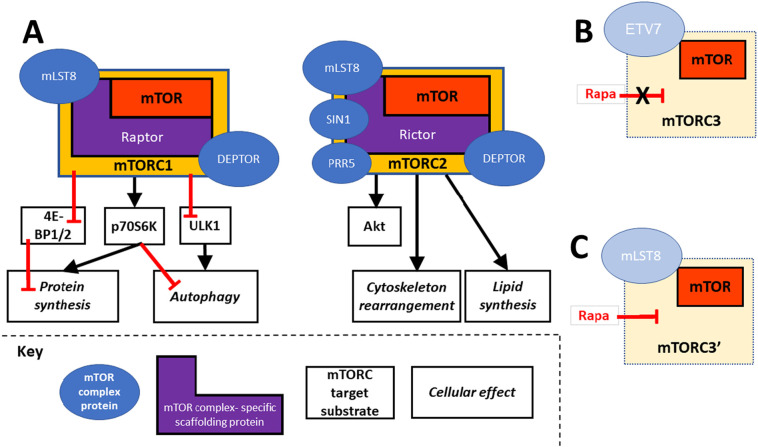
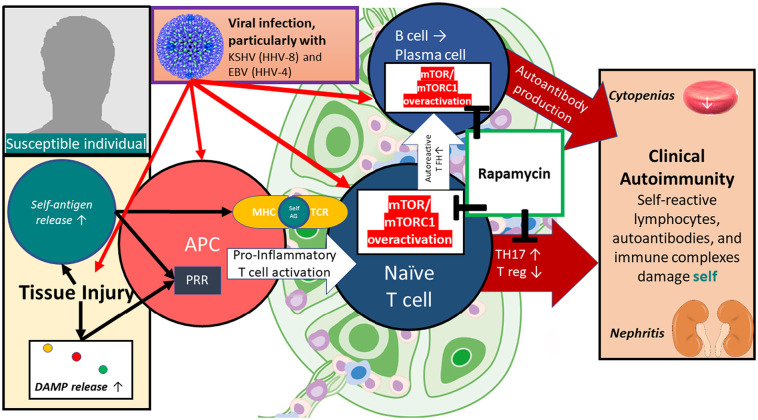
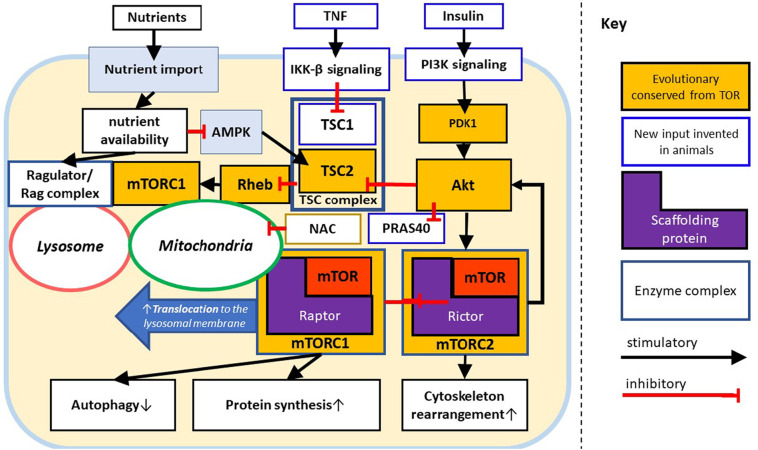
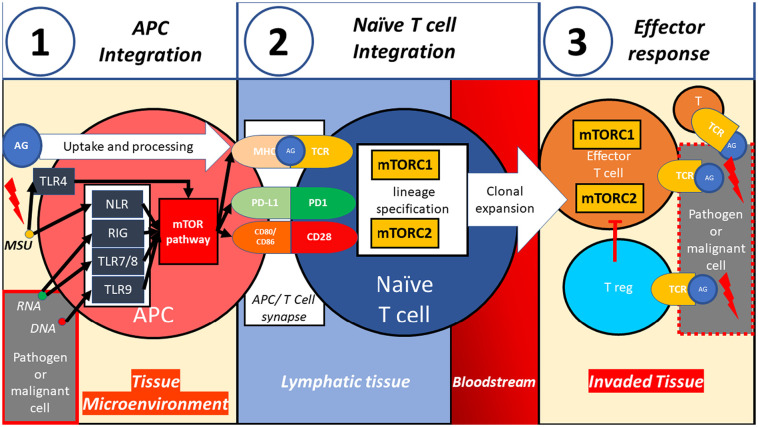
The mechanistic target of rapamycin (mTOR) pathway integrates metabolic cues into cell fate decisions. A particularly fateful event during the adaptive immune response is the engagement of a T cell receptor by its cognate antigen presented by an antigen-presenting cell (APC). Here, the induction of adequate T cell activation and lineage specification is critical to mount protective immunity; at the same time, inadequate activation, which could lead to autoimmunity, must be avoided. mTOR forms highly conserved protein complexes 1 and 2 that shape lineage specification by integrating signals originating from TCR engagement, co-stimulatory or co-inhibitory receptors and cytokines and availability of nutrients. If one considers autoimmunity as the result of aberrant lineage specification in response to such signals, the importance of this pathway becomes evident; this provides the conceptual basis for mTOR inhibition in the treatment of systemic autoimmunity, such as systemic lupus erythematosus (SLE). Clinical trials in SLE patients have provided preliminary evidence that mTOR blockade by sirolimus (rapamycin) can reverse pro-inflammatory lineage skewing, including the expansion of Th17 and double-negative T cells and plasma cells and the contraction of regulatory T cells. Moreover, sirolimus has shown promising efficacy in the treatment of refractory idiopathic multicentric Castleman disease, newly characterized by systemic autoimmunity due to mTOR overactivation. Alternatively, mTOR blockade enhances responsiveness to vaccination and reduces infections by influenza virus in healthy elderly subjects. Such seemingly contradictory findings highlight the importance to further evaluate the clinical effects of mTOR manipulation, including its potential role in treatment of COVID-19 infection. mTOR blockade may extend healthy lifespan by abrogating inflammation induced by viral infections and autoimmunity. This review provides a mechanistic assessment of mTOR pathway activation in lineage specification within the adaptive and innate immune systems and its role in health and autoimmunity. We then discuss some of the recent experimental and clinical discoveries implicating mTOR in viral pathogensis and aging.
雷帕霉素的机械靶点 (mTOR) 途径将代谢线索整合到细胞命运决定中。适应性免疫反应中一个特别致命的事件是 T 细胞受体与其同源抗原结合,该抗原由抗原呈递细胞 (APC) 呈递。在这里,充分激活 T 细胞和谱系特异性对于产生保护性免疫至关重要;同时,必须避免过度激活,否则可能导致自身免疫。mTOR 形成高度保守的蛋白复合物 1 和 2,通过整合 TCR 结合、共刺激或共抑制受体和细胞因子以及营养物质可用性产生的信号来塑造谱系特异性。如果将自身免疫视为对这些信号的异常谱系特异性的结果,那么该途径的重要性就显而易见了;这为 mTOR 抑制在系统性自身免疫(如系统性红斑狼疮 (SLE))治疗中的应用提供了概念基础。SLE 患者的临床试验初步证明,雷帕霉素(西罗莫司)通过 mTOR 阻断可以逆转促炎谱系偏斜,包括 Th17 和双阴性 T 细胞和浆细胞的扩张以及调节性 T 细胞的收缩。此外,西罗莫司在治疗新表现为由于 mTOR 过度激活引起的系统性自身免疫的特发性多中心 Castleman 病方面显示出有希望的疗效。或者,mTOR 阻断通过增强对疫苗的反应性并减少健康老年人中流感病毒感染来提高其反应性。这些看似矛盾的发现强调了进一步评估 mTOR 操作的临床效果的重要性,包括其在治疗 COVID-19 感染中的潜在作用。mTOR 阻断可能通过消除病毒感染和自身免疫引起的炎症来延长健康寿命。本文提供了对适应性和固有免疫系统中 mTOR 途径激活在谱系特异性中的作用的机制评估,及其在健康和自身免疫中的作用。然后,我们讨论了一些最近的实验和临床发现,这些发现表明 mTOR 参与病毒发病机制和衰老。