Yang Yangyang, Zhao Binggong, Lv Linlin, Yang Yuxi, Li Shujing, Wu Huijian
School of Bioengineering & Key Laboratory of Protein Modification and Disease, Liaoning Province, Dalian University of Technology, Dalian, Liaoning Province, China.
Cell Death Discov. 2021 Oct 30;7(1):328. doi: 10.1038/s41420-021-00722-7.
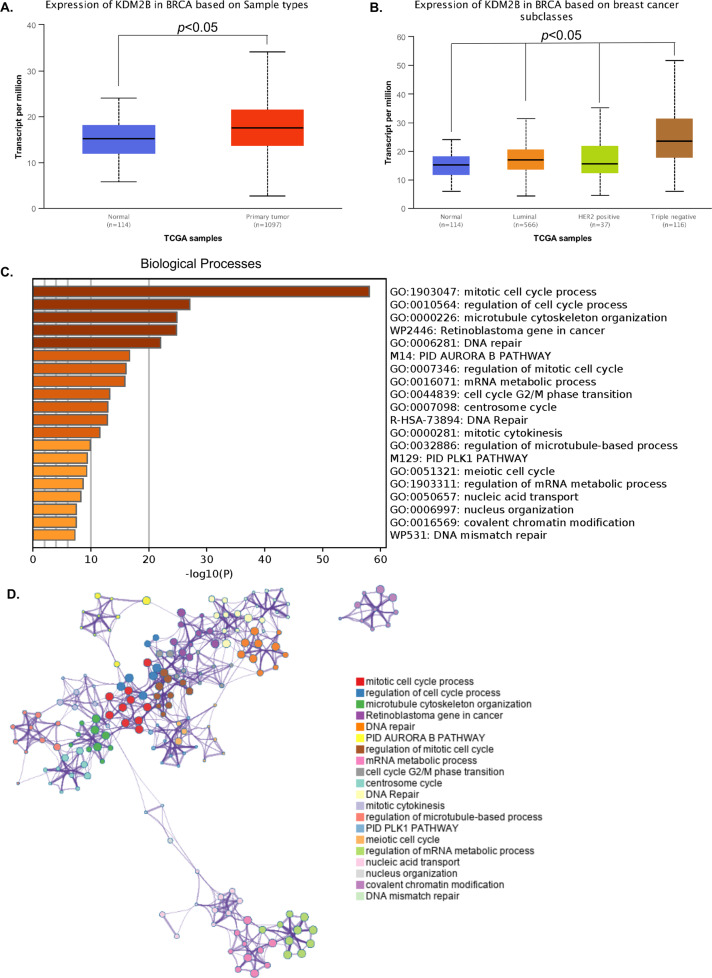
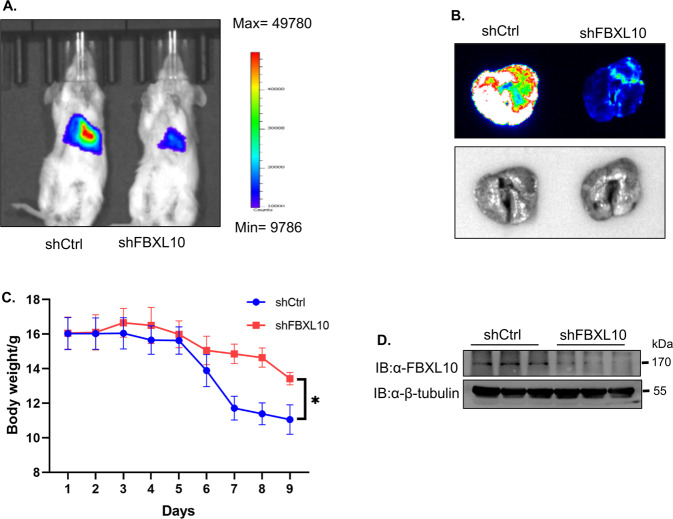
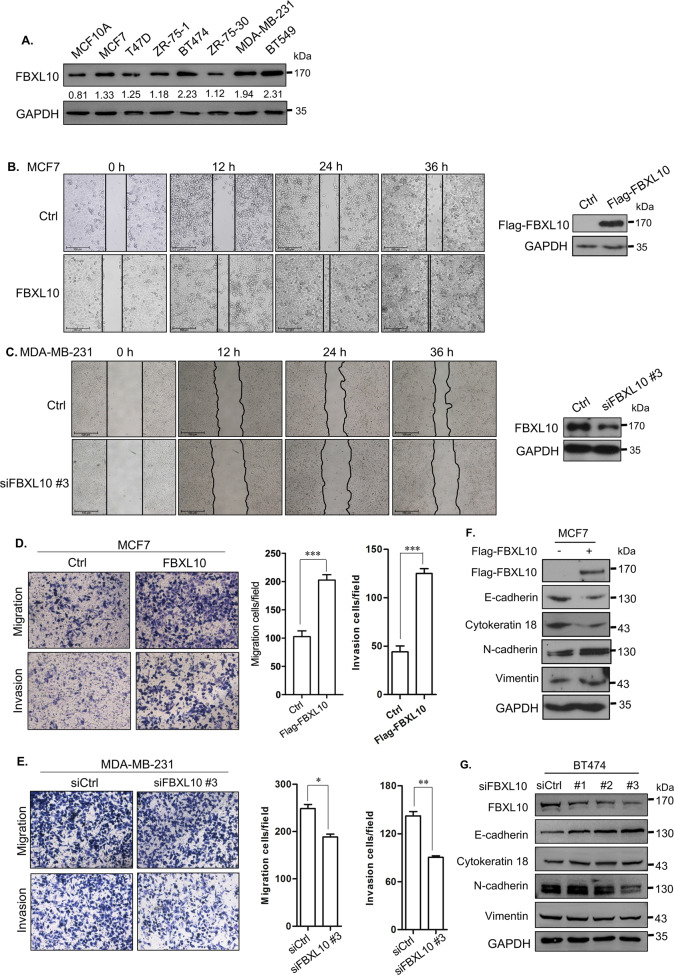
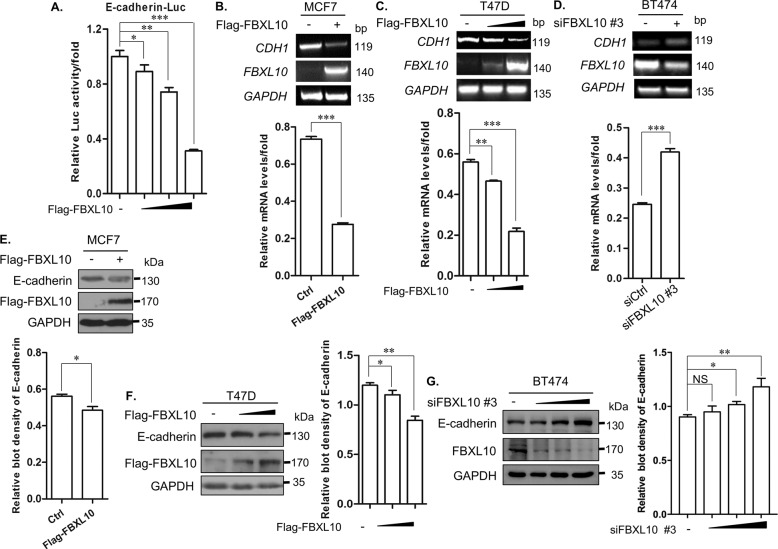
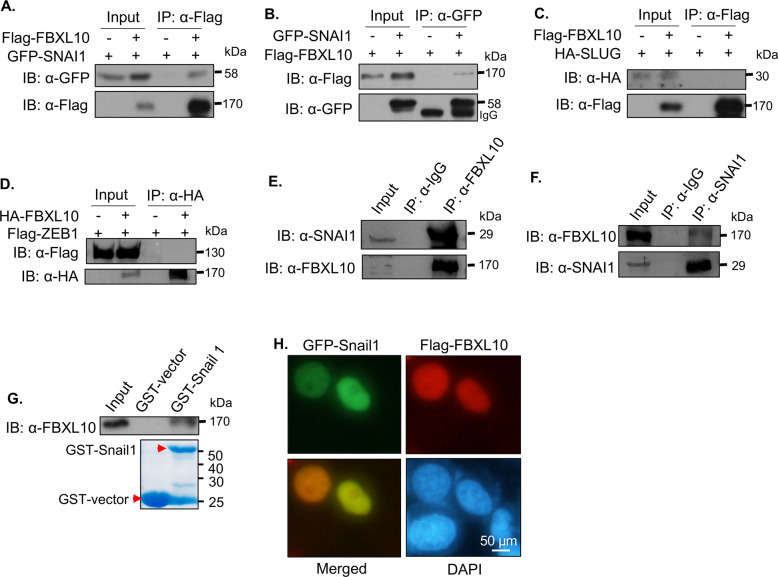
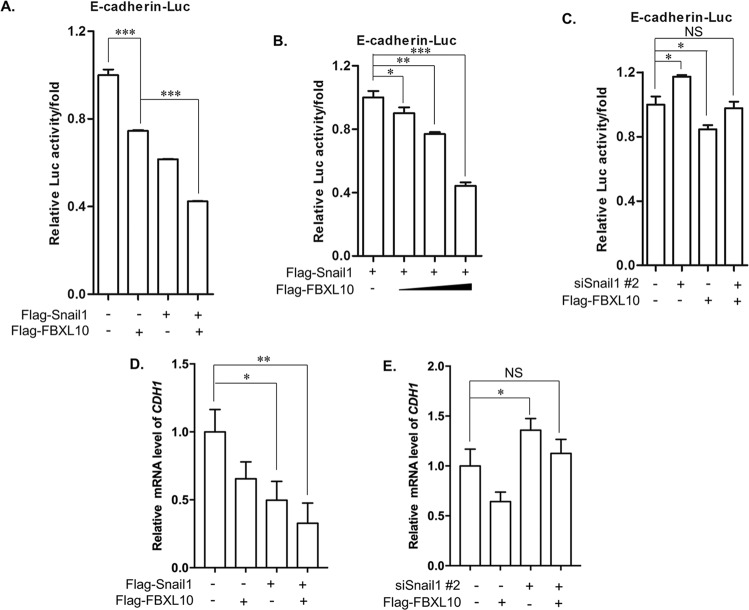
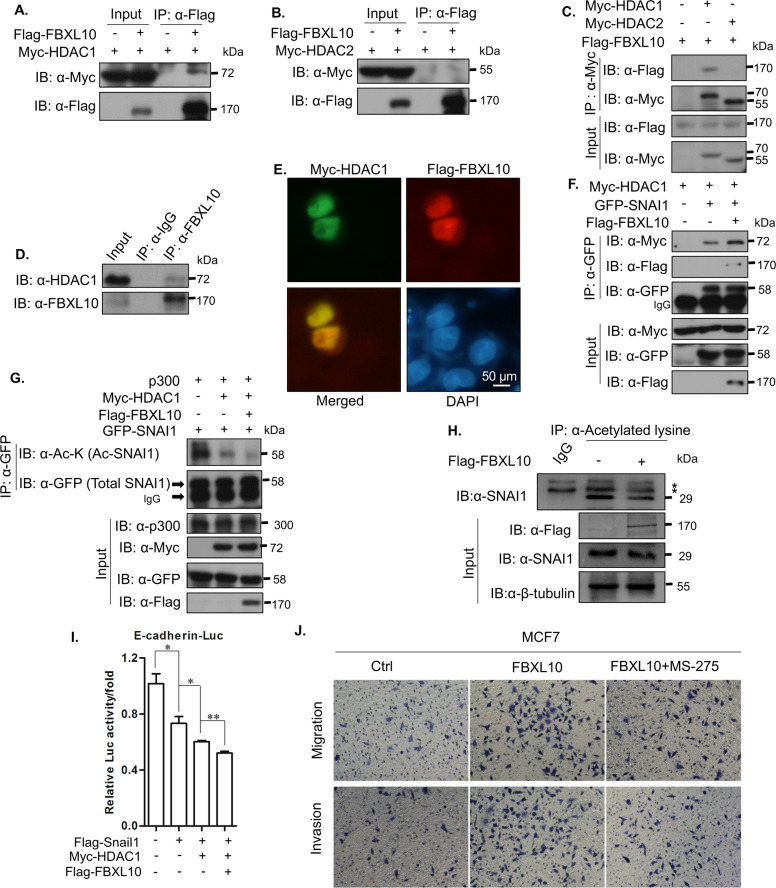
F-box and leucine-rich repeat protein 10 (FBXL10) has been reported to play a regulatory role in the initiation and development of breast cancer. Bioinformatics analyses revealed that FBXL10 may involve in the process of cytoskeleton organization. This research aimed to investigate the function of FBXL10 in epithelial-mesenchymal transition (EMT) and metastasis of breast cancer, and tried to reveal the molecular mechanism involved in this issue. Functional experiments in vitro revealed that FBXL10 promoted the migration and invasion of breast cancer cells through inhibiting E-cadherin expression and inducing EMT. Mechanical studies revealed that FBXL10 could specifically interact with SNAI1, but not Slug or ZEB1. And it promoted the transcriptional repression activity of SNAI1 on CDH1 in breast cancer cells. Furthermore, FBXL10 had a positive role for the deacetylation of SNAI1 by facilitating the interaction between SNAI1 and HDAC1, a dominating deacetylase of SNAI1. And the deacetylated SNAI1 showed a more suppressive ability to inhibit the transcription of E-cadherin. Moreover, mouse models were also conducted to confirm the effect of FBXL10 on the lung metastasis of breast cancer in vivo. Totally, our data revealed that FBXL10 served as a pro-metastatic factor in breast cancer via repressing the expression of E-cadherin and inducing EMT. It may provide a novel regulatory axis in the EMT of breast cancer.
据报道,F-box和富含亮氨酸重复序列蛋白10(FBXL10)在乳腺癌的发生和发展中起调节作用。生物信息学分析表明,FBXL10可能参与细胞骨架组织过程。本研究旨在探讨FBXL10在乳腺癌上皮-间质转化(EMT)和转移中的作用,并试图揭示其中涉及的分子机制。体外功能实验表明,FBXL10通过抑制E-钙黏蛋白表达和诱导EMT促进乳腺癌细胞的迁移和侵袭。机制研究表明,FBXL10可特异性地与SNAI1相互作用,但不与Slug或ZEB1相互作用。并且它促进了SNAI1对乳腺癌细胞中CDH1的转录抑制活性。此外,FBXL10通过促进SNAI1与SNAI1的主要去乙酰化酶HDAC1之间的相互作用,对SNAI1的去乙酰化具有积极作用。去乙酰化的SNAI1对抑制E-钙黏蛋白转录表现出更强的抑制能力。此外,还建立了小鼠模型以在体内证实FBXL10对乳腺癌肺转移的影响。总的来说,我们的数据表明,FBXL10通过抑制E-钙黏蛋白表达和诱导EMT,在乳腺癌中作为促转移因子发挥作用。它可能为乳腺癌的EMT提供一个新的调控轴。