Institute of Innovation and Applied Research in Chinese Medicine, Hunan University of Chinese Medicine, Changsha 410208, China.
Department of Pharmacy, The Third Hospital of Changsha, Changsha 410015, China.
Genet Res (Camb). 2022 May 31;2022:2249909. doi: 10.1155/2022/2249909. eCollection 2022.
Mitochondria play an important role in breast cancer (BRCA). We aimed to build a prognostic model based on mitochondria-related genes.
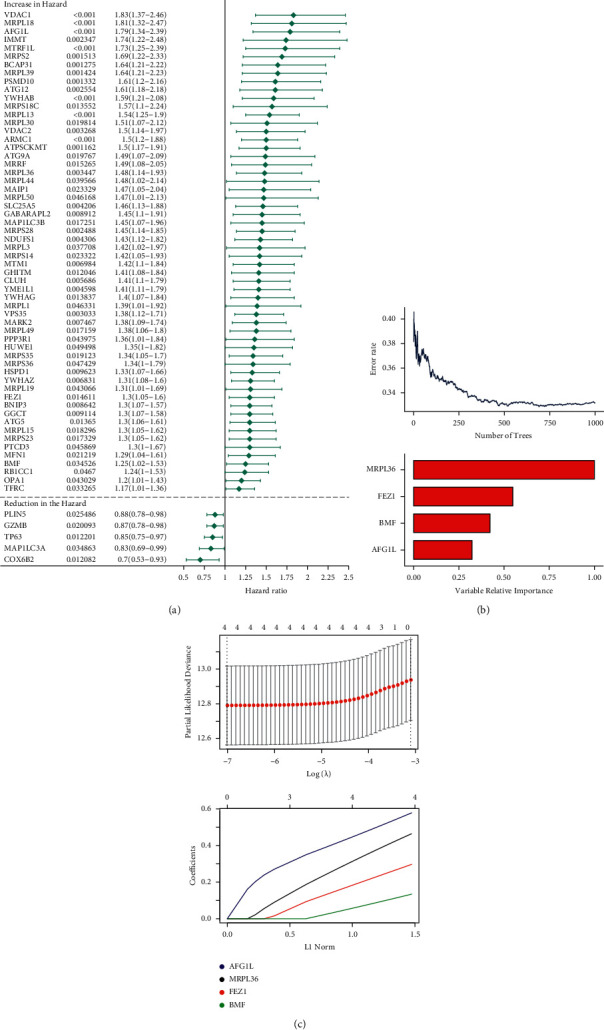
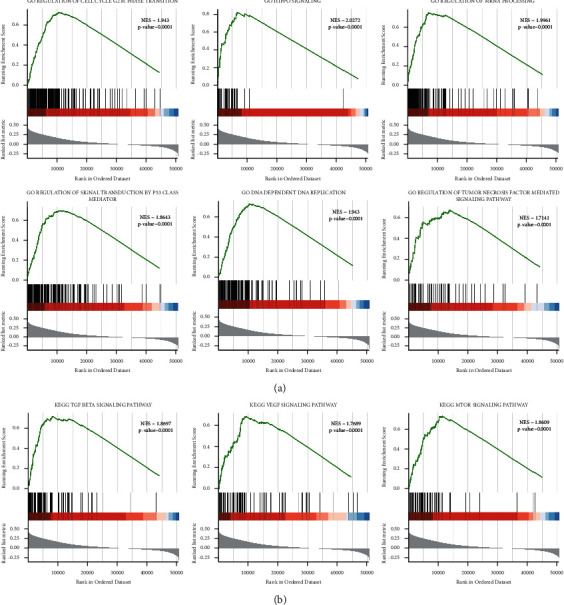
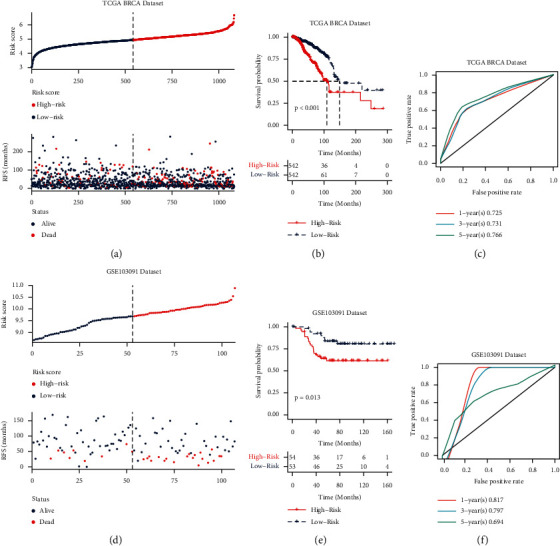
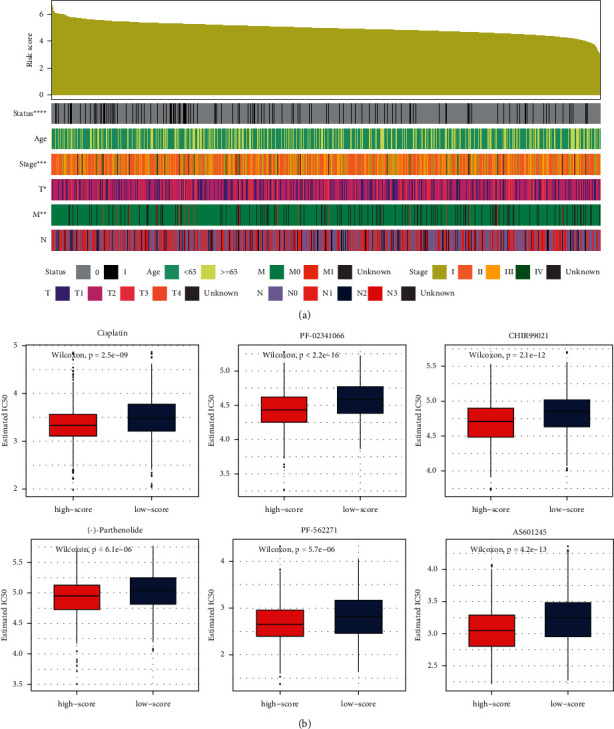
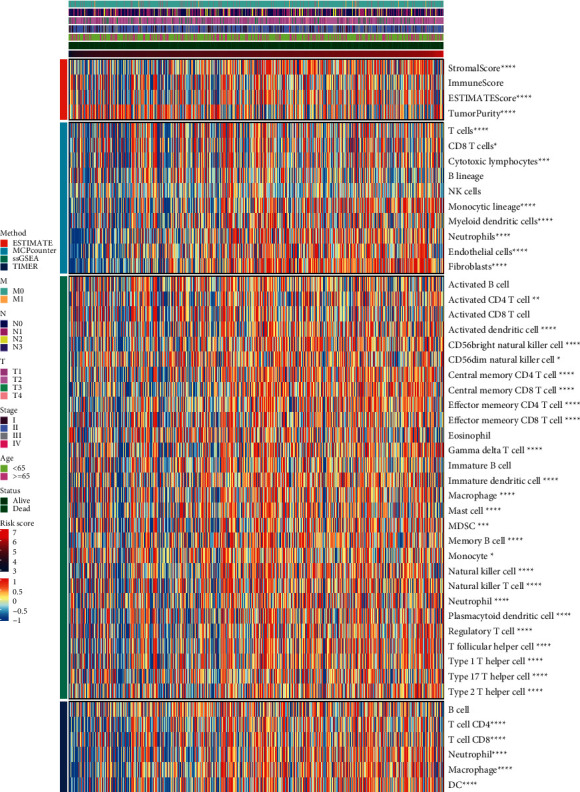
Univariate Cox regression analysis, random forest, and the LASSO method were performed in sequence on pretreated TCGA BRCA datasets to screen out genes from a Gene Set Enrichment Analysis, Gene Ontology: biological process gene set to build a prognosis risk score model. Survival analyses and ROC curves were performed to verify the model by using the GSE103091 dataset. The BRCA datasets were equally divided into high- and low-risk score groups. Comparisons between clinical features and immune infiltration related to different risk scores and gene mutation analysis and drug sensitivity prediction were performed for different groups.
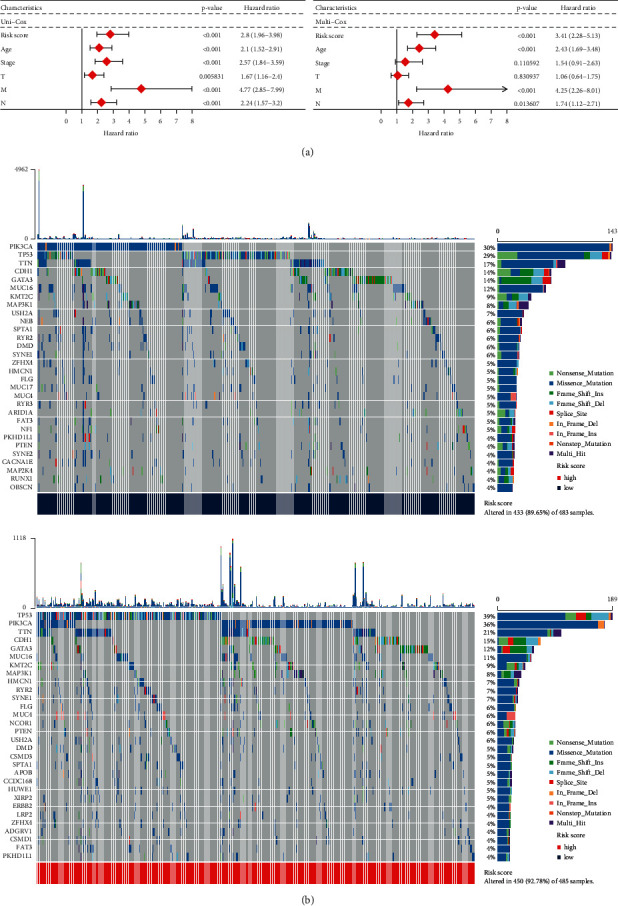
Four genes, MRPL36, FEZ1, BMF, and AFG1L, were screened to construct our risk score model in which the higher the risk score, the poorer the prognosis. Univariate and multivariate analyses showed that the risk score was significantly associated with age, M stage, and N stage. The gene mutation probability in the high-risk score group was significantly higher than that in the low-risk score group. Patients with higher risk scores were more likely to die. Drug sensitivity prediction in different groups indicated that PF-562271 and AS601245 might be new inhibitors of BRCA.
We developed a new workable risk score model based on mitochondria-related genes for BRCA prognosis and identified new targets and drugs for BRCA research.
线粒体在乳腺癌(BRCA)中发挥着重要作用。我们旨在建立一个基于线粒体相关基因的预后模型。
对预处理的 TCGA BRCA 数据集进行单变量 Cox 回归分析、随机森林和 LASSO 方法的序列分析,从基因集富集分析筛选出基因,对基因本体论:生物过程基因集进行基因筛选,构建预后风险评分模型。使用 GSE103091 数据集进行生存分析和 ROC 曲线验证模型。将 BRCA 数据集等分为高风险评分组和低风险评分组。比较不同风险评分组之间的临床特征和免疫浸润差异,并对不同组进行基因突变分析和药物敏感性预测。
筛选出 4 个基因(MRPL36、FEZ1、BMF 和 AFG1L)构建我们的风险评分模型,风险评分越高,预后越差。单因素和多因素分析表明,风险评分与年龄、M 分期和 N 分期显著相关。高风险评分组的基因突变概率明显高于低风险评分组。风险评分较高的患者更有可能死亡。不同组的药物敏感性预测表明,PF-562271 和 AS601245 可能是 BRCA 的新抑制剂。
我们建立了一个基于线粒体相关基因的新的可行的 BRCA 预后风险评分模型,并确定了 BRCA 研究的新靶点和药物。