Neuromuscular Diseases Unit, Department of Neurology, Hospital de la Santa Creu i Sant Pau, Universitat Autònoma de Barcelona, Barcelona, Spain.
Immunology Department, Hospital de la Santa Creu i Sant Pau, Universitat Autònoma de Barcelona, Barcelona, Spain.
J Neuroinflammation. 2021 Nov 1;18(1):251. doi: 10.1186/s12974-021-02301-0.
Guillain-Barré syndrome (GBS) is an acute inflammatory neuropathy with a heterogeneous presentation. Although some evidences support the role of autoantibodies in its pathogenesis, the target antigens remain unknown in a substantial proportion of GBS patients. The objective of this study is to screen for autoantibodies targeting peripheral nerve components in Guillain-Barré syndrome.
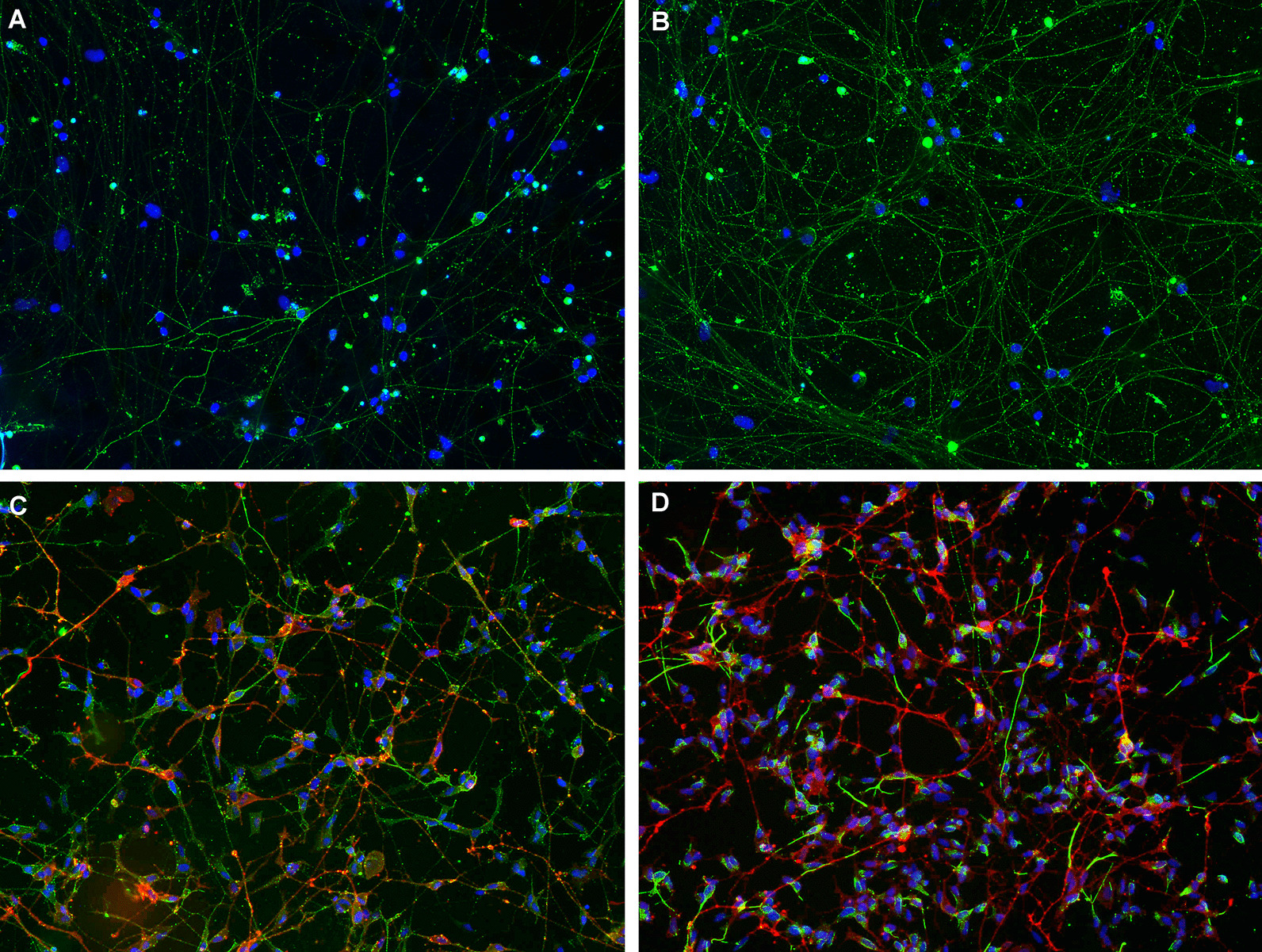
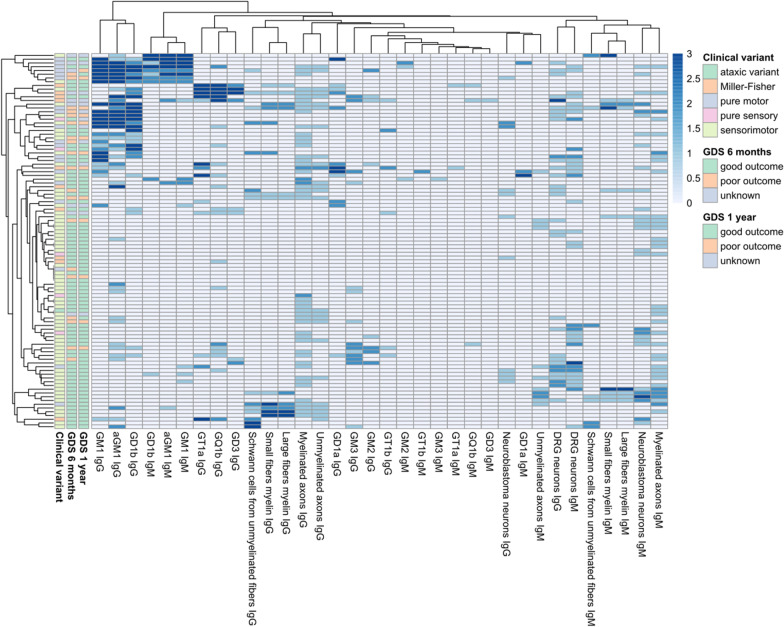
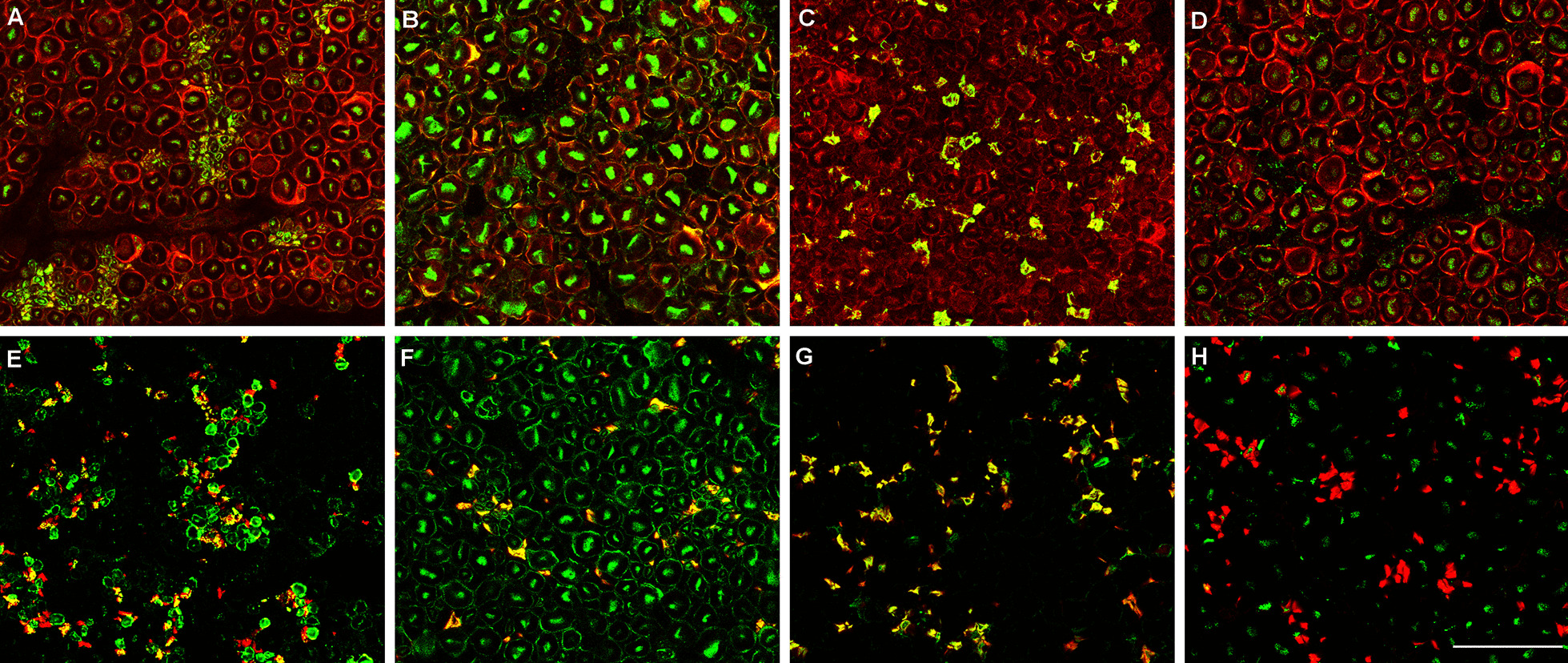
Autoantibody screening was performed in serum samples from all GBS patients included in the International GBS Outcome study by 11 different Spanish centres. The screening included testing for anti-ganglioside antibodies, anti-nodo/paranodal antibodies, immunocytochemistry on neuroblastoma-derived human motor neurons and murine dorsal root ganglia (DRG) neurons, and immunohistochemistry on monkey peripheral nerve sections. We analysed the staining patterns of patients and controls. The prognostic value of anti-ganglioside antibodies was also analysed.
None of the GBS patients (n = 100) reacted against the nodo/paranodal proteins tested, and 61 (61%) were positive for, at least, one anti-ganglioside antibody. GBS sera reacted strongly against DRG neurons more frequently than controls both with IgG (6% vs 0%; p = 0.03) and IgM (11% vs 2.2%; p = 0.02) immunodetection. No differences were observed in the proportion of patients reacting against neuroblastoma-derived human motor neurons. Reactivity against monkey nerve tissue was frequently detected both in patients and controls, but specific patterns were only detected in GBS patients: IgG from 13 (13%) patients reacted strongly against Schwann cells. Finally, we confirmed that IgG anti-GM1 antibodies are associated with poorer outcomes independently of other known prognostic factors.
Our study confirms that (1) GBS patients display a heterogeneous repertoire of autoantibodies targeting nerve cells and structures; (2) gangliosides are the most frequent antigens in GBS patients and have a prognostic value; (3) further antigen-discovery experiments may elucidate other potential antigens in GBS.
格林-巴利综合征(GBS)是一种具有异质性表现的急性炎症性神经病。尽管有一些证据支持自身抗体在其发病机制中的作用,但在相当一部分 GBS 患者中,靶抗原仍然未知。本研究的目的是筛选针对格林-巴利综合征外周神经成分的自身抗体。
通过 11 个不同的西班牙中心,对纳入国际 GBS 结局研究的所有 GBS 患者的血清样本进行自身抗体筛查。筛查包括检测神经节苷脂抗体、神经节/神经末梢抗体、神经母细胞瘤衍生的人运动神经元和鼠背根神经节(DRG)神经元的免疫细胞化学以及猴外周神经切片的免疫组织化学。我们分析了患者和对照组的染色模式。还分析了抗神经节苷脂抗体的预后价值。
没有一个 GBS 患者(n=100)对测试的神经节/神经末梢蛋白产生反应,61(61%)至少对一种神经节苷脂抗体呈阳性。与对照组相比,GBS 血清与 IgG(6%对 0%;p=0.03)和 IgM(11%对 2.2%;p=0.02)免疫检测更频繁地强烈反应 against DRG 神经元。在对神经母细胞瘤衍生的人运动神经元产生反应的患者比例方面没有观察到差异。患者和对照组均经常检测到针对猴神经组织的反应,但仅在 GBS 患者中检测到特定模式:来自 13(13%)名患者的 IgG 强烈针对施旺细胞反应。最后,我们证实 IgG 抗 GM1 抗体与其他已知预后因素独立相关,与较差的预后相关。
我们的研究证实:(1)GBS 患者表现出针对神经细胞和结构的自身抗体的异质性谱;(2)神经节苷脂是 GBS 患者最常见的抗原,具有预后价值;(3)进一步的抗原发现实验可能阐明 GBS 中的其他潜在抗原。