Sciacca Beatrice, Laffan Derek A, O'Higgins Norman James, Milosevic Tijana
DCU National Anti-Bullying Centre, Dublin City University, Ireland.
Comput Human Behav. 2022 Feb;127:107081. doi: 10.1016/j.chb.2021.107081. Epub 2021 Oct 23.
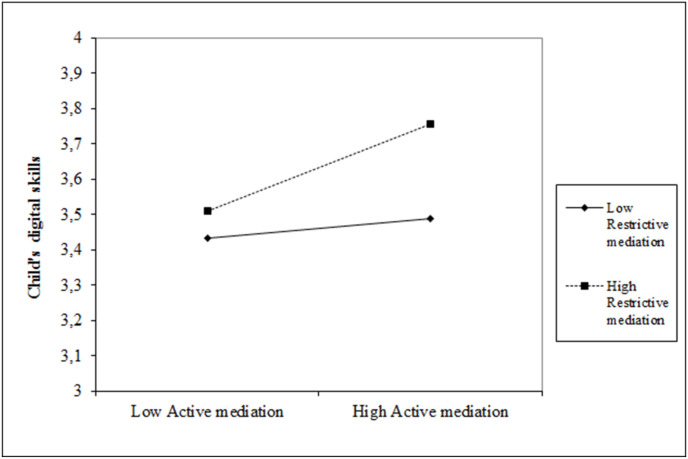
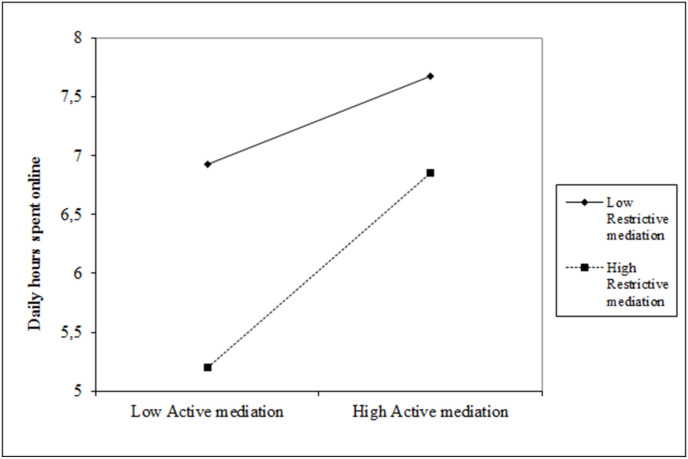
During the COVID-19 pandemic, an increasing reliance on digital technology to carry out social, entertainment, work and school activities increased, which may have affected the ways in which parents mediated their children's digital technology use. Given the prominent role that digital technology will have in the future, it is important to investigate parent and child characteristics which impacted parental mediation of children's digital technology use. Therefore, the present study aimed at analysing the frequency of parental mediation strategies (i.e. active and restrictive) during lockdown, their determinants, and how the two strategies affected children's digital skills and time spent online. Data were collected from 461 parent and 461 child participants. Results showed that almost half of parents (46%) practiced parental mediation with the same frequency, while the 42.6% applied it more often. Active mediation was predicted by parental worries about online risks, while restrictive mediation was predicted by time spent online by children, parental worries about online risks, parental negative attitudes towards digital technology and parents' digital skills. Children developed more digital skills when their parents applied higher levels of both active and restrictive mediation, and they spent the lowest amount of time online when their parents employed higher levels of restrictive and lower levels of active mediation. Practical implications for families and children's wellbeing are discussed.
在新冠疫情期间,人们越来越依赖数字技术来开展社交、娱乐、工作和学习活动,这可能影响了父母调节孩子使用数字技术的方式。鉴于数字技术在未来将发挥重要作用,研究影响父母对孩子数字技术使用进行调节的父母和孩子特征很重要。因此,本研究旨在分析封锁期间父母调节策略(即积极型和限制型)的频率、其决定因素,以及这两种策略如何影响孩子的数字技能和上网时间。数据收集自461名家长和461名儿童参与者。结果显示,近一半的家长(46%)以相同频率进行父母调节,而42.6%的家长更频繁地进行调节。父母对在线风险的担忧预测了积极调节,而孩子的上网时间、父母对在线风险的担忧、父母对数字技术的负面态度以及父母的数字技能预测了限制调节。当父母同时采用较高水平的积极调节和限制调节时,孩子会发展出更多数字技能;当父母采用较高水平的限制调节和较低水平的积极调节时,孩子上网时间最少。讨论了对家庭和儿童福祉的实际影响。