Zhang Hao, Xia Peng, Ma Weijie, Yuan Yufeng
Department of Hepatobiliary and Pancreatic Surgery, Zhongnan Hospital of Wuhan University, Wuhan, Hubei, China.
J Clin Transl Hepatol. 2021 Oct 28;9(5):635-646. doi: 10.14218/JCTH.2020.00103. Epub 2021 Apr 13.
The survival rate of patients with hepatocellular carcinoma is variable. The abnormal expression of RNA-binding proteins (RBPs) is closely related to the occurrence and development of malignant tumors. The primary aim of this study was to identify RBPs related to the prognosis of liver cancer and to construct a prognostic model of liver cancer.
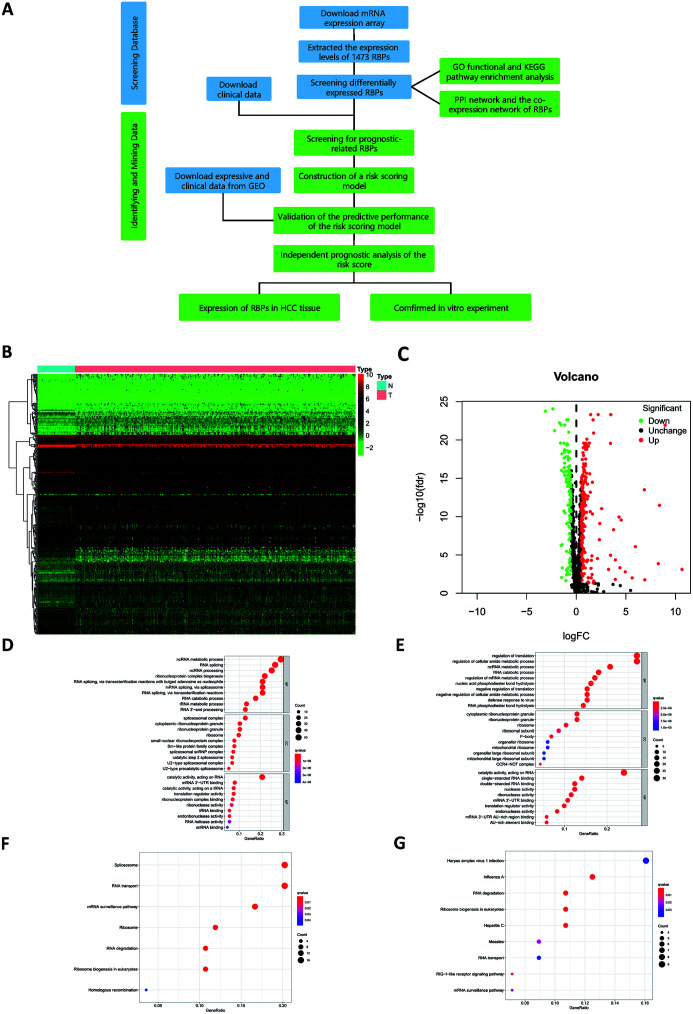
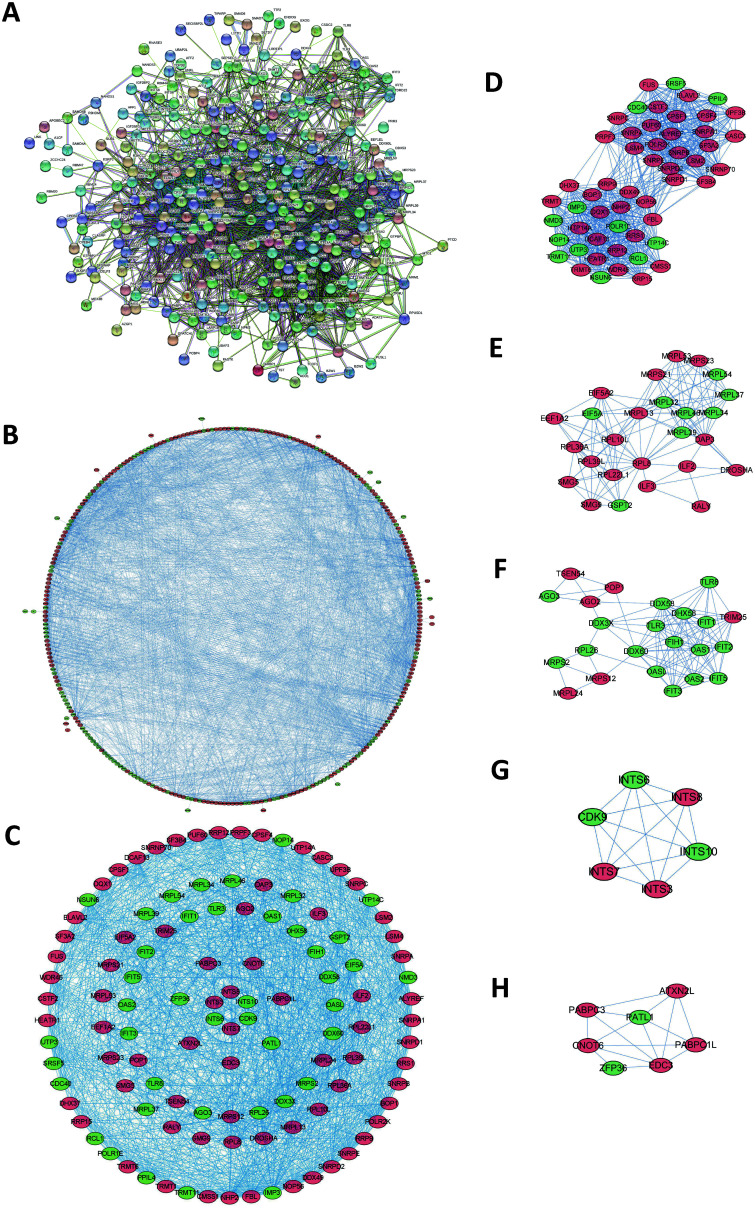
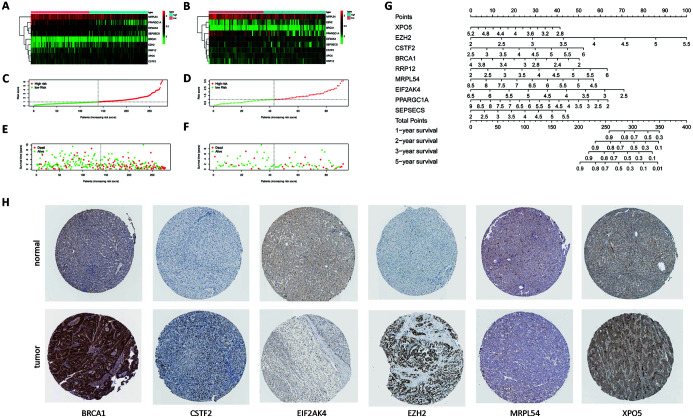
We downloaded the hepatocellular carcinoma gene sequencing data from The Cancer Genome Atlas (cancergenome.nih.gov/) database, constructed a protein-protein interaction network, and used Cytoscape to realize the visualization. From among 325 abnormally expressed genes for RBPs, 9 (XPO5, enhancer of zeste 2 polycomb repressive complex 2 subunit [EZH2], CSTF2, BRCA1, RRP12, MRPL54, EIF2AK4, PPARGC1A, and SEPSECS) were selected for construction of the prognostic model. Then, we further verified the results through the Gene Expression Omnibus (www.ncbi.nlm.nih.gov/geo/) database and experiments.
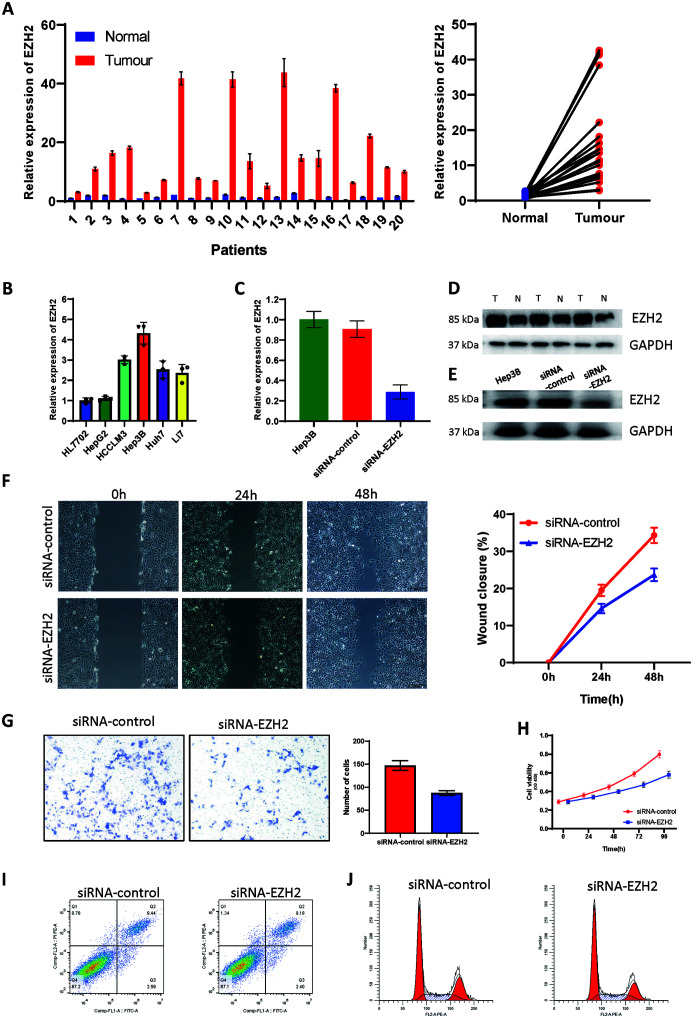
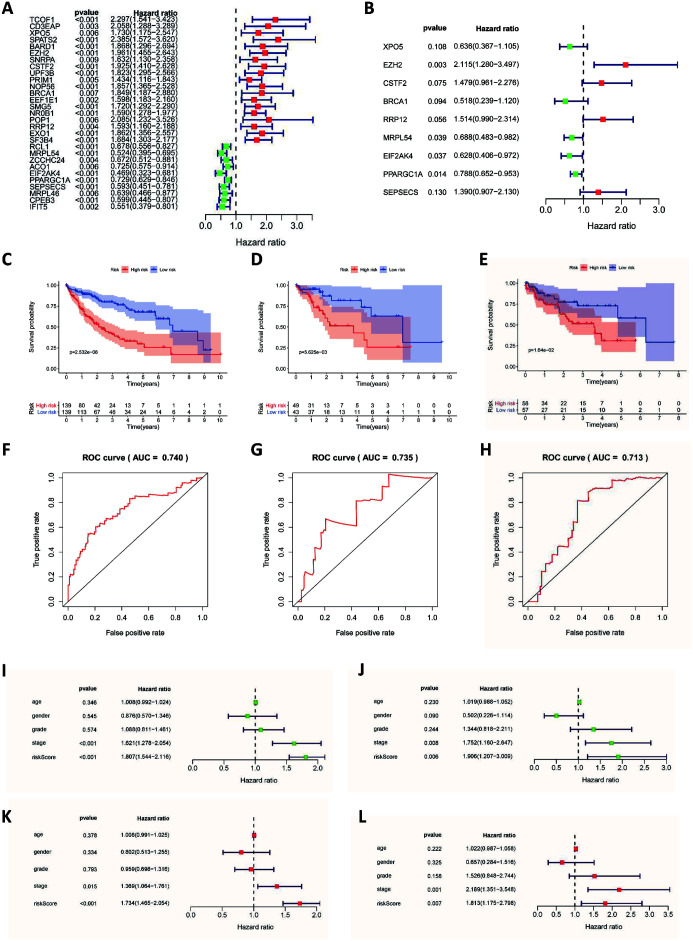
A prognostic model was constructed, which determined that the survival time of patients in the high-risk group was significantly shorter than that of the low-risk group (<0.01). Univariate and multivariate Cox regression analysis suggested that the risk score was an independent prognostic factor (<0.01). We also constructed a nomogram based on the risk score, survival time, and survival status. At the same time, we verified the high expression and cancer-promoting effects of EZH2 in tumors.
Survival, receiver operating characteristic curve and independent prognostic analyses demonstrated that we constructed a good prognostic model, which might be useful for estimating the survival of patients with hepatocellular carcinoma.
肝细胞癌患者的生存率存在差异。RNA结合蛋白(RBP)的异常表达与恶性肿瘤的发生发展密切相关。本研究的主要目的是鉴定与肝癌预后相关的RBP,并构建肝癌预后模型。
我们从癌症基因组图谱(cancergenome.nih.gov/)数据库下载了肝细胞癌基因测序数据,构建了蛋白质-蛋白质相互作用网络,并使用Cytoscape实现可视化。从325个异常表达的RBP基因中,选择9个(XPO5、zeste 2多梳抑制复合物2亚基增强子[EZH2]、CSTF2、BRCA1、RRP12、MRPL54、EIF2AK4、PPARGC1A和SEPSECS)构建预后模型。然后,我们通过基因表达综合数据库(www.ncbi.nlm.nih.gov/geo/)和实验进一步验证结果。
构建了一个预后模型,该模型确定高危组患者的生存时间明显短于低危组(<0.01)。单因素和多因素Cox回归分析表明,风险评分是一个独立的预后因素(<0.01)。我们还基于风险评分、生存时间和生存状态构建了列线图。同时,我们验证了EZH2在肿瘤中的高表达和促癌作用。
生存分析、受试者工作特征曲线分析和独立预后分析表明,我们构建了一个良好的预后模型,这可能有助于估计肝细胞癌患者的生存情况。