Microbial Processes and Interactions, TERRA Teaching and Research Center, BioEcoAgro, Joint Research Unit/UMR transfrontalière 1158, University of Liègegrid.4861.b-Gembloux Agro-Bio Tech, Gembloux, Belgium.
Ecology and Biodiversity, Department of Biology, Utrecht Universitygrid.5477.1, Utrecht, The Netherlands.
mBio. 2021 Dec 21;12(6):e0177421. doi: 10.1128/mBio.01774-21. Epub 2021 Nov 2.
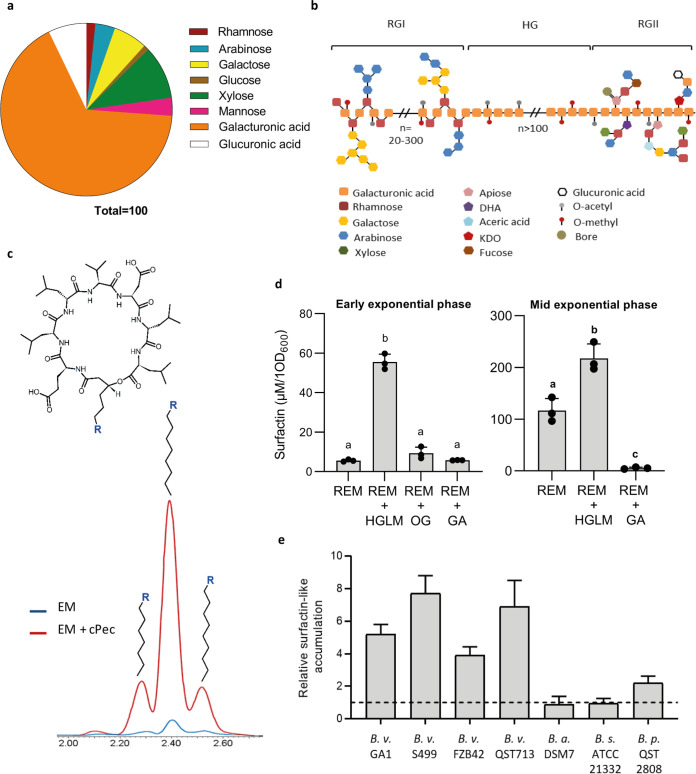
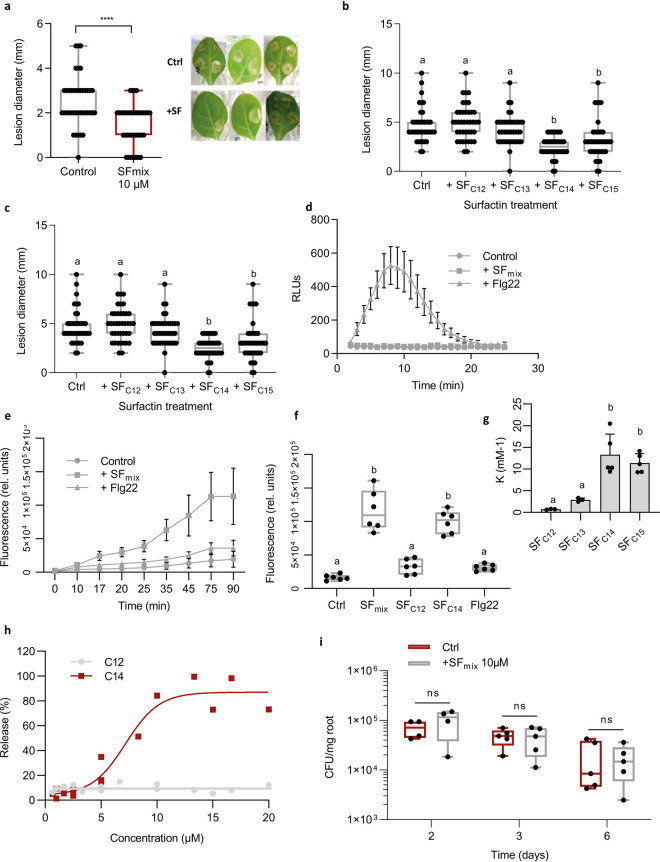
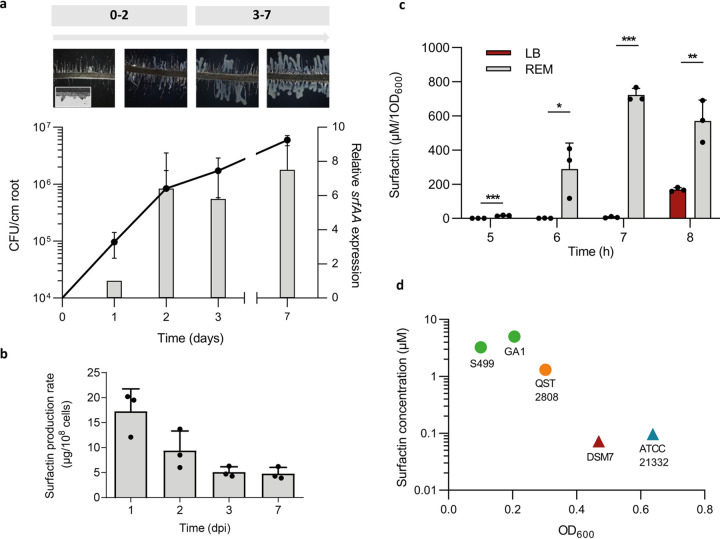
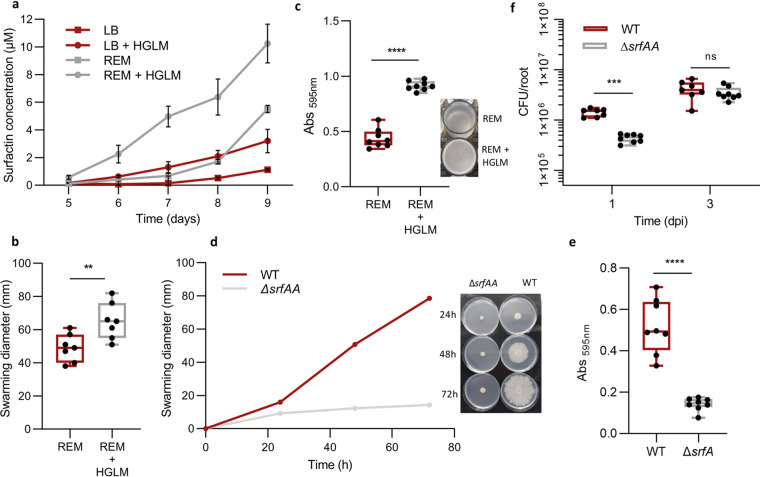
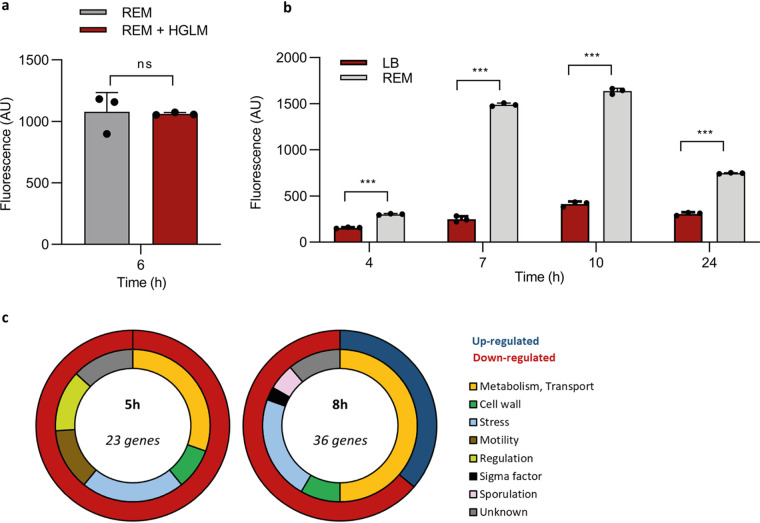
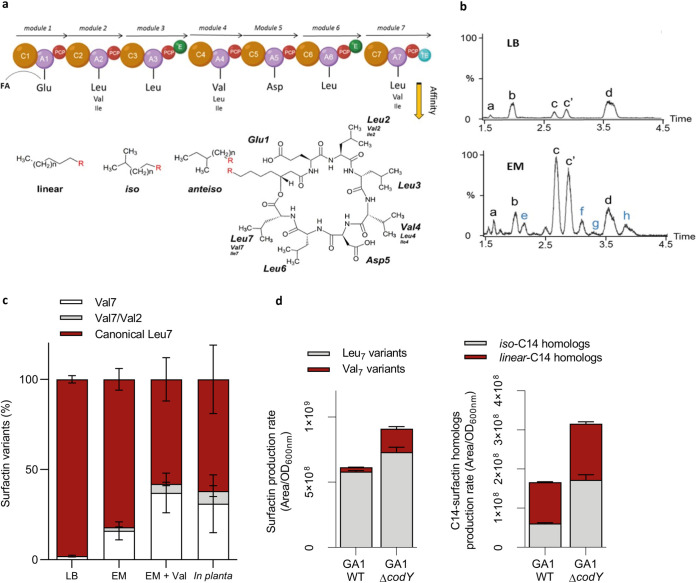
Bacillus velezensis is considered as a model species belonging to the so-called Bacillus subtilis complex that evolved typically to dwell in the soil rhizosphere niche and establish an intimate association with plant roots. This bacterium provides protection to its natural host against diseases and represents one of the most promising biocontrol agents. However, the molecular basis of the cross talk that this bacterium establishes with its natural host has been poorly investigated. We show here that these plant-associated bacteria have evolved a polymer-sensing system to perceive their host and that, in response, they increase the production of the surfactin-type lipopeptide. Furthermore, we demonstrate that surfactin synthesis is favored upon growth on root exudates and that this lipopeptide is a key component used by the bacterium to optimize biofilm formation, motility, and early root colonization. In this specific nutritional context, the bacterium also modulates qualitatively the pattern of surfactin homologues coproduced and forms mainly variants that are the most active at triggering plant immunity. Surfactin represents a shared good as it reinforces the defensive capacity of the host. Within the plant-associated microbiome, some bacterial species are of particular interest due to the disease protective effect they provide via direct pathogen suppression and/or stimulation of host immunity. While these biocontrol mechanisms are quite well characterized, we still poorly understand the molecular basis of the cross talk these beneficial bacteria initiate with their host. Here, we show that the model species Bacillus velezensis stimulates the production of the surfactin lipopeptide upon sensing pectin as a cell surface molecular pattern and upon feeding on root exudates. Surfactin favors bacterial rhizosphere fitness on one hand and primes the plant immune system on the other hand. Our data therefore illustrate how both partners use this multifunctional compound as a unique shared good to sustain a mutualistic interaction.
解淀粉芽孢杆菌被认为是一种模式物种,属于所谓的枯草芽孢杆菌复合体,通常进化为栖息在土壤根际生境中,并与植物根系建立密切联系。这种细菌为其自然宿主提供保护,防止疾病,并代表最有前途的生物防治剂之一。然而,这种细菌与其自然宿主建立的串扰的分子基础尚未得到充分研究。我们在这里表明,这些与植物相关的细菌已经进化出一种聚合物感应系统来感知它们的宿主,并且作为响应,它们增加了表面活性素型脂肽的产生。此外,我们证明表面活性素的合成在根分泌物上的生长时得到促进,并且这种脂肽是细菌用来优化生物膜形成、运动和早期根定植的关键成分。在这种特定的营养环境中,细菌还会改变共产生的表面活性素类似物的模式,并形成主要变体,这些变体在触发植物免疫方面最有效。表面活性素代表一种共享的好处,因为它增强了宿主的防御能力。在植物相关微生物组中,由于它们通过直接抑制病原体和/或刺激宿主免疫来提供疾病保护作用,一些细菌物种特别引人注目。虽然这些生物防治机制已经得到了很好的描述,但我们仍然不太了解这些有益细菌与它们的宿主之间启动的串扰的分子基础。在这里,我们表明,模式物种解淀粉芽孢杆菌在感知果胶作为细胞表面分子模式和在根分泌物上进食时,会刺激表面活性素脂肽的产生。表面活性素一方面有利于细菌在根际的适应性,另一方面又能激活植物免疫系统。因此,我们的数据说明了两个合作伙伴如何将这种多功能化合物用作独特的共享好处,以维持互利互动。