Farhan Y Almalki Abdullah, Arabdin Maria, Khan Adnan
Pathology, University of Malta, Msida, MLT.
Pathology, Rehman Medical College, Peshawar, PAK.
Cureus. 2021 Sep 27;13(9):e18316. doi: 10.7759/cureus.18316. eCollection 2021 Sep.
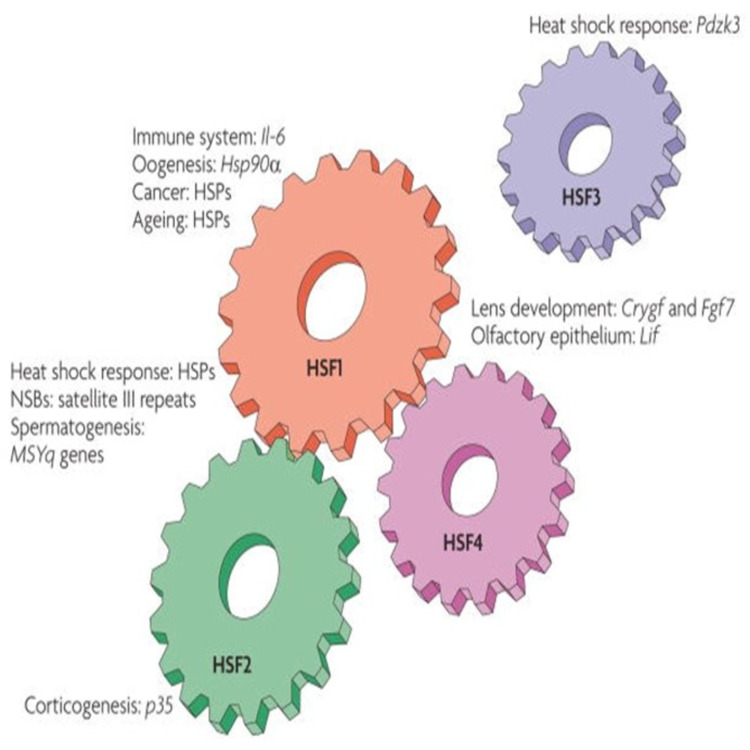
This review article has been necessitated by the limited number of studies on the role of heat shock proteins (HSPs) in cellular functions. The analysis is performed by reviewing evidence in various literary works concerning the topic. The main function of HSPs is to prevent the formation of non-functional proteins and facilitate protein folding. They also enhance the survival of cells in addition to being clinically significant. HSPs protect proteins from stress factors such as temperature, pH, and low levels of oxygen. Some of the common types of HSPs include HSP70, HSP90, HSP27, and HSP100. These proteins have different weights and other features which make them suit for different cellular functions. However, they have numerous similar features which make them perform almost the same functions, yet they vary in the degree of protection that they provide for the cells. The release of HSPs is controlled by four types of HSF depending on the type of stress that a cell is subjected to. HSF1 is responsible for identifying stress factors, especially heat. HSF2 performs almost similar functions as HSF1 in addition to cellular development. HSF3 is released when the stress conditions are extreme and, hence, cannot be effectively controlled by HSF1 and HSF2. HSF4 functions by inducing negative DNA transcriptions. Other tasks of HSPs include enhancing the immune system. The cells help in the management of Alzheimer's disease and other similar complications by forming protective tissues around brain cells. The cells also help in controlling cancer and heart diseases. However, their roles are more enhanced in managing cancer, extending to diagnosis and prediction. Further research on the HSPs and HSFs may extend their application to curing tumorous cells.
鉴于关于热休克蛋白(HSPs)在细胞功能中作用的研究数量有限,才有了这篇综述文章。该分析通过回顾各种文学作品中有关该主题的证据来进行。热休克蛋白的主要功能是防止无功能蛋白质的形成并促进蛋白质折叠。它们除了具有临床意义外,还能提高细胞的存活率。热休克蛋白可保护蛋白质免受温度、pH值和低氧水平等应激因素的影响。一些常见的热休克蛋白类型包括HSP70、HSP90、HSP27和HSP100。这些蛋白质具有不同的分子量和其他特性,使其适合不同的细胞功能。然而,它们有许多相似的特性,使其执行几乎相同的功能,但它们为细胞提供的保护程度有所不同。热休克蛋白的释放由四种热休克因子(HSF)控制,具体取决于细胞所遭受的应激类型。HSF1负责识别应激因素,尤其是热。HSF2除了参与细胞发育外,其功能与HSF1几乎相似。当应激条件极端时,HSF3会释放出来,因此无法被HSF1和HSF2有效控制。HSF4通过诱导负向DNA转录发挥作用。热休克蛋白的其他任务包括增强免疫系统。这些细胞通过在脑细胞周围形成保护组织来帮助管理阿尔茨海默病和其他类似并发症。这些细胞还有助于控制癌症和心脏病。然而,它们在癌症管理方面的作用更为突出,甚至延伸到诊断和预测。对热休克蛋白和热休克因子的进一步研究可能会扩大它们在治疗肿瘤细胞方面的应用。