Liang Yu, Zhang Li, Peng Chao, Zhang Shiyu, Chen Siwen, Qian Xin, Luo Wanxian, Dan Qing, Ren Yongyan, Li Yingjia, Zhao Bingxia
Department of Medicine Ultrasonics, Nanfang Hospital, Southern Medical University, Guangzhou 510515, China.
Guangzhou Key Laboratory of Tumor Immunology Research, Cancer Research Institute, School of Basic Medical Sciences, Southern Medical University, Guangzhou 510515, China.
Acta Pharm Sin B. 2021 Oct;11(10):3231-3243. doi: 10.1016/j.apsb.2021.01.016. Epub 2021 Jan 23.
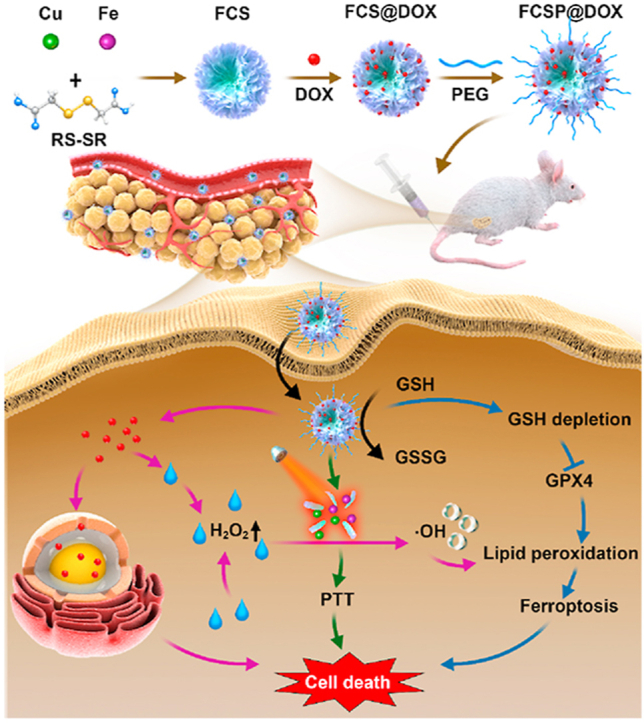
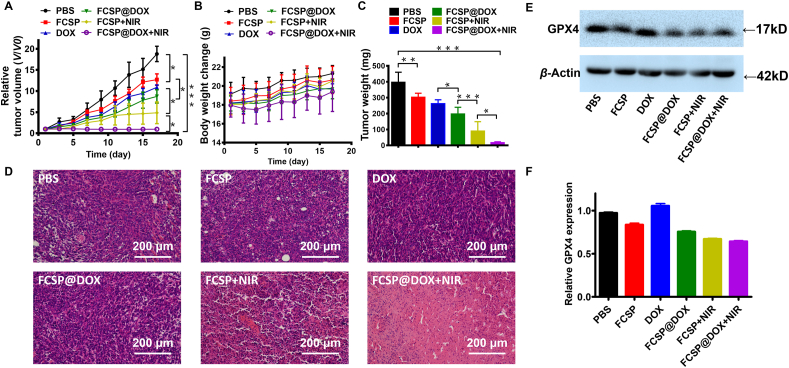
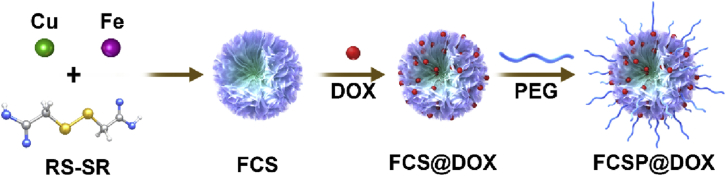
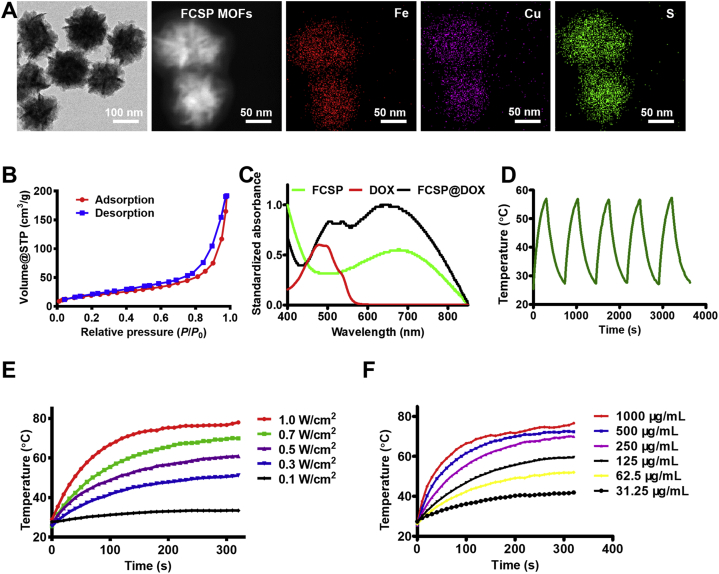
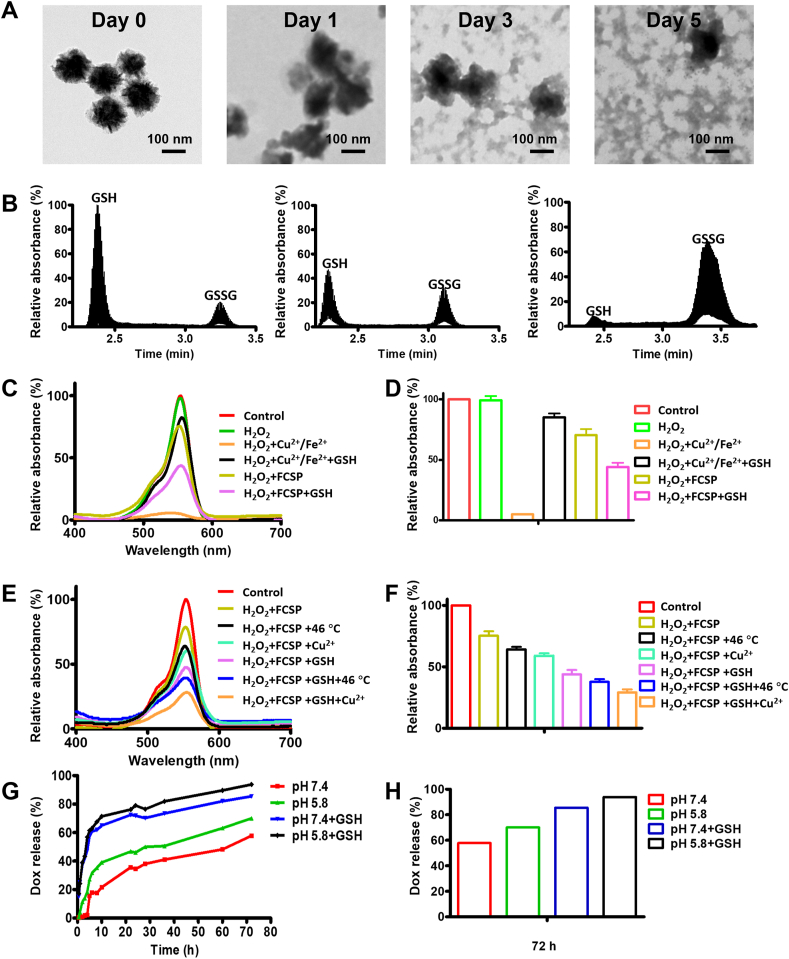
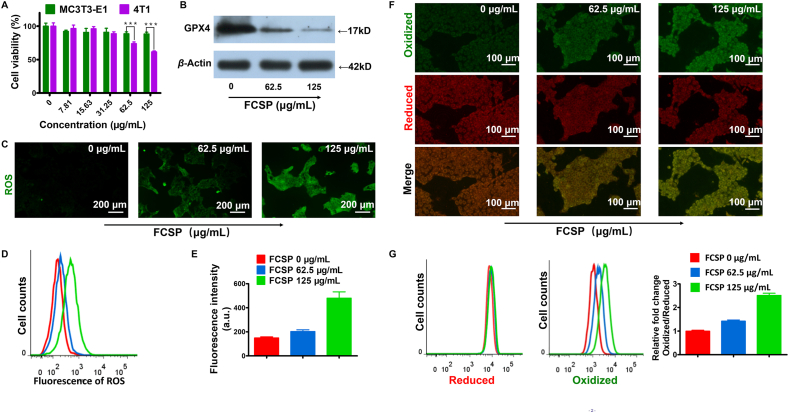
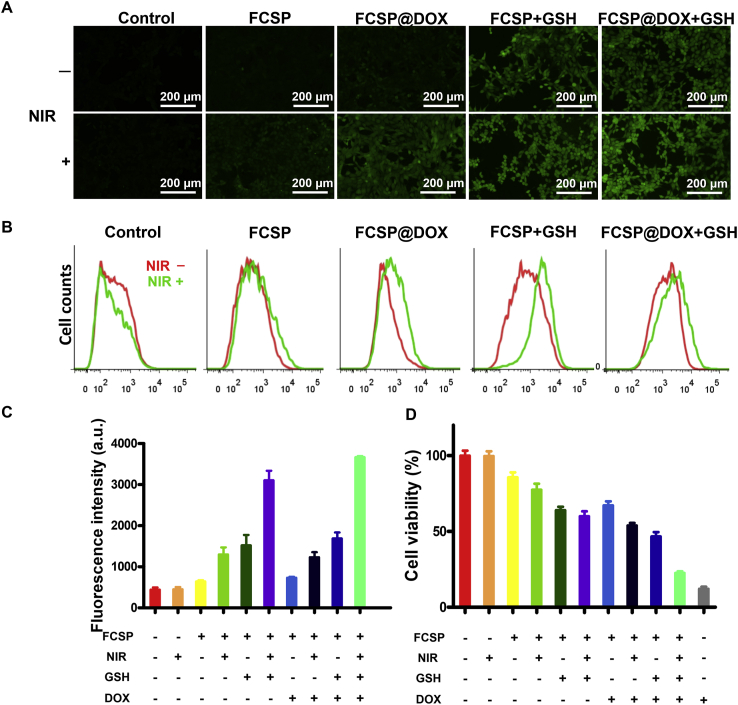
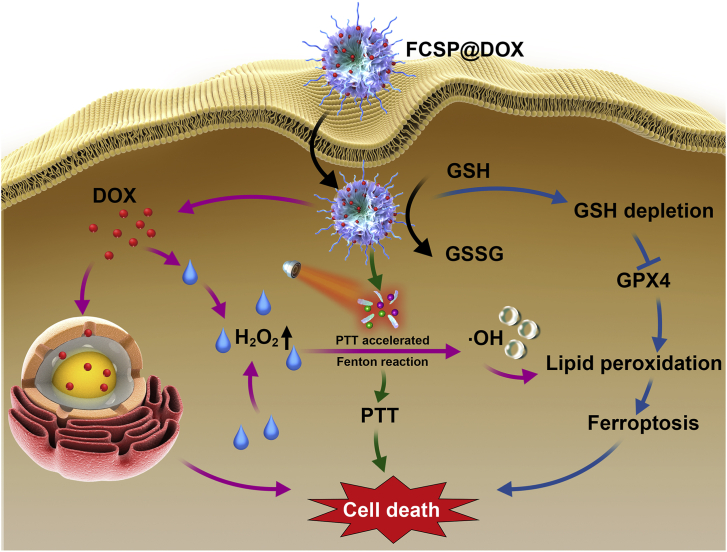
Ferroptosis, as a newly discovered cell death form, has become an attractive target for precision cancer therapy. Several ferroptosis therapy strategies based on nanotechnology have been reported by either increasing intracellular iron levels or by inhibition of glutathione (GSH)-dependent lipid hydroperoxidase glutathione peroxidase 4 (GPX4). However, the strategy by simultaneous iron delivery and GPX4 inhibition has rarely been reported. Herein, novel tumor microenvironments (TME)-activated metal-organic frameworks involving Fe & Cu ions bridged by disulfide bonds with PEGylation (FCSP MOFs) were developed, which would be degraded specifically under the redox TME, simultaneously achieving GSH-depletion induced GPX4 inactivation and releasing Fe ions to produce ROS Fenton reaction, therefore causing ferroptosis. More ROS could be generated by the acceleration of Fenton reaction due to the released Cu ions and the intrinsic photothermal capability of FCSP MOFs. The overexpressed GSH and HO in TME could ensure the specific TME self-activated therapy. Better tumor therapeutic efficiency could be achieved by doxorubicin (DOX) loading since it can not only cause apoptosis, but also indirectly produce HO to amplify Fenton reaction. Remarkable anti-tumor effect of obtained FCSP@DOX MOFs was verified both and assays.
铁死亡作为一种新发现的细胞死亡形式,已成为精准癌症治疗的一个有吸引力的靶点。已经报道了几种基于纳米技术的铁死亡治疗策略,要么通过提高细胞内铁水平,要么通过抑制谷胱甘肽(GSH)依赖性脂质氢过氧化物谷胱甘肽过氧化物酶4(GPX4)。然而,同时进行铁递送和GPX4抑制的策略鲜有报道。在此,开发了一种新型的肿瘤微环境(TME)激活的金属有机框架,即由二硫键桥接并聚乙二醇化的含Fe和Cu离子的框架(FCSP MOFs),其在氧化还原TME下会特异性降解,同时实现GSH耗竭诱导的GPX4失活并释放Fe离子以通过芬顿反应产生活性氧(ROS),从而导致铁死亡。由于释放的Cu离子和FCSP MOFs的固有光热能力,芬顿反应的加速可产生更多的ROS。TME中过表达的GSH和HO可确保特异性的TME自激活治疗。通过负载阿霉素(DOX)可实现更好的肿瘤治疗效果,因为它不仅能引起细胞凋亡,还能间接产生HO以放大芬顿反应。所获得的FCSP@DOX MOFs显著的抗肿瘤作用在体外和体内实验中均得到验证。