School Institute of Chemical Biology and Nanomedicine, State Key Laboratory of Chemo/Biosensing and Chemometrics, College of Chemistry and Chemical Engineering, Hunan University, Changsha, 410082, Hunan, China.
School of Basic Medical Sciences, Hubei University of Medicine, Renmin Road No. 30, Shiyan, 442000, Hubei, China.
J Nanobiotechnology. 2022 May 14;20(1):230. doi: 10.1186/s12951-022-01455-0.
Chemodynamic therapy (CDT) relying on intracellular iron ions and HO is a promising therapeutic strategy due to its tumor selectivity, which is limited by the not enough metal ions or HO supply of tumor microenvironment. Herein, we presented an efficient CDT strategy based on Chinese herbal monomer-dihydroartemisinin (DHA) as a substitute for the HO and recruiter of iron ions to amplify greatly the reactive oxygen species (ROS) generation for synergetic CDT-ferroptosis therapy.
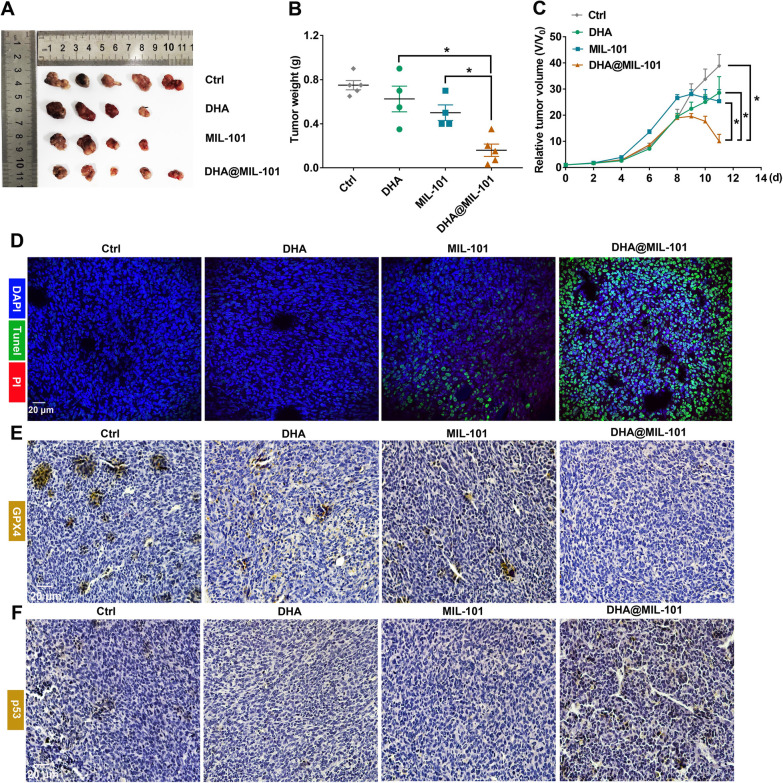
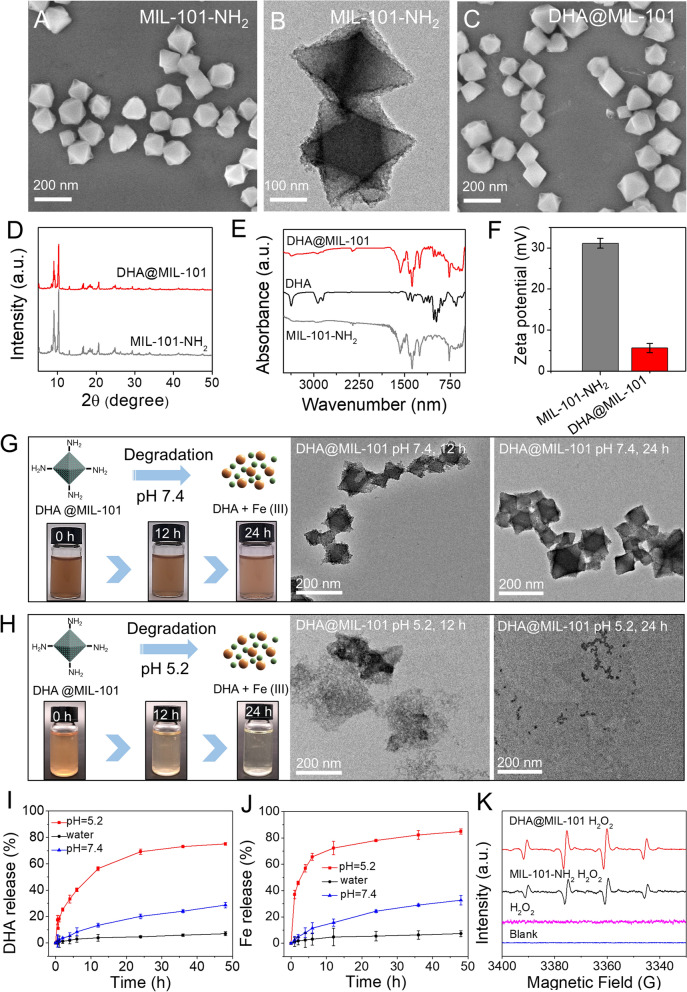
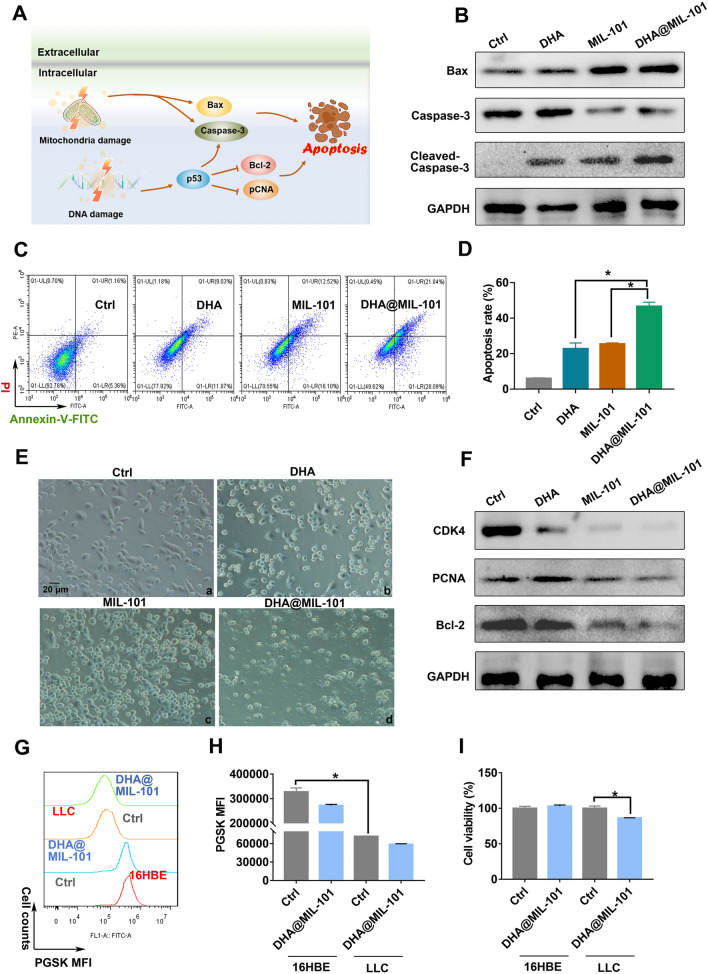
The DHA@MIL-101 nanoreactor was prepared and characterized firstly. This nanoreactor degraded under the acid tumor microenvironment, thereby releasing DHA and iron ions. Subsequent experiments demonstrated DHA@MIL-101 significantly increased intracellular iron ions through collapsed nanoreactor and recruitment effect of DHA, further generating ROS thereupon. Meanwhile, ROS production introduced ferroptosis by depleting glutathione (GSH), inactivating glutathione peroxidase 4 (GPX4), leading to lipid peroxide (LPO) accumulation. Furthermore, DHA also acted as an efficient ferroptosis molecular amplifier by direct inhibiting GPX4. The resulting ROS and LPO caused DNA and mitochondria damage to induce apoptosis of malignant cells. Finally, in vivo outcomes evidenced that DHA@MIL-101 nanoreactor exhibited prominent anti-cancer efficacy with minimal systemic toxicity.
In summary, DHA@MIL-101 nanoreactor boosts CDT and ferroptosis for synergistic cancer therapy by molecular amplifier DHA. This work provides a novel and effective approach for synergistic CDT-ferroptosis with Chinese herbal monomer-DHA and Nanomedicine.
化学动力学疗法(CDT)依赖于细胞内铁离子和 HO,由于其肿瘤选择性,是一种很有前途的治疗策略,但受到肿瘤微环境中金属离子或 HO 供应不足的限制。在此,我们提出了一种基于中草药单体二氢青蒿素(DHA)作为 HO 替代物和铁离子招募剂的高效 CDT 策略,极大地放大了活性氧物种(ROS)的产生,从而实现协同 CDT-铁死亡治疗。
首先制备和表征了 DHA@MIL-101 纳米反应器。该纳米反应器在酸性肿瘤微环境下降解,从而释放 DHA 和铁离子。随后的实验表明,DHA@MIL-101 通过纳米反应器的崩塌和 DHA 的招募作用,显著增加了细胞内的铁离子,从而进一步产生 ROS。同时,ROS 的产生通过耗尽谷胱甘肽(GSH)、使谷胱甘肽过氧化物酶 4(GPX4)失活,导致脂质过氧化物(LPO)积累,从而引发铁死亡。此外,DHA 还通过直接抑制 GPX4 作为一种有效的铁死亡分子放大器发挥作用。由此产生的 ROS 和 LPO 导致 DNA 和线粒体损伤,从而诱导恶性细胞凋亡。最后,体内结果表明,DHA@MIL-101 纳米反应器通过分子放大器 DHA 表现出显著的抗癌疗效,同时具有最小的全身毒性。
总之,DHA@MIL-101 纳米反应器通过分子放大器 DHA 增强 CDT 和铁死亡,从而实现协同癌症治疗。这项工作为基于中草药单体-DHA 和纳米医学的协同 CDT-铁死亡提供了一种新的有效方法。