Department of Bioinformatics, King Abdullah International Medical Research Center (KAIMRC), King Saud bin Abdulaziz University for Health Sciences (KSAU-HS), MNGHA, Riyadh, Saudi Arabia.
Medical Research Core Facility and Platforms, King Abdullah International Medical Research Center (KAIMRC), King Saud bin Abdulaziz University for Health Sciences (KSAU-HS), MNGHA, Riyadh, Saudi Arabia.
Cancer Med. 2021 Nov;10(22):8138-8150. doi: 10.1002/cam4.4106. Epub 2021 Nov 2.
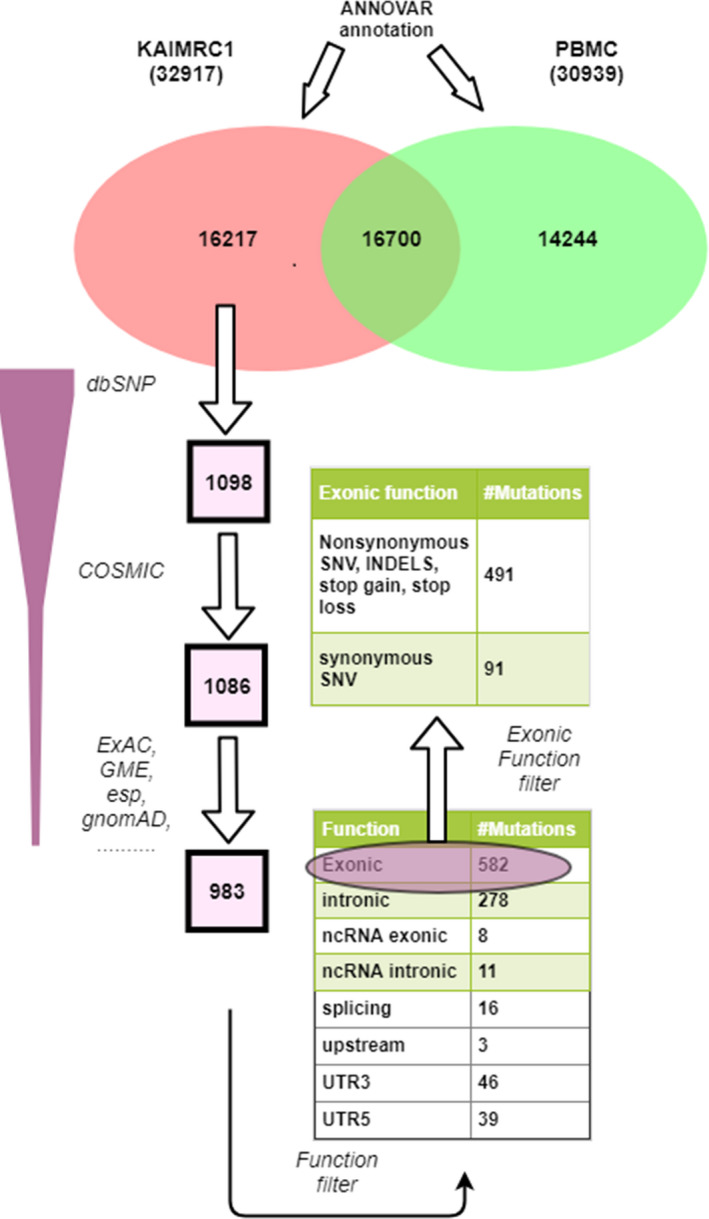
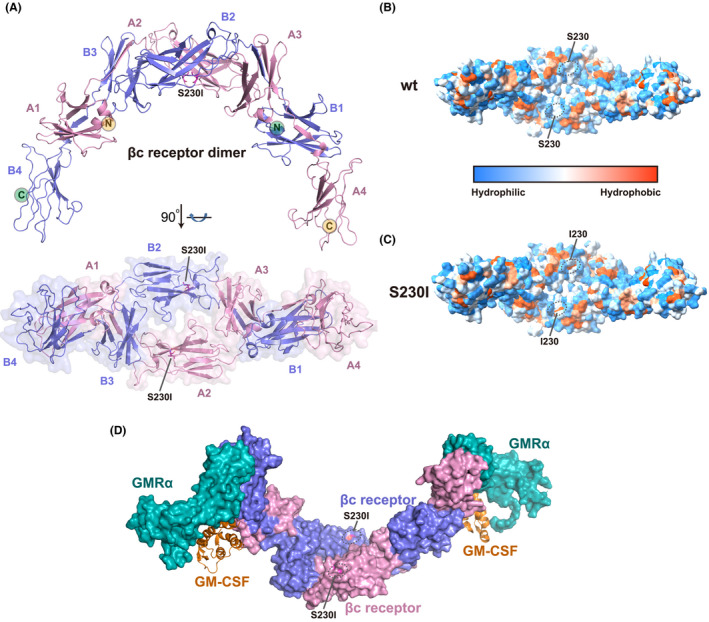
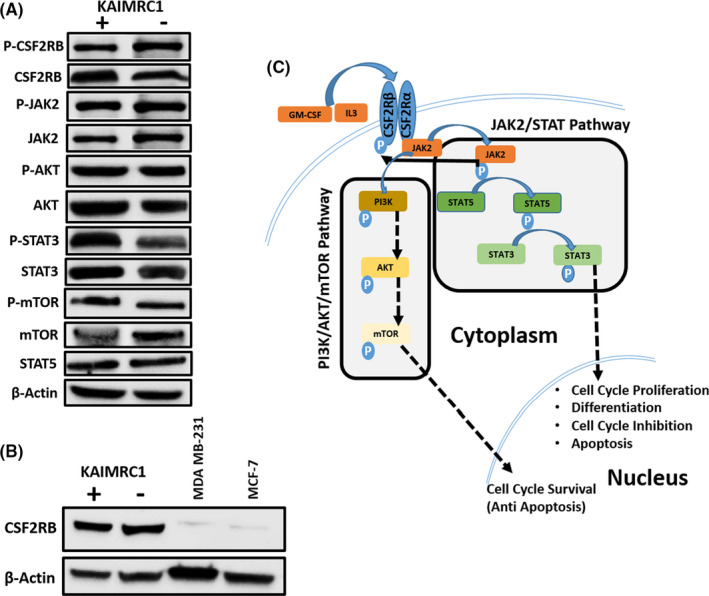
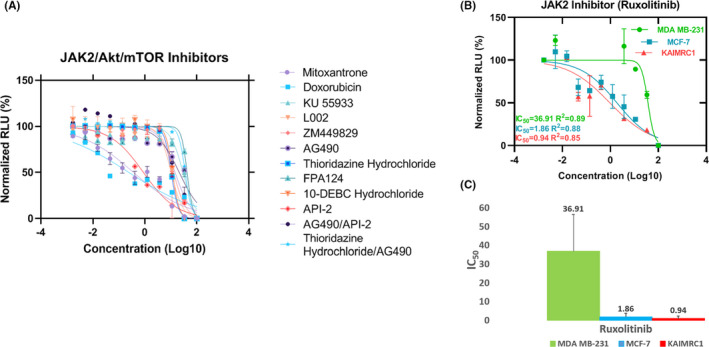
The colony stimulating factor 2 receptor subunit beta (CSF2RB) is the common signaling subunit of the cytokine receptors for IL-3, IL-5, and GM-CSF. Several studies have shown that spontaneous and random mutants of CSF2RB can lead to ligand independence in vitro. To date, no report(s) have been shown for the presence of potentially transforming and oncogenic CSF2RB mutation(s) clinically in cancer patients until the first reported case of a leukemia patient in 2016 harboring a germline-activating mutation (R461C). We combined exome sequencing, pathway analyses, and functional assays to identify novel somatic mutations in KAIMRC1 cells and breast tumor specimen. The patient's peripheral blood mononuclear cell (PBMC) exome served as a germline control in the identification of somatic mutations. Here, we report the discovery of a novel potentially transforming and oncogenic somatic mutation (S230I) in the CSF2RB gene of a breast cancer patient and the cell line, KAIMRC1 established from her breast tumor tissue. KAIMRC1 cells are immortalized and shown to survive and proliferate in ligand starvation condition. Immunoblot analysis showed that mutant CSF2RB signals through JAK2/STAT and PI3K/mTOR pathways in ligand starvation conditions. Screening a small molecule kinase inhibitor library revealed potent JAK2 inhibitors against KAIMRC1 cells. We, for the first time, identified a somatic, potentially transforming, and oncogenic CSF2RB mutation (S230I) in breast cancer patients that seem to be an actionable mutation leading to the development of new therapeutics for breast cancer.
集落刺激因子 2 受体亚基β(CSF2RB)是白细胞介素 3、白细胞介素 5 和粒细胞-巨噬细胞集落刺激因子细胞因子受体的共同信号亚基。几项研究表明,CSF2RB 的自发和随机突变可导致体外配体非依赖性。迄今为止,直到 2016 年首例白血病患者携带种系激活突变(R461C)被报道,在癌症患者中尚未发现潜在的转化和致癌 CSF2RB 突变。我们结合外显子组测序、通路分析和功能测定,在 KAIMRC1 细胞和乳腺癌标本中鉴定出新型体细胞突变。患者外周血单核细胞(PBMC)外显子组作为鉴定体细胞突变的种系对照。在此,我们报告了在一名乳腺癌患者和源自其乳腺癌组织的细胞系 KAIMRC1 中 CSF2RB 基因中发现一种新型潜在转化和致癌体细胞突变(S230I)。KAIMRC1 细胞永生化,并在配体饥饿条件下显示出存活和增殖的能力。免疫印迹分析显示,突变 CSF2RB 在配体饥饿条件下通过 JAK2/STAT 和 PI3K/mTOR 通路信号转导。筛选小分子激酶抑制剂文库显示出针对 KAIMRC1 细胞的有效 JAK2 抑制剂。我们首次在乳腺癌患者中鉴定出一种潜在转化和致癌的 CSF2RB 体细胞突变(S230I),该突变似乎是一种可操作的突变,可为乳腺癌开发新的治疗方法。