Department of Molecular Biology and Biochemistry, University of California, Irvine, Irvine, California, USA.
Center for Virus Research, University of California, Irvine, Irvine, California, USA.
J Leukoc Biol. 2021 Dec;110(6):1225-1239. doi: 10.1002/JLB.4COVA0121-084RR. Epub 2021 Nov 3.
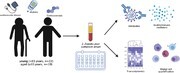
Severe acute respiratory syndrome coronavirus 2 (SARS-CoV-2) is the causative agent of coronavirus disease-2019 (COVID-19), a respiratory disease that varies in severity from mild to severe/fatal. Several risk factors for severe disease have been identified, notably age, male sex, and pre-existing conditions such as diabetes, obesity, and hypertension. Several advancements in clinical care have been achieved over the past year, including the use of corticosteroids (e.g., corticosteroids) and other immune-modulatory treatments that have now become standard of care for patients with acute severe COVID-19. While the understanding of the mechanisms that underlie increased disease severity with age has improved over the past few months, it remains incomplete. Furthermore, the molecular impact of corticosteroid treatment on host response to acute SARS-CoV-2 infection has not been investigated. In this study, a cross-sectional and longitudinal analysis of Ab, soluble immune mediators, and transcriptional responses in young (65 ≤ years) and aged (≥ 65 years) diabetic males with obesity hospitalized with acute severe COVID-19 was conducted. Additionally, the transcriptional profiles in samples obtained before and after corticosteroids became standard of care were compared. The analysis indicates that severe COVID-19 is characterized by robust Ab responses, heightened systemic inflammation, increased expression of genes related to inflammatory and pro-apoptotic processes, and reduced expression of those important for adaptive immunity regardless of age. In contrast, COVID-19 patients receiving steroids did not show high levels of systemic immune mediators and lacked transcriptional indicators of heightened inflammatory and apoptotic responses. Overall, these data suggest that inflammation and cell death are key drivers of severe COVID-19 pathogenesis in the absence of corticosteroid therapy.
严重急性呼吸综合征冠状病毒 2(SARS-CoV-2)是导致 2019 年冠状病毒病(COVID-19)的病原体,这是一种从轻度到重度/致命的呼吸道疾病。已经确定了几种严重疾病的危险因素,特别是年龄、男性和糖尿病、肥胖症和高血压等预先存在的疾病。在过去的一年中,在临床护理方面取得了几项进展,包括使用皮质类固醇(例如皮质类固醇)和其他免疫调节治疗,这些治疗现在已成为急性重症 COVID-19 患者的标准治疗方法。尽管过去几个月来,人们对年龄增加导致疾病严重程度增加的机制有了更好的了解,但仍不完整。此外,皮质类固醇治疗对宿主对急性 SARS-CoV-2 感染的反应的分子影响尚未得到研究。在这项研究中,对患有肥胖症的年轻(65 岁≤)和老年(≥65 岁)糖尿病男性急性重症 COVID-19 住院患者的 Ab、可溶性免疫介质和转录反应进行了横断面和纵向分析。此外,比较了皮质类固醇成为标准治疗前后获得的样本的转录谱。分析表明,严重的 COVID-19 以强烈的 Ab 反应、全身性炎症加剧、与炎症和促凋亡过程相关的基因表达增加以及对适应性免疫重要的基因表达减少为特征,而与年龄无关。相比之下,接受类固醇治疗的 COVID-19 患者没有表现出高水平的全身性免疫介质,也缺乏炎症和细胞凋亡反应加剧的转录指标。总体而言,这些数据表明,在没有皮质类固醇治疗的情况下,炎症和细胞死亡是严重 COVID-19 发病机制的关键驱动因素。