Peng Liang, Peng Huarong, Liu Yu, Wang Xiao, Hung Chin-Te, Zhao Zaiwang, Chen Gang, Li Wei, Mai Liqiang, Zhao Dongyuan
Department of Chemistry, Laboratory of Advanced Materials, Shanghai Key Laboratory of Molecular Catalysis and Innovative Materials, iChEM and State Key Laboratory of Molecular Engineering of Polymers, Fudan University, Shanghai 200433, P. R. China.
State Key Laboratory of Advanced Technology for Materials Synthesis and Processing, Wuhan University of Technology, Wuhan 430070, P. R. China.
Sci Adv. 2021 Nov 5;7(45):eabi7403. doi: 10.1126/sciadv.abi7403. Epub 2021 Nov 3.
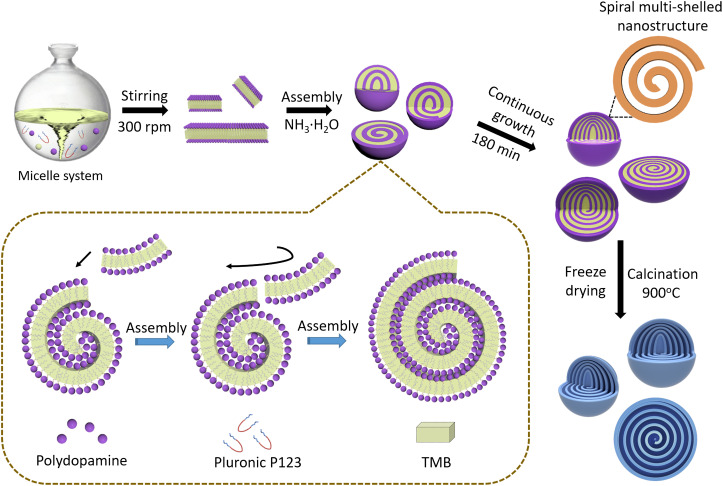
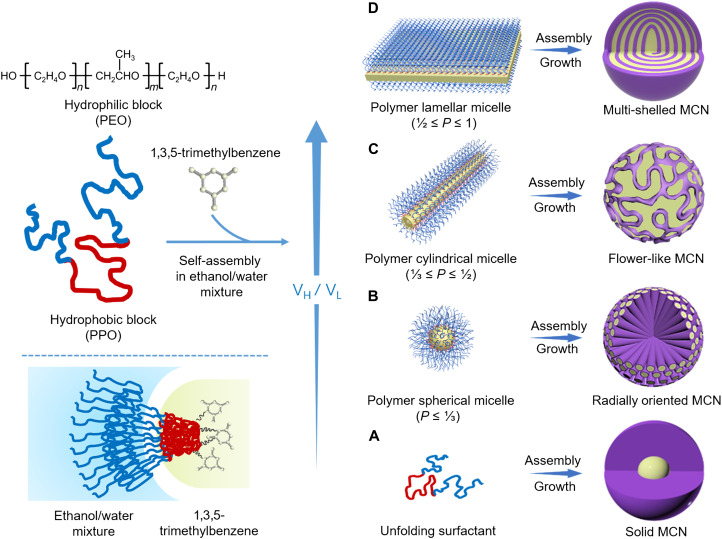
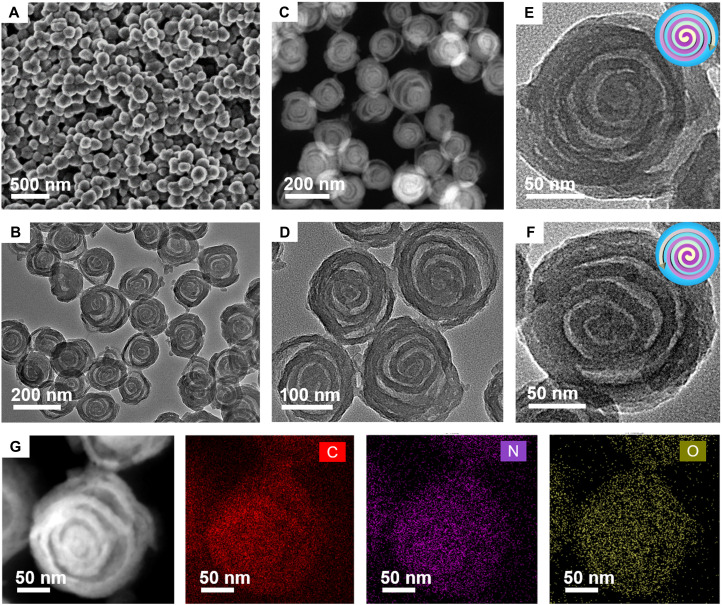
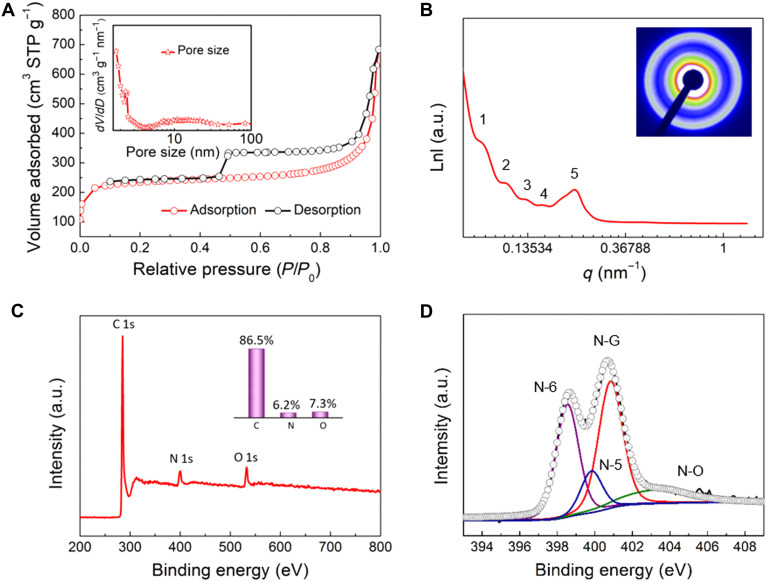
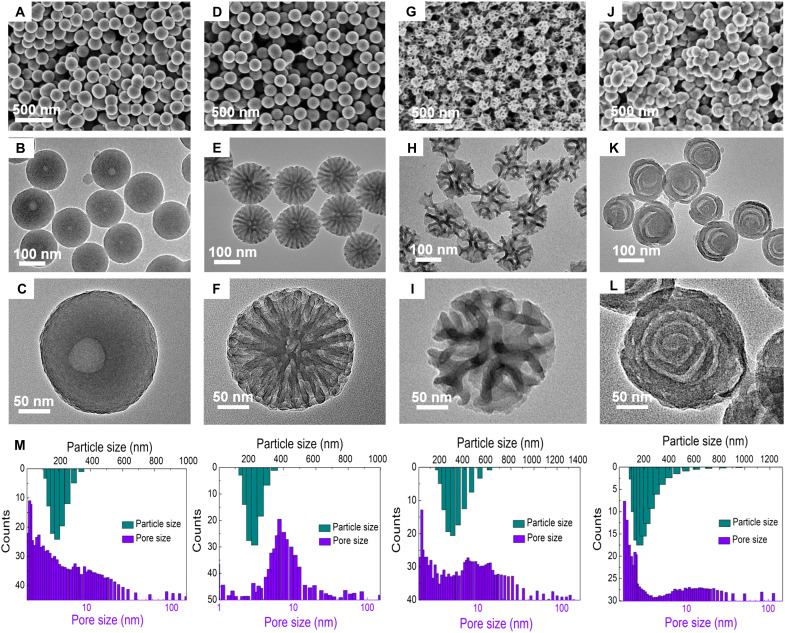
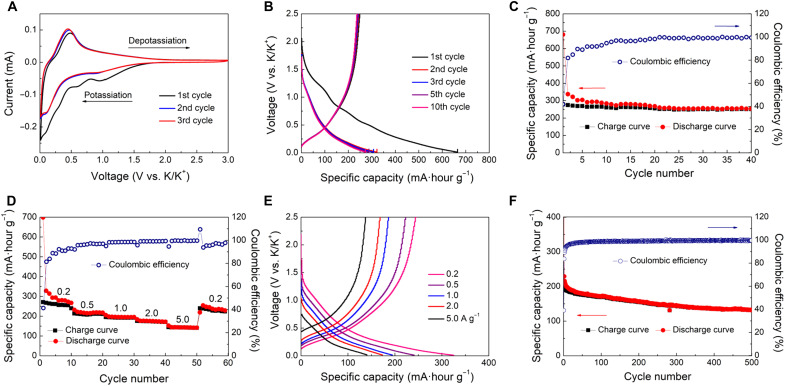
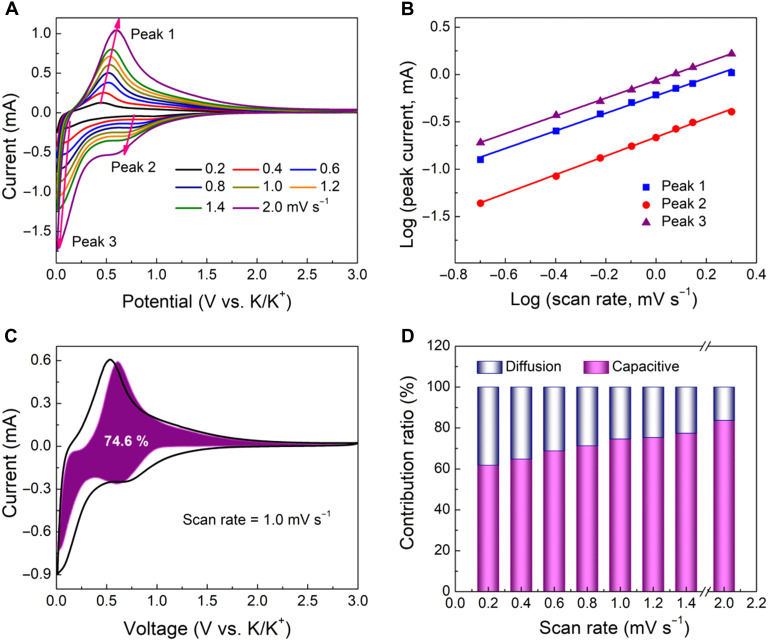
Functional carbon nanospheres are exceptionally useful, yet controllable synthesis of them with well-defined porosity and complex multi-shelled nanostructure remains challenging. Here, we report a lamellar micelle spiral self-assembly strategy to synthesize multi-shelled mesoporous carbon nanospheres with unique chirality. This synthesis features the introduction of shearing flow to drive the spiral self-assembly, which is different from conventional chiral templating methods. Furthermore, a continuous adjustment in the amphipathicity of surfactants can cause the packing parameter changes, namely, micellar structure transformations, resulting in diverse pore structures from single-porous, to radial orientated, to flower-like, and to multi-shelled configurations. The self-supported spiral architecture of these multi-shelled carbon nanospheres, in combination with their high surface area (530 m g), abundant nitrogen content (6.2 weight %), and plentiful mesopores (~2.5 nm), affords them excellent electrochemical performance for potassium-ion storage. This simple but powerful micelle-directed self-assembly strategy offers inspiration for future nanostructure design of functional materials.
功能性碳纳米球非常有用,然而,可控合成具有明确孔隙率和复杂多壳纳米结构的碳纳米球仍然具有挑战性。在此,我们报道了一种层状胶束螺旋自组装策略,用于合成具有独特手性的多壳介孔碳纳米球。这种合成方法的特点是引入剪切流来驱动螺旋自组装,这与传统的手性模板方法不同。此外,表面活性剂两亲性的连续调整会导致堆积参数变化,即胶束结构转变,从而产生从单孔到径向取向、再到花状和多壳构型的多种孔结构。这些多壳碳纳米球的自支撑螺旋结构,结合其高比表面积(约530 m²/g)、丰富的氮含量(约6.2重量%)和大量的介孔(约2.5 nm),使其具有优异的钾离子存储电化学性能。这种简单而强大的胶束导向自组装策略为未来功能材料的纳米结构设计提供了灵感。