Department of Internal Medicine, Gastroenterology and Hepatology, Sechenov University, Moscow, Russian Federation.
The Interregional Public Organization "Scientific Community for the Promotion of the Clinical Study of the Human Microbiome," Moscow, Russian Federation.
Medicine (Baltimore). 2021 Oct 15;100(41):e27528. doi: 10.1097/MD.0000000000027528.
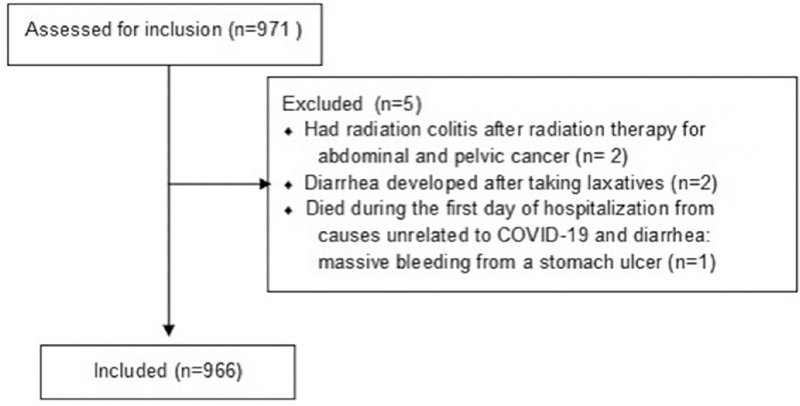
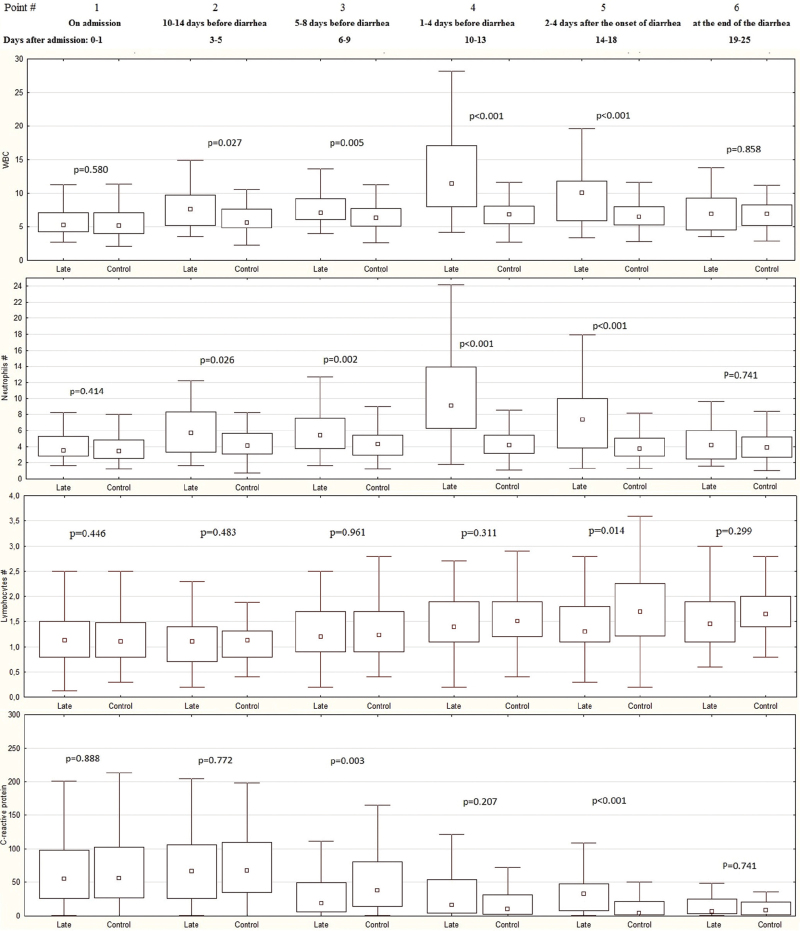
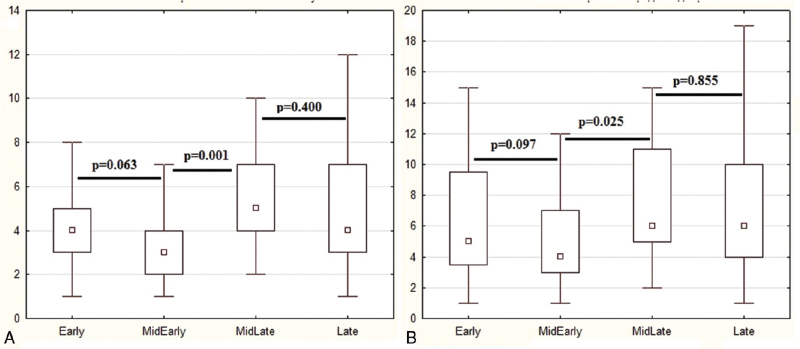
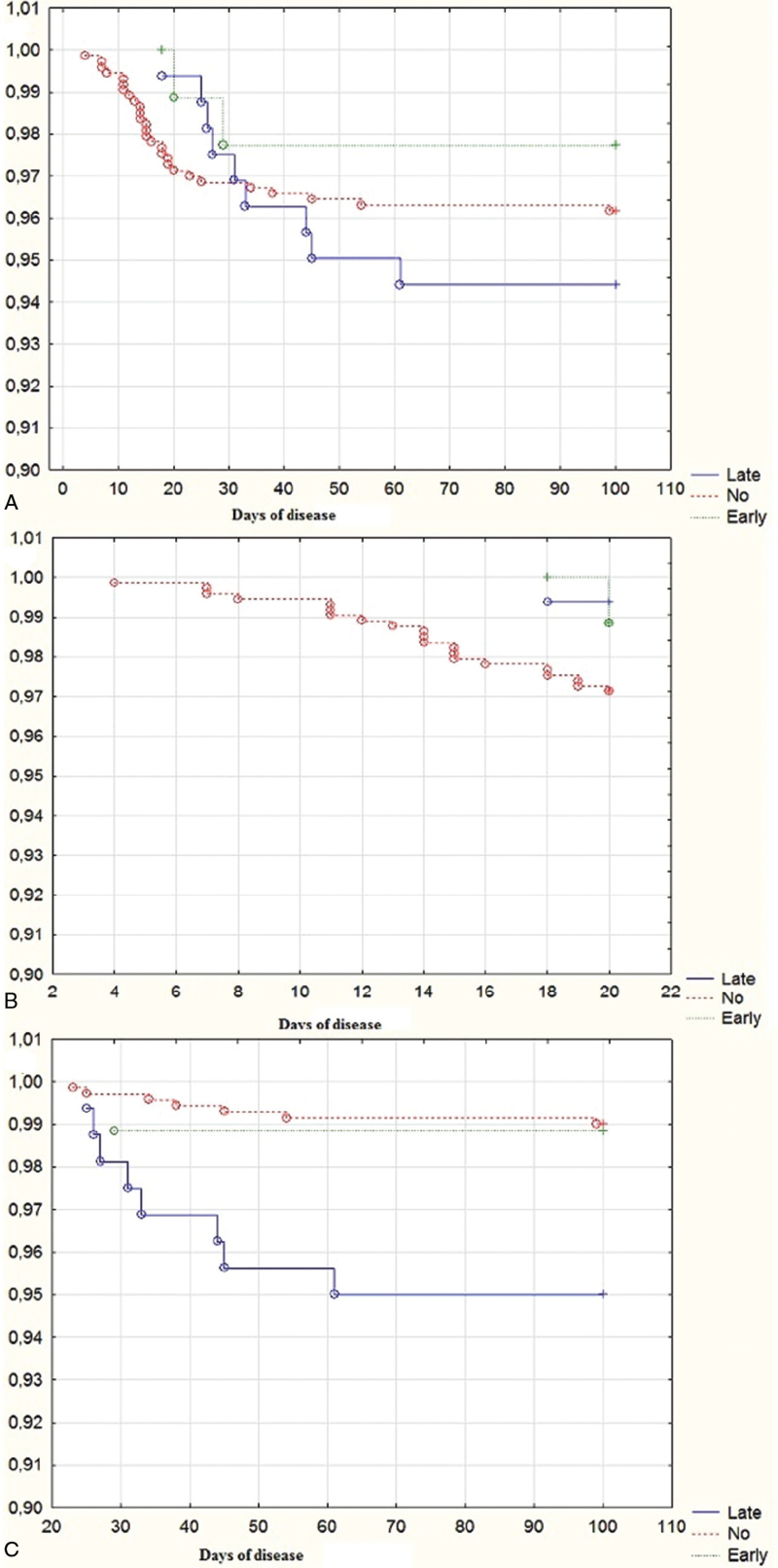
Diarrhea is one of the manifestations of the novel coronavirus disease (COVID-19), but it also develops as a complication of massive antibiotic therapy in this disease. This study aimed to compare these types of diarrhea.We included patients with COVID-19 in a cohort study and excluded patients with chronic diarrhea, laxative use, and those who died during the first day of hospitalization.There were 89 (9.3%), 161 (16.7%), and 731 (75.7%) patients with early viral, late antibiotic-associated, and without diarrhea, respectively. Late diarrhea lasted longer (6 [4-10] vs 5 [3-7] days, P < .001) and was more severe. Clostridioides difficile was found in 70.5% of tested patients with late diarrhea and in none with early diarrhea. Presence of late diarrhea was associated with an increased risk of death after 20 days of disease (P = .009; hazard ratio = 4.7). Patients with late diarrhea had a longer hospital stay and total disease duration, and a higher proportion of these patients required intensive care unit admission. Oral amoxicillin/clavulanate (odds ratio [OR] = 2.23), oral clarithromycin (OR = 3.79), and glucocorticoids (OR = 4.41) use was a risk factor for the development of late diarrhea, while ceftriaxone use (OR = 0.35) had a protective effect. Before the development of late diarrhea, decrease in C-reactive protein levels and increase in lymphocyte count stopped but the white blood cell and neutrophil count increased. An increase in neutrophils by >0.6 × 10⁹ cells/L predicted the development of late diarrhea in the coming days (sensitivity 82.0%, specificity 70.8%, area under the curve = 0.791 [0.710-0.872]).Diarrhea in COVID-19 is heterogeneous, and different types of diarrhea require different management.
腹泻是新型冠状病毒病(COVID-19)的表现之一,但在该病中,它也会作为大量抗生素治疗的并发症而发展。本研究旨在比较这两种类型的腹泻。我们纳入了 COVID-19 患者的队列研究,并排除了有慢性腹泻、使用泻药以及在住院第一天死亡的患者。分别有 89(9.3%)、161(16.7%)和 731(75.7%)例患者出现早期病毒相关性腹泻、晚期抗生素相关性腹泻和无腹泻。晚期腹泻持续时间更长(6 [4-10] 天 vs 5 [3-7] 天,P < 0.001)且更严重。在接受检测的晚期腹泻患者中,有 70.5%的患者检测出艰难梭菌,而早期腹泻患者中无一例检出。与 20 天后疾病死亡风险增加相关(P = 0.009;风险比= 4.7)。晚期腹泻患者的住院时间和总病程更长,更需要入住重症监护病房。口服阿莫西林/克拉维酸(比值比 [OR] = 2.23)、口服克拉霉素(OR = 3.79)和糖皮质激素(OR = 4.41)的使用是发生晚期腹泻的危险因素,而头孢曲松的使用(OR = 0.35)具有保护作用。在发生晚期腹泻之前,C 反应蛋白水平下降和淋巴细胞计数增加停止,但白细胞和中性粒细胞计数增加。中性粒细胞计数增加 >0.6 × 10⁹ 细胞/L 预测未来几天会发生晚期腹泻(敏感性 82.0%,特异性 70.8%,曲线下面积 [AUC] = 0.791 [0.710-0.872])。COVID-19 中的腹泻具有异质性,不同类型的腹泻需要不同的管理。