College of Agriculture, Jilin Agricultural Science and Technology University, Jilin, PR China.
PLoS One. 2021 Nov 3;16(11):e0259455. doi: 10.1371/journal.pone.0259455. eCollection 2021.
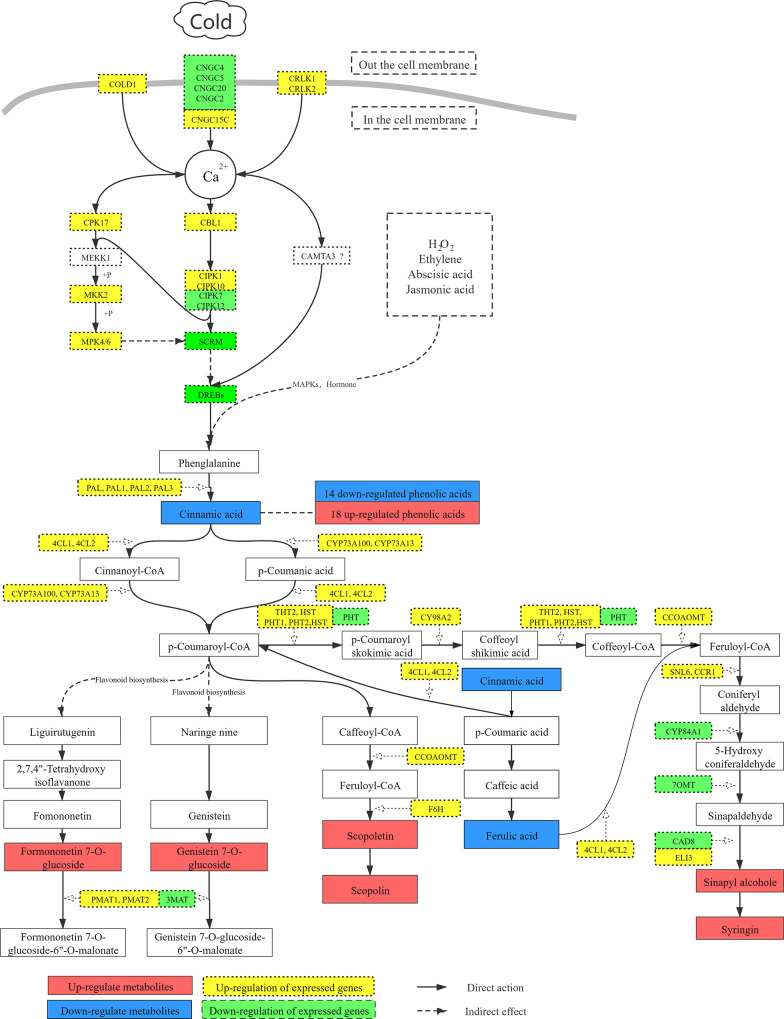
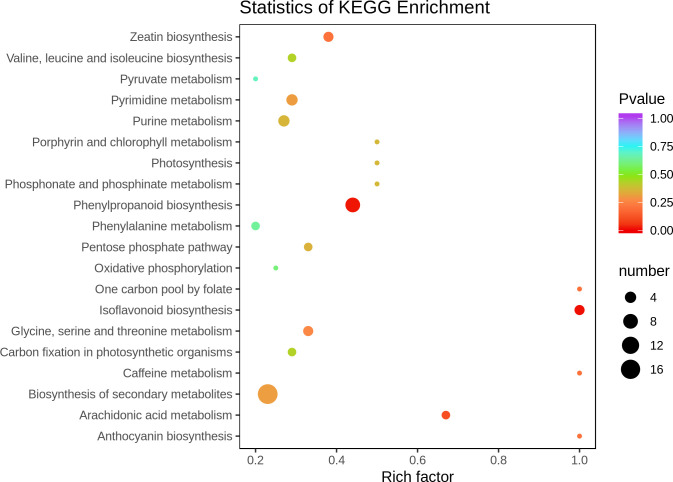
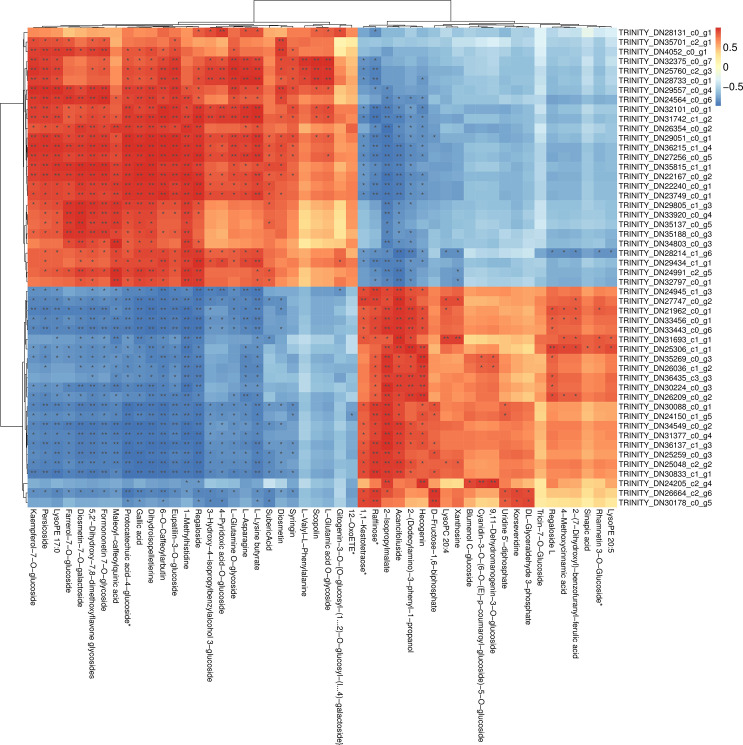
Hosta ventricosa is a robust ornamental perennial plant that can tolerate low temperatures, and which is widely used in urban landscaping design in Northeast China. However, the mechanism of cold-stress tolerance in this species is unclear. A combination of transcriptomic and metabolomic analysis was used to explore the mechanism of low-temperature tolerance in H. ventricosa. A total of 12 059 differentially expressed genes and 131 differentially expressed metabolites were obtained, which were mainly concentrated in the signal transduction and phenylpropanoid metabolic pathways. In the process of low-temperature signal transduction, possibly by transmitting Ca2+ inside and outside the cell through the ion channels on the three cell membranes of COLD, CNGCs and CRLK, H. ventricosa senses temperature changes and stimulates SCRM to combine with DREB through the MAPK signal pathway and Ca2+ signal sensors such as CBL, thus strengthening its low-temperature resistance. The pathways of phenylpropanoid and flavonoid metabolism represent the main mechanism of low-temperature tolerance in this species. The plant protects itself from low-temperature damage by increasing its content of genistein, scopolentin and scopolin. It is speculated that H. ventricosa can also adjust the content ratio of sinapyl alcohol and coniferyl alcohol and thereby alter the morphological structure of its cell walls and so increase its resistance to low temperatures.When subjected to low-temperature stress, H. ventricosa perceives temperature changes via COLD, CNGCs and CRLK, and protection from low-temperature damage is achieved by an increase in the levels of genistein, scopolentin and scopolin through the pathways of phenylpropanoid biosynthesis and flavonoid biosynthesis.
玉簪是一种耐寒的观赏多年生植物,在中国东北地区的城市景观设计中被广泛应用。然而,该物种耐寒的机制尚不清楚。本研究采用转录组学和代谢组学联合分析的方法,探讨了玉簪低温耐受的机制。共获得 12059 个差异表达基因和 131 个差异表达代谢物,主要集中在信号转导和苯丙烷代谢途径。在低温信号转导过程中,玉簪可能通过冷驯化蛋白(COLD)、环核苷酸门控通道(CNGCs)和钙调蛋白样受体激酶(CRLK)上的离子通道,将细胞内外的 Ca2+传递,从而感知温度变化,并通过 MAPK 信号通路和 Ca2+信号传感器(如 CBL)刺激 SCRM 与 DREB 结合,增强其抗寒性。苯丙烷代谢和黄酮类代谢途径代表了该物种低温耐受的主要机制。植物通过增加染料木黄酮、东莨菪碱和山莨菪碱的含量来保护自身免受低温伤害。推测玉簪还可以调节丁香醇和松柏醇的含量比例,从而改变细胞壁的形态结构,提高其抗低温能力。当受到低温胁迫时,玉簪通过 COLD、CNGCs 和 CRLK 感知温度变化,通过苯丙烷生物合成和黄酮类生物合成途径增加染料木黄酮、东莨菪碱和山莨菪碱的水平来实现对低温伤害的保护。