School of Life and Health Sciences, Aston University, Birmingham B4 7ET, UK.
Department of Clinical Neurophysiology, Birmingham Women's and Children's NHS Foundation Trust, Birmingham B4 6NH, UK.
Nutrients. 2021 Jan 16;13(1):249. doi: 10.3390/nu13010249.
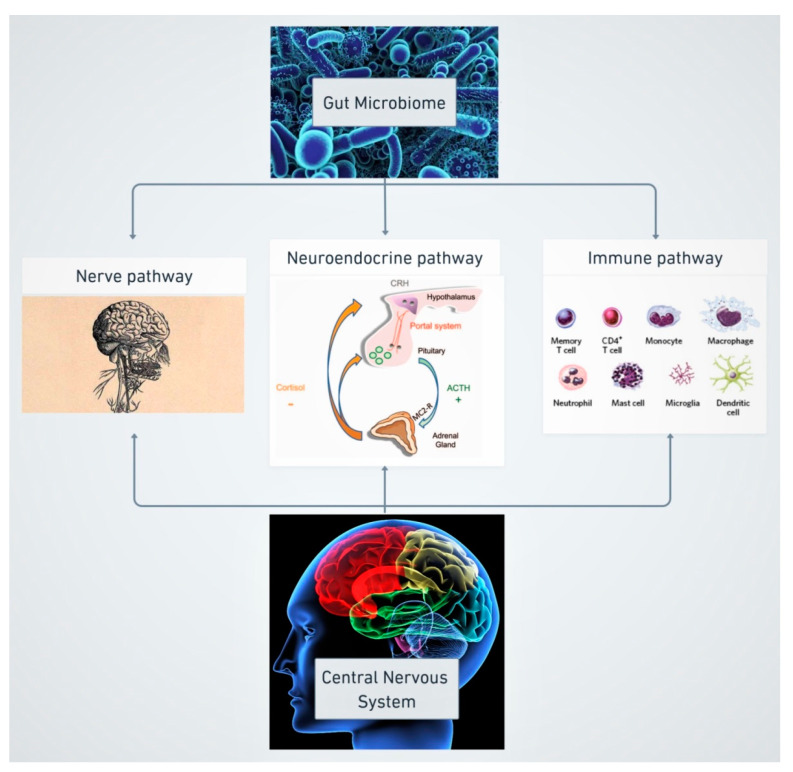
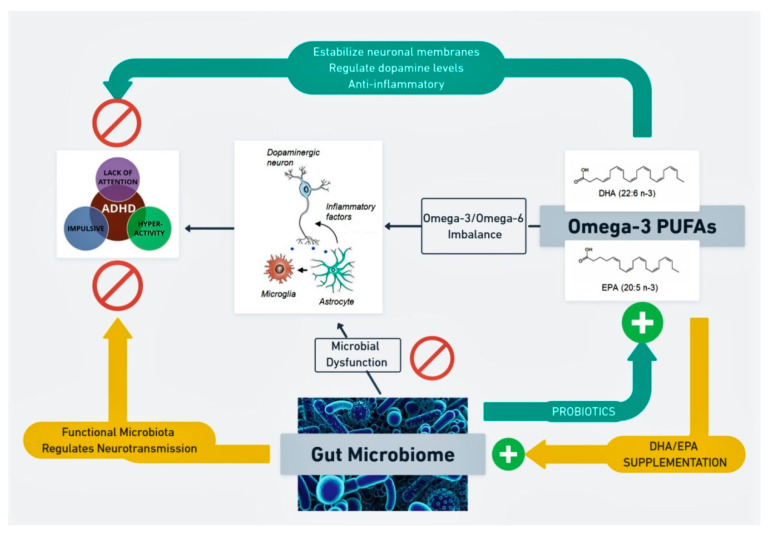
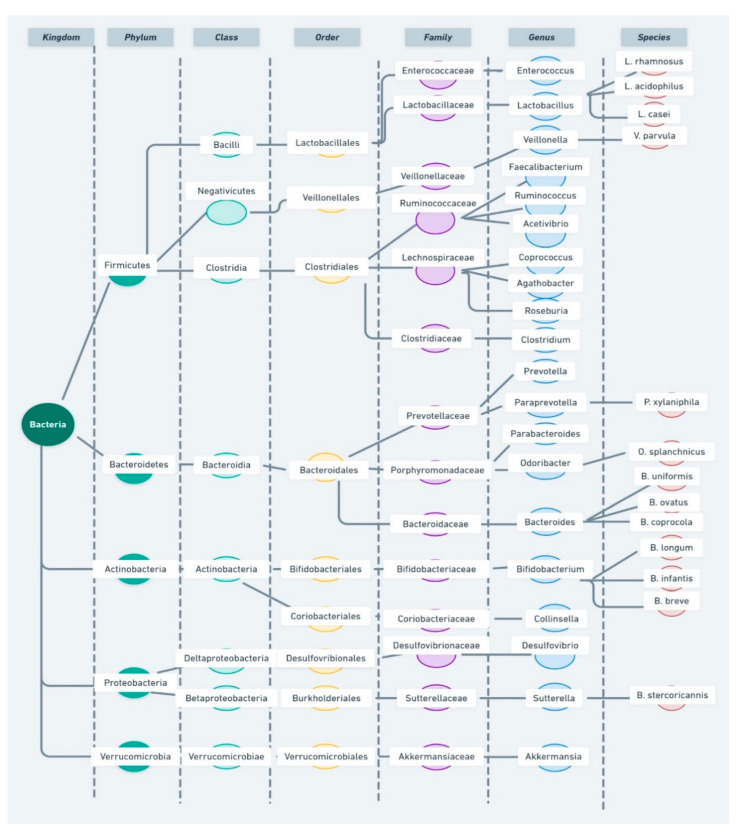
Studies suggest that the bidirectional relationship existent between the gut microbiome (GM) and the central nervous system (CNS), or so-called the microbiome-gut-brain axis (MGBA), is involved in diverse neuropsychiatric diseases in children and adults. In pediatric age, most studies have focused on patients with autism. However, evidence of the role played by the MGBA in attention deficit/hyperactivity disorder (ADHD), the most common neurodevelopmental disorder in childhood, is still scanty and heterogeneous. This review aims to provide the current evidence on the functioning of the MGBA in pediatric patients with ADHD and the specific role of omega-3 polyunsaturated fatty acids (ω-3 PUFAs) in this interaction, as well as the potential of the GM as a therapeutic target for ADHD. We will explore: (1) the diverse communication pathways between the GM and the CNS; (2) changes in the GM composition in children and adolescents with ADHD and association with ADHD pathophysiology; (3) influence of the GM on the ω-3 PUFA imbalance characteristically found in ADHD; (4) interaction between the GM and circadian rhythm regulation, as sleep disorders are frequently comorbid with ADHD; (5) finally, we will evaluate the most recent studies on the use of probiotics in pediatric patients with ADHD.
研究表明,肠道微生物群(GM)和中枢神经系统(CNS)之间的双向关系,即所谓的微生物群-肠道-大脑轴(MGBA),与儿童和成人的多种神经精神疾病有关。在儿科年龄,大多数研究都集中在自闭症患者身上。然而,MGBA 在注意力缺陷/多动障碍(ADHD)中的作用的证据仍然很少且存在异质性,ADHD 是儿童中最常见的神经发育障碍。本综述旨在提供目前关于 MGBA 在儿科 ADHD 患者中的作用以及 ω-3 多不饱和脂肪酸(ω-3 PUFAs)在这种相互作用中的特定作用的证据,以及 GM 作为 ADHD 治疗靶点的潜力。我们将探讨:(1)GM 和 CNS 之间的多种通讯途径;(2)ADHD 儿童和青少年 GM 组成的变化及其与 ADHD 病理生理学的关联;(3)GM 对 ADHD 中典型发现的 ω-3 PUFA 失衡的影响;(4)GM 与昼夜节律调节的相互作用,因为睡眠障碍经常与 ADHD 共病;(5)最后,我们将评估最近关于在 ADHD 儿科患者中使用益生菌的研究。