Zhang Shujun, Qian Yinfeng, Li Qian, Xu Xiaotao, Li Xueying, Wang Chunli, Cai Huanhuan, Zhu Jiajia, Yu Yongqiang
Department of Radiology, The First Affiliated Hospital of Anhui Medical University, Hefei, China.
Research Center of Clinical Medical Imaging, Hefei, China.
Front Neurosci. 2021 Oct 18;15:750704. doi: 10.3389/fnins.2021.750704. eCollection 2021.
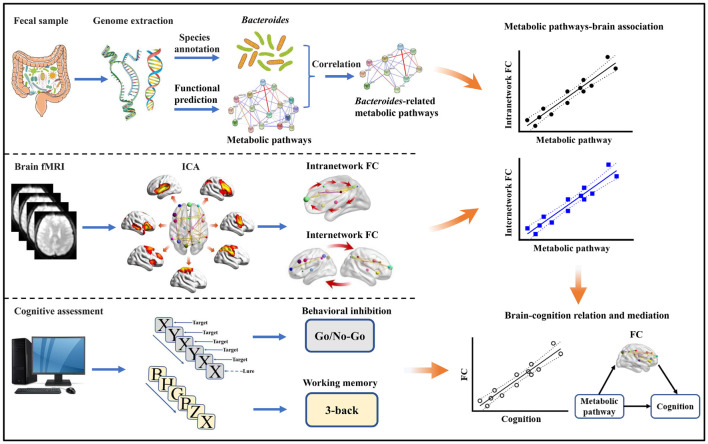
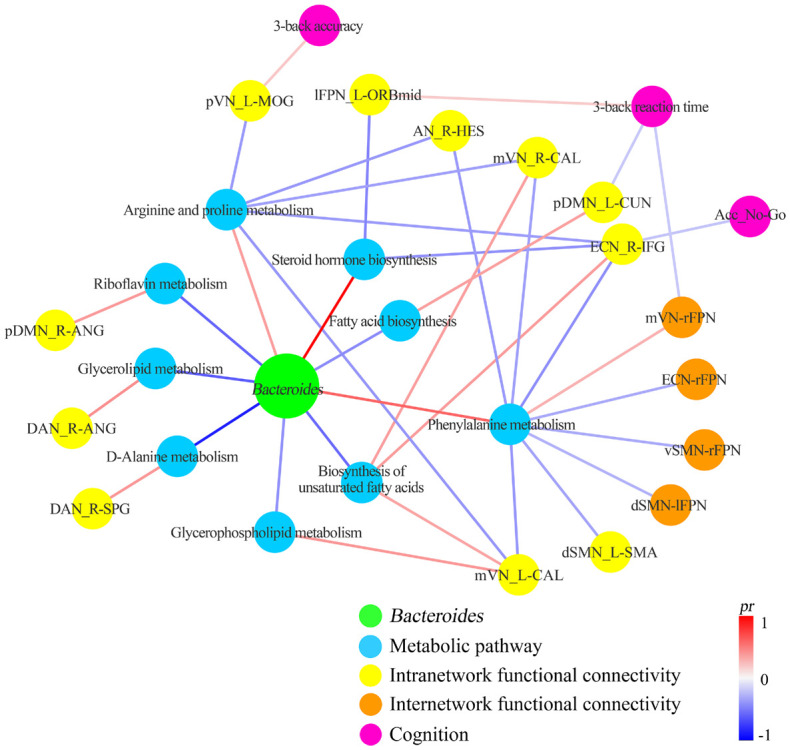
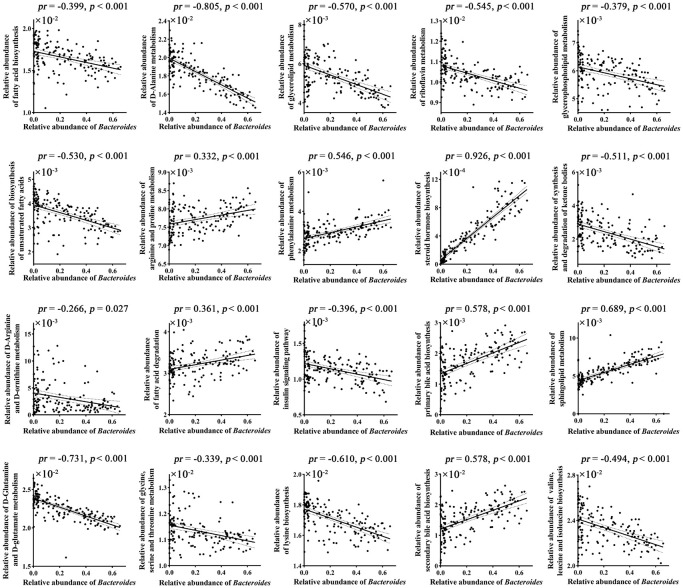
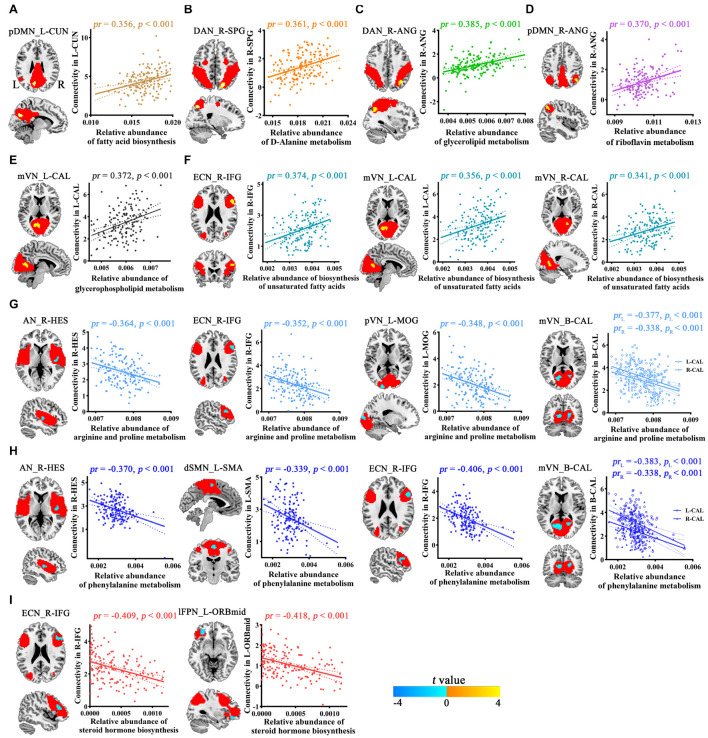
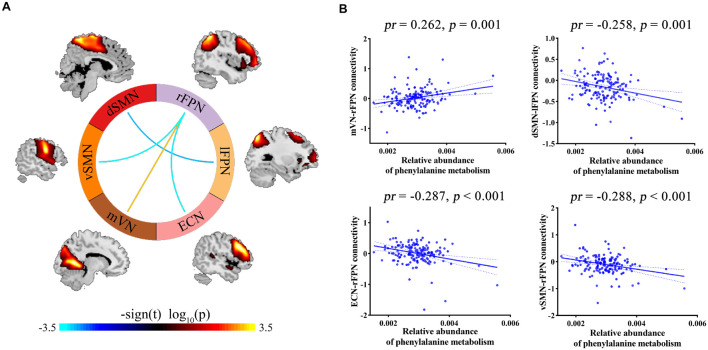
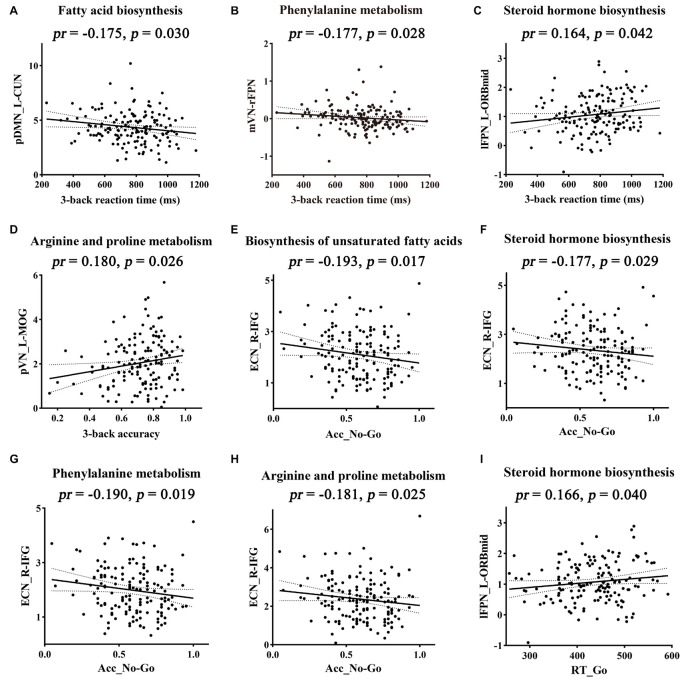
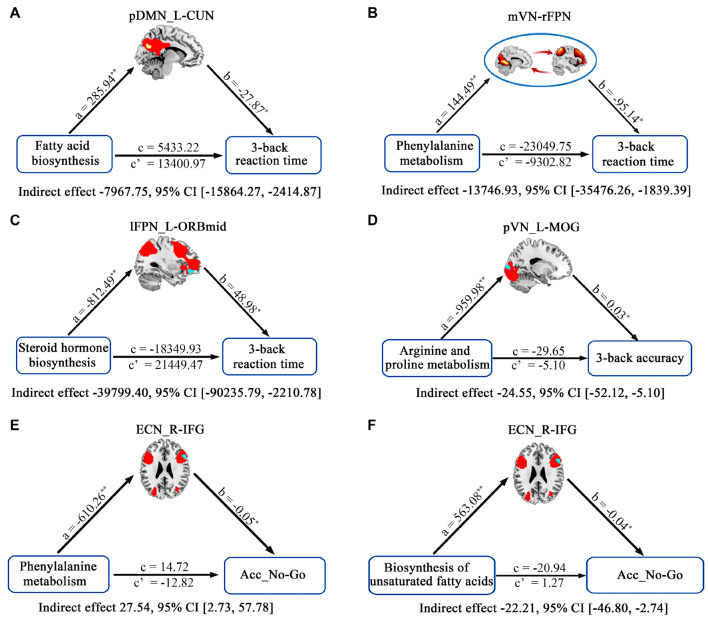
There is a proof-of-concept that microbial metabolites provide a molecular connection between the gut and the brain. Extensive research has established a link between gut and human cognition, yet the metabolic and neural mechanisms underlying this association remain largely unknown. Here, we collected fecal samples, resting-state functional MRI, and cognitive data from a large and homogeneous sample of 157 healthy young adults. 16S rRNA gene sequencing was conducted with abundances of and metabolic pathways quantified by species annotation and functional prediction analyses, respectively. Large-scale intra- and internetwork functional connectivity was measured using independent component analysis. Results showed that gut were related to multiple metabolic pathways, which in turn were associated with widespread functional network connectivity. Furthermore, functional network connectivity mediated the associations between some related metabolic pathways and cognition. Remarkably, arginine and proline metabolism, phenylalanine metabolism, and biosynthesis of unsaturated fatty acids act as the key metabolic pathways that are most contributive, and the executive control and sensorimotor systems contribute most strongly at the neural level. Our findings suggest complex poly-pathway and poly-network processes linking to cognition, more generally yielding a novel conceptualization of targeting gut as an intervention strategy for individuals with cognitive impairment.
有一个概念验证表明,微生物代谢产物在肠道和大脑之间提供了分子联系。广泛的研究已经建立了肠道与人类认知之间的联系,但这种关联背后的代谢和神经机制在很大程度上仍然未知。在这里,我们从157名健康年轻成年人的大型同质样本中收集了粪便样本、静息态功能磁共振成像和认知数据。分别通过物种注释和功能预测分析对16S rRNA基因进行测序,并对丰度和代谢途径进行量化。使用独立成分分析测量大规模的网络内和网络间功能连接。结果表明,肠道微生物与多种代谢途径相关,而这些代谢途径又与广泛的功能网络连接相关。此外,功能网络连接介导了一些相关代谢途径与认知之间的关联。值得注意的是,精氨酸和脯氨酸代谢、苯丙氨酸代谢以及不饱和脂肪酸的生物合成是最具贡献的关键代谢途径,并且执行控制和感觉运动系统在神经水平上贡献最为显著。我们的研究结果表明,肠道微生物与认知之间存在复杂的多途径和多网络过程,更普遍地说,这为将靶向肠道微生物作为认知障碍个体的干预策略提供了一种新的概念化。