Department of Public Health, Shiga University of Medical Science, Otsu, Japan.
Yamashina Racto Clinic and Medical Examination Center, Kyoto, Japan.
J Nutr Sci. 2021 Oct 11;10:e61. doi: 10.1017/jns.2021.49. eCollection 2021.
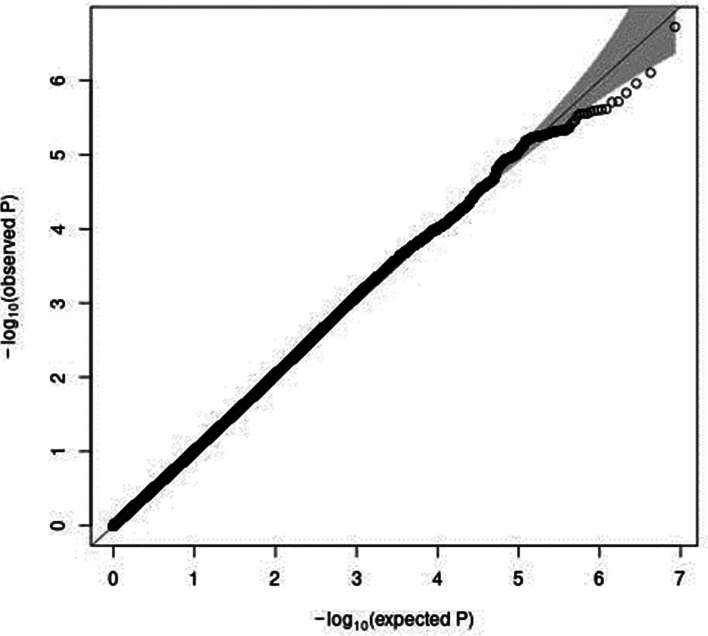
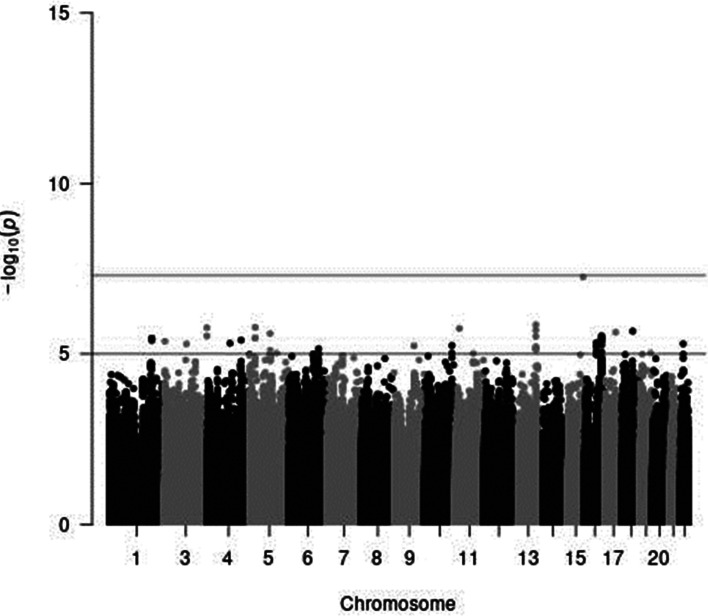
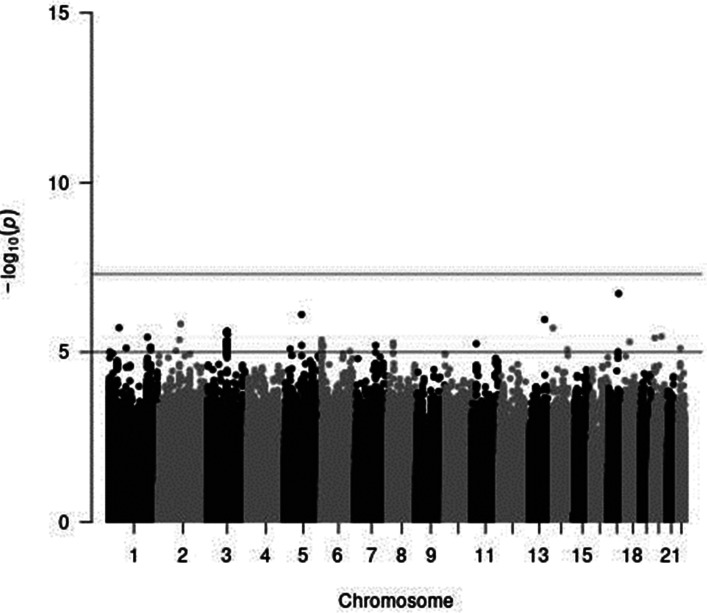
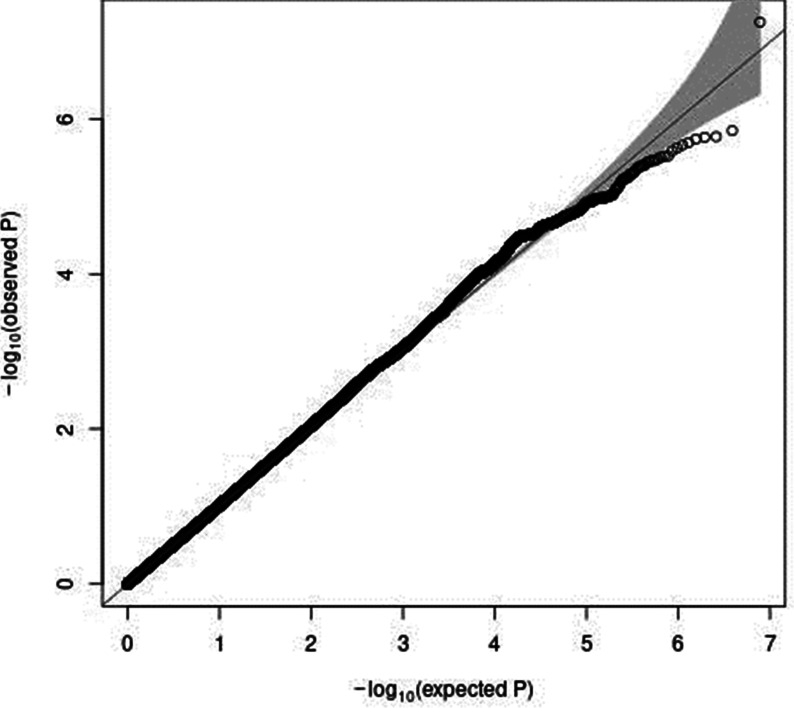
Recent genome-wide association studies (GWAS) on the dietary habits of the Japanese population have shown that an effect rs671 allele was inversely associated with fish consumption, whereas it was directly associated with coffee consumption. Although meat is a major source of protein and fat in the diet, whether genetic factors that influence meat-eating habits in healthy populations are unknown. This study aimed to conduct a GWAS to find genetic variations that affect meat consumption in a Japanese population. We analysed GWAS data using 14 076 participants from the Japan Multi-Institutional Collaborative Cohort (J-MICC) study. We used a semi-quantitative food frequency questionnaire to estimate food intake that was validated previously. Association of the imputed variants with total meat consumption per 1000 kcal energy was performed by linear regression analysis with adjustments for age, sex, and principal component analysis components 1-10. We found that no genetic variant, including rs671, was associated with meat consumption. The previously reported single nucleotide polymorphisms that were associated with meat consumption in samples of European ancestry could not be replicated in our J-MICC data. In conclusion, significant genetic factors that affect meat consumption were not observed in a Japanese population.
最近针对日本饮食习惯的全基因组关联研究(GWAS)表明,rs671 等位基因与鱼类摄入呈负相关,而与咖啡摄入呈正相关。虽然肉类是饮食中蛋白质和脂肪的主要来源,但在健康人群中影响肉食习惯的遗传因素尚不清楚。本研究旨在对日本人群进行 GWAS,以寻找影响肉食摄入的遗传变异。我们使用来自日本多机构合作队列研究(J-MICC)的 14076 名参与者的 GWAS 数据进行分析。我们使用半定量食物频率问卷来估计之前已经验证过的食物摄入量。通过线性回归分析,在调整年龄、性别和主成分分析成分 1-10 后,评估了 imputed 变异与每 1000 卡路里能量的总肉类摄入量之间的关联。我们发现,包括 rs671 在内的没有遗传变异与肉类摄入有关。先前在欧洲血统样本中与肉类摄入相关的单核苷酸多态性在我们的 J-MICC 数据中无法复制。总之,在日本人群中没有观察到显著影响肉类摄入的遗传因素。