Percheski Christine, Gibson-Davis Christina
Northwestern University, Evanston, IL, USA.
Duke University, Durham, NC, USA.
Socius. 2020 Jan-Dec;6. doi: 10.1177/2378023120916616. Epub 2020 Jun 1.
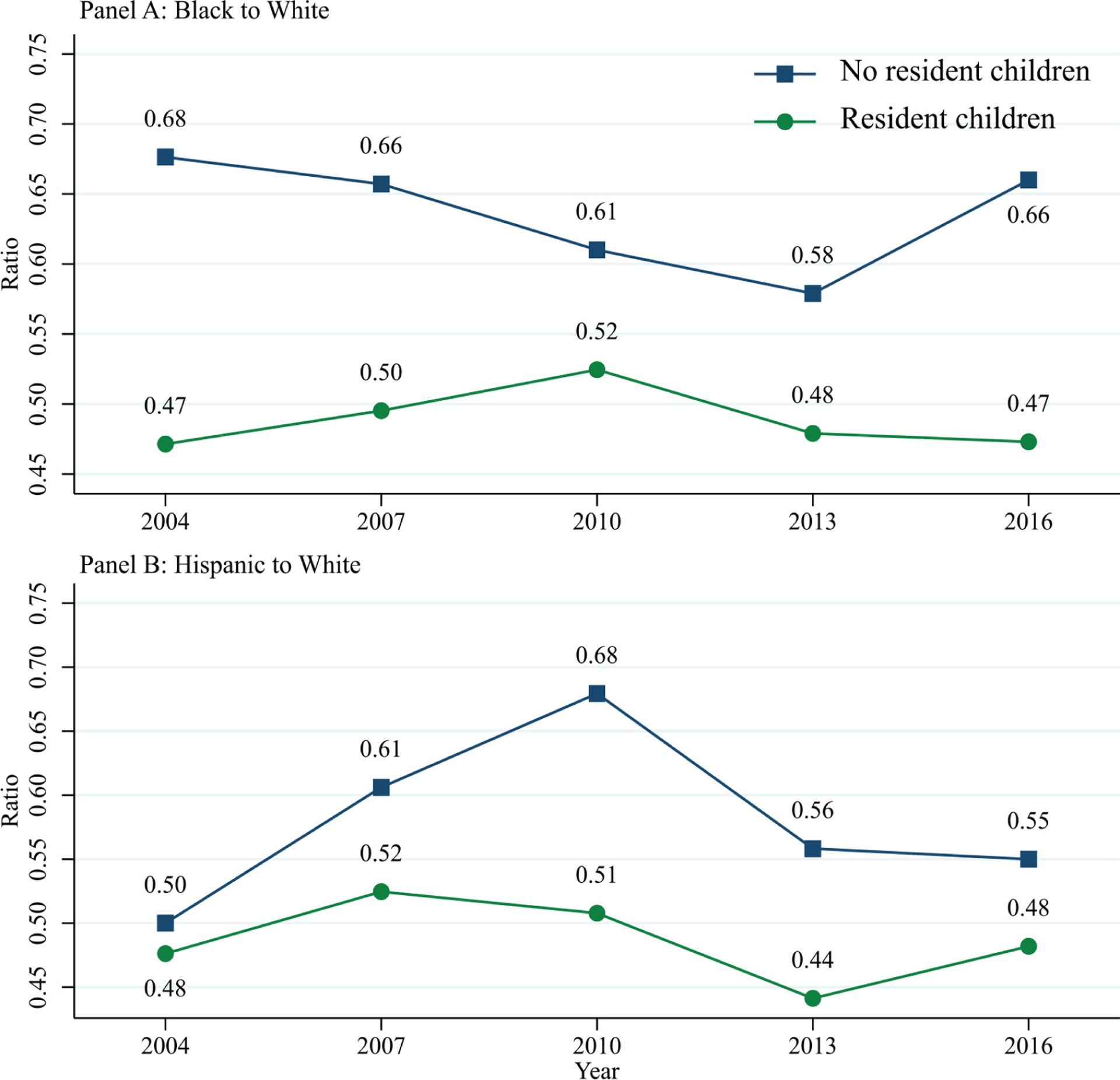
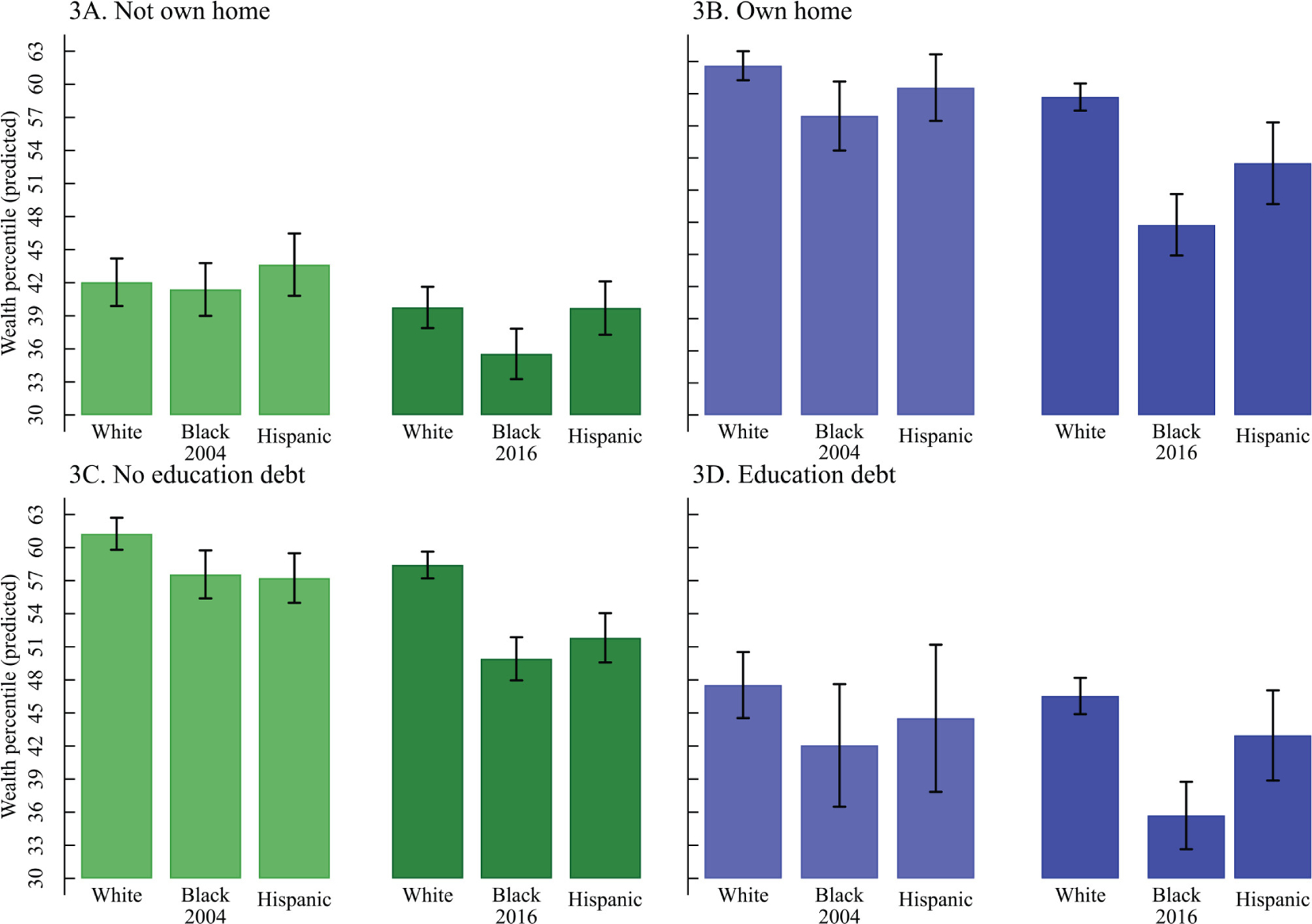
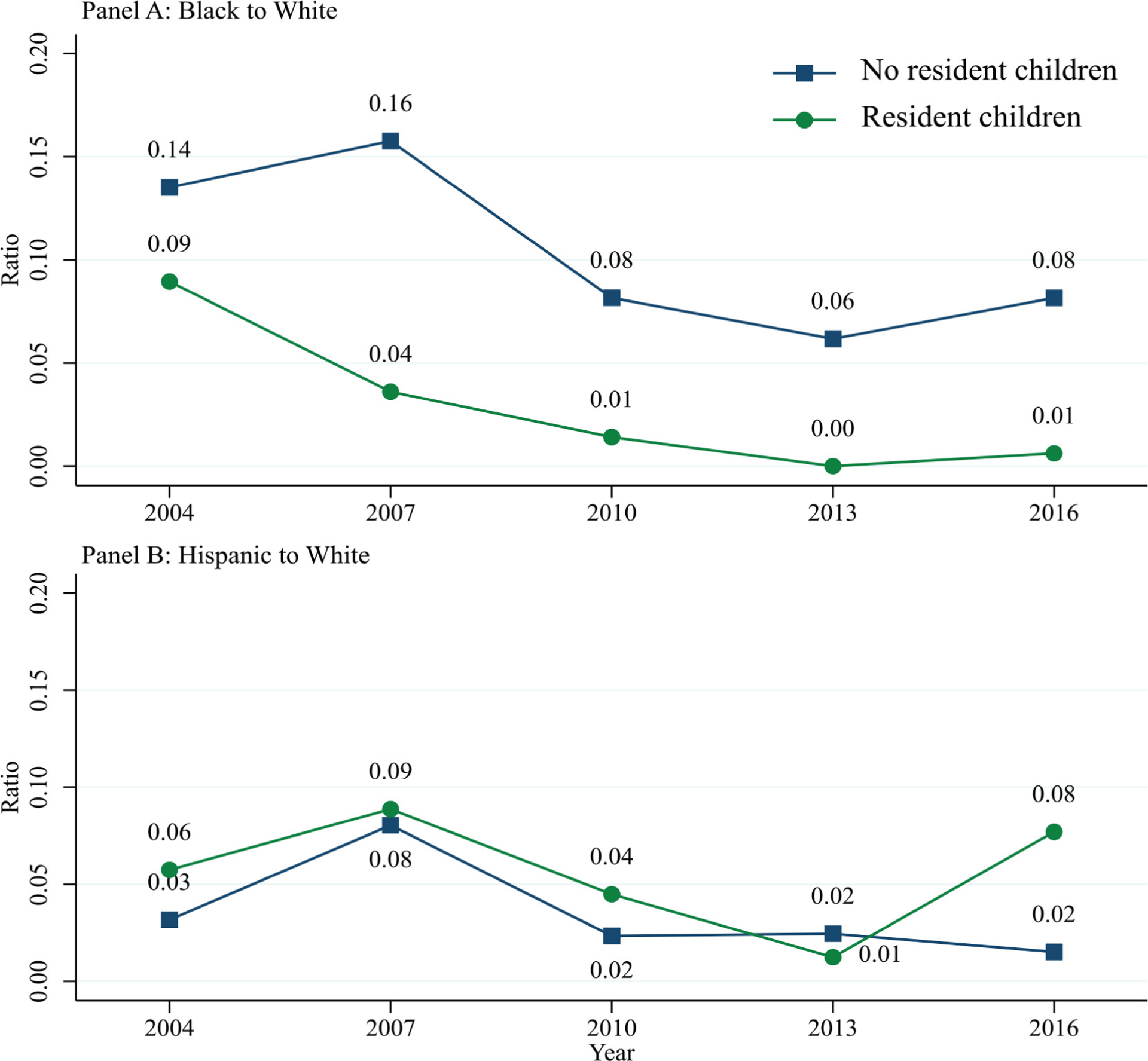
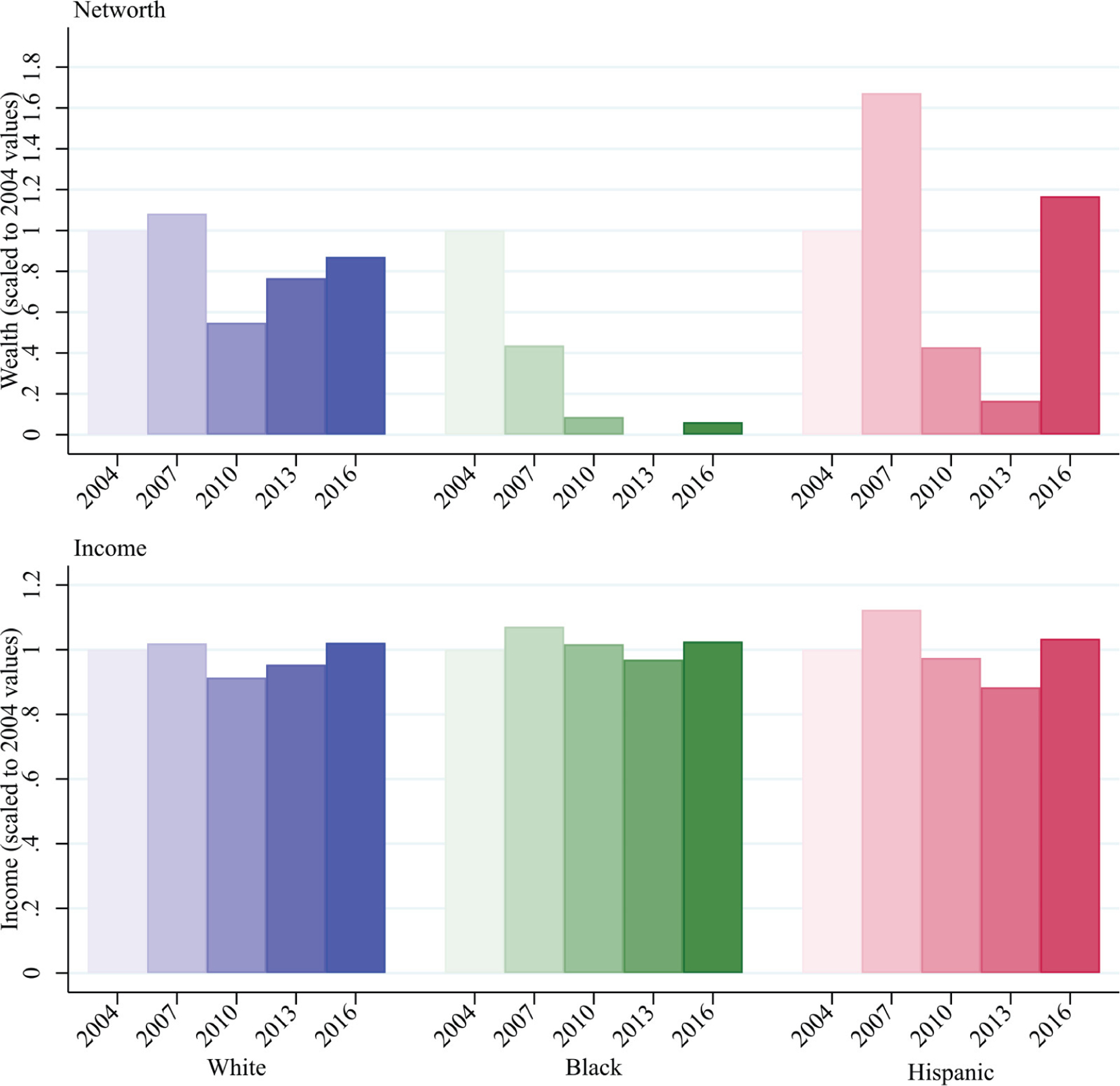
The dynamics of racial/ethnic wealth inequality among U.S. families with resident children (child households) have been understudied, a major oversight because of wealth's impact on child development and intergenerational mobility. Using data from the Survey of Consumer Finances (2004-2016), the authors find that gaps between black and white households are larger in, and have grown faster for, child households relative to the general population. In contrast, black-white gaps for child households have remained largely unchanged. Wealth trends for black and Hispanic child households have diverged, and by 2016, Hispanic child households had more net worth than black child households. Between 2004 and 2016, home ownership rates and home equity levels for black child households decreased, while educational debt increased. In 2016, black child households had just one cent for every dollar held by non-Hispanic white child households. These findings depict the extreme wealth fragility of black child households.
对于有常住子女的美国家庭(有孩子的家庭)而言,种族/族裔财富不平等的动态变化一直未得到充分研究,这是一个重大疏忽,因为财富会影响儿童发展和代际流动。利用消费者金融调查(2004 - 2016年)的数据,作者发现,与普通人群相比,有孩子的家庭中黑人和白人家庭之间的差距更大,且增长速度更快。相比之下,有孩子家庭的黑白差距基本保持不变。黑人和西班牙裔有孩子家庭的财富趋势出现了分化,到2016年,西班牙裔有孩子家庭的净资产超过了黑人有孩子家庭。2004年至2016年期间,黑人有孩子家庭的住房拥有率和房屋净值水平下降,而教育债务增加。2016年,黑人有孩子家庭每持有1美元,非西班牙裔白人有孩子家庭就持有100美分。这些发现描绘了黑人有孩子家庭极端的财富脆弱性。