Gielis Karsten, Vanden Abeele Marie-Elena, De Croon Robin, Dierick Paul, Ferreira-Brito Filipa, Van Assche Lies, Verbert Katrien, Tournoy Jos, Vanden Abeele Vero
e-Media Research Lab, Katholieke Universiteit Leuven, Leuven, Belgium.
Memory Clinic, Jessa Hospital, Hasselt, Belgium.
JMIR Serious Games. 2021 Nov 4;9(4):e18359. doi: 10.2196/18359.
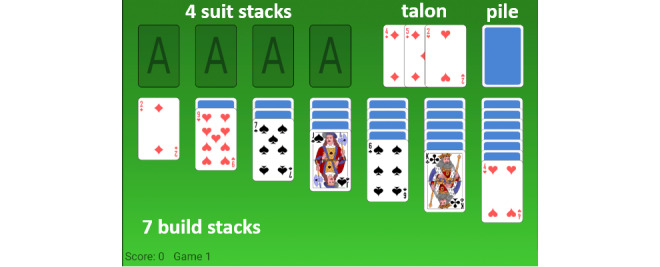
Mild cognitive impairment (MCI), the intermediate cognitive status between normal cognitive decline and pathological decline, is an important clinical construct for signaling possible prodromes of dementia. However, this condition is underdiagnosed. To assist monitoring and screening, digital biomarkers derived from commercial off-the-shelf video games may be of interest. These games maintain player engagement over a longer period of time and support longitudinal measurements of cognitive performance.
This paper aims to explore how the player actions of Klondike Solitaire relate to cognitive functions and to what extent the digital biomarkers derived from these player actions are indicative of MCI.
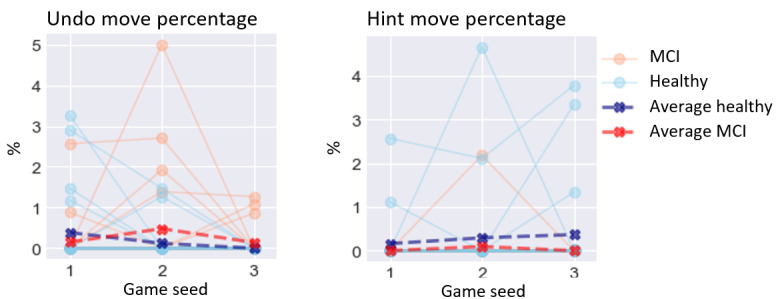
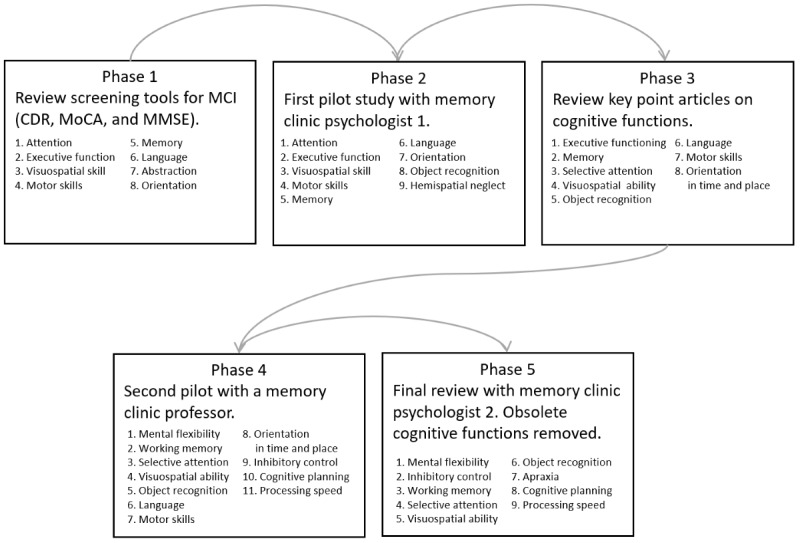
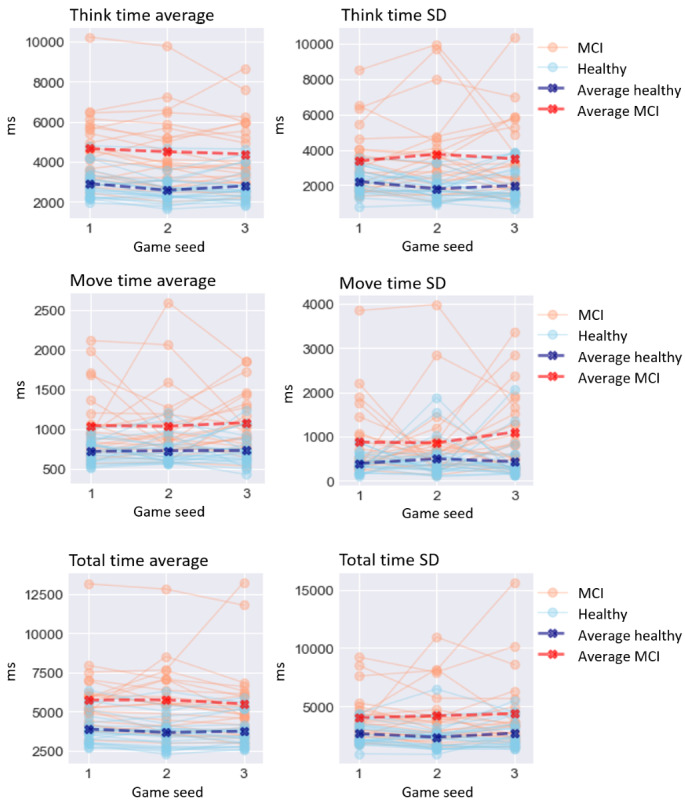
First, 11 experts in the domain of cognitive impairments were asked to correlate 21 player actions to 11 cognitive functions. Expert agreement was verified through intraclass correlation, based on a 2-way, fully crossed design with type consistency. On the basis of these player actions, 23 potential digital biomarkers of performance for Klondike Solitaire were defined. Next, 23 healthy participants and 23 participants living with MCI were asked to play 3 rounds of Klondike Solitaire, which took 17 minutes on average to complete. A generalized linear mixed model analysis was conducted to explore the differences in digital biomarkers between the healthy participants and those living with MCI, while controlling for age, tablet experience, and Klondike Solitaire experience.
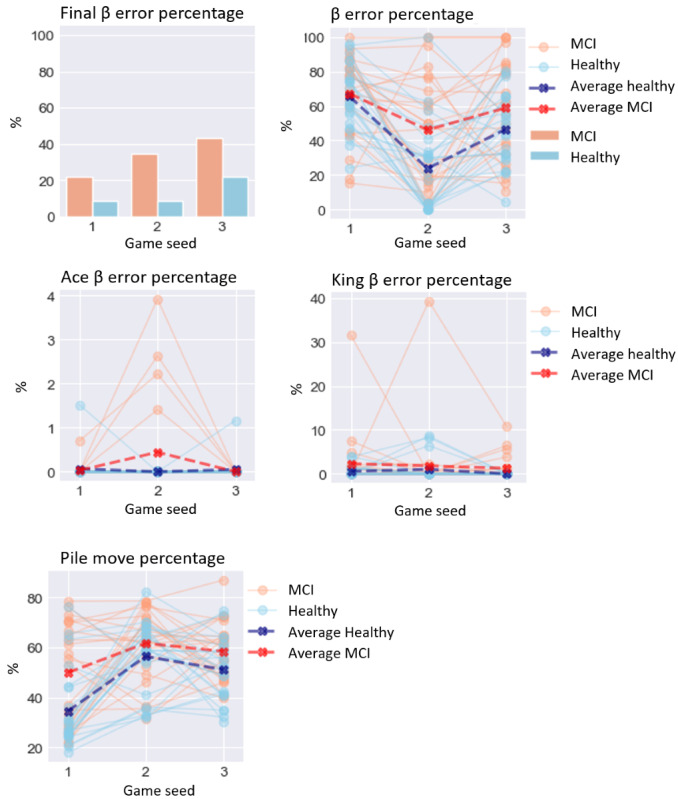
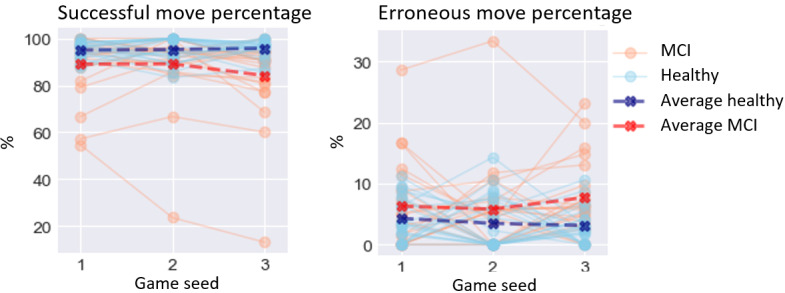
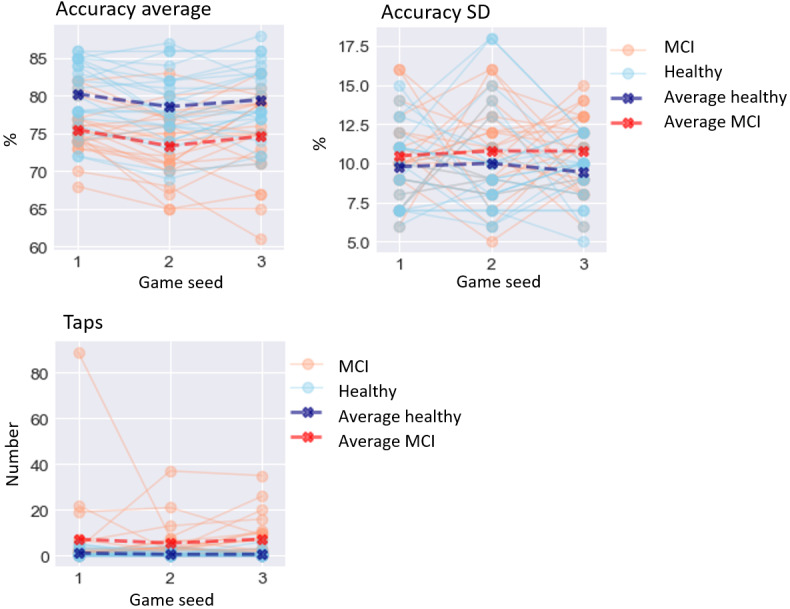
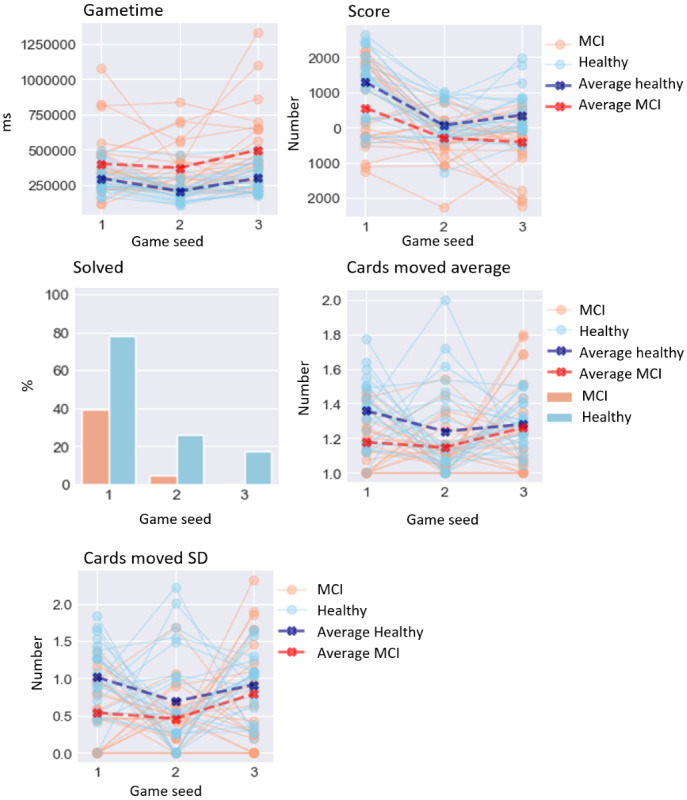
All intraclass correlations for player actions and cognitive functions scored higher than 0.75, indicating good to excellent reliability. Furthermore, all player actions had, according to the experts, at least one cognitive function that was on average moderately to strongly correlated to a cognitive function. Of the 23 potential digital biomarkers, 12 (52%) were revealed by the generalized linear mixed model analysis to have sizeable effects and significance levels. The analysis indicates sensitivity of the derived digital biomarkers to MCI.
Commercial off-the-shelf games such as digital card games show potential as a complementary tool for screening and monitoring cognition.
ClinicalTrials.gov NCT02971124; https://clinicaltrials.gov/ct2/show/NCT02971124.
轻度认知障碍(MCI)是正常认知衰退与病理性衰退之间的中间认知状态,是预示痴呆可能前驱症状的重要临床概念。然而,这种情况目前诊断不足。为了辅助监测和筛查,源自现成商业视频游戏的数字生物标志物可能会受到关注。这些游戏能让玩家长时间保持参与度,并支持对认知表现进行纵向测量。
本文旨在探讨克朗代克纸牌接龙游戏的玩家行为与认知功能之间的关系,以及从这些玩家行为中得出的数字生物标志物在多大程度上可指示MCI。
首先,邀请11位认知障碍领域的专家将21种玩家行为与11种认知功能进行关联。基于具有类型一致性的双向完全交叉设计,通过组内相关来验证专家之间的一致性。基于这些玩家行为,定义了23种克朗代克纸牌接龙游戏表现的潜在数字生物标志物。接下来,让23名健康参与者和23名患有MCI的参与者玩3轮克朗代克纸牌接龙游戏,平均耗时17分钟完成。进行广义线性混合模型分析,以探究健康参与者与患有MCI的参与者在数字生物标志物方面的差异,同时控制年龄、平板电脑使用经验和克朗代克纸牌接龙游戏经验。
玩家行为与认知功能的所有组内相关得分均高于0.75,表明可靠性良好至极佳。此外,根据专家的看法,所有玩家行为都至少有一种认知功能,其与某一认知功能的平均相关性为中等至强相关。在23种潜在数字生物标志物中,广义线性混合模型分析显示有12种(52%)具有显著影响和显著性水平。该分析表明所衍生的数字生物标志物对MCI具有敏感性。
诸如数字纸牌游戏之类的现成商业游戏显示出作为筛查和监测认知的补充工具的潜力。
ClinicalTrials.gov NCT02971124;https://clinicaltrials.gov/ct2/show/NCT02971124 。