Comparative Genetics and Refinement, Biomedical Primate Research Centre, Rijswijk, Netherlands.
Theoretical Biology and Bioinformatics, Utrecht University, Utrecht, Netherlands.
Front Immunol. 2021 Oct 19;12:716289. doi: 10.3389/fimmu.2021.716289. eCollection 2021.
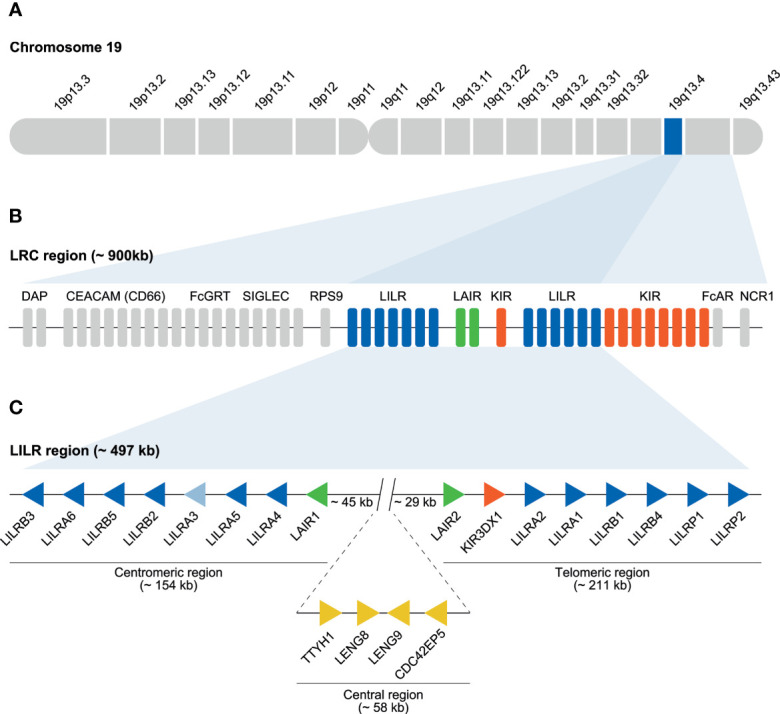
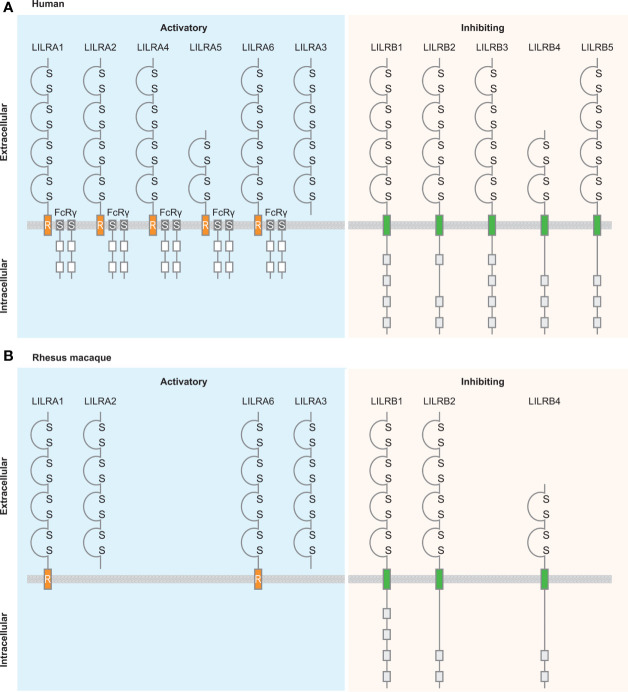
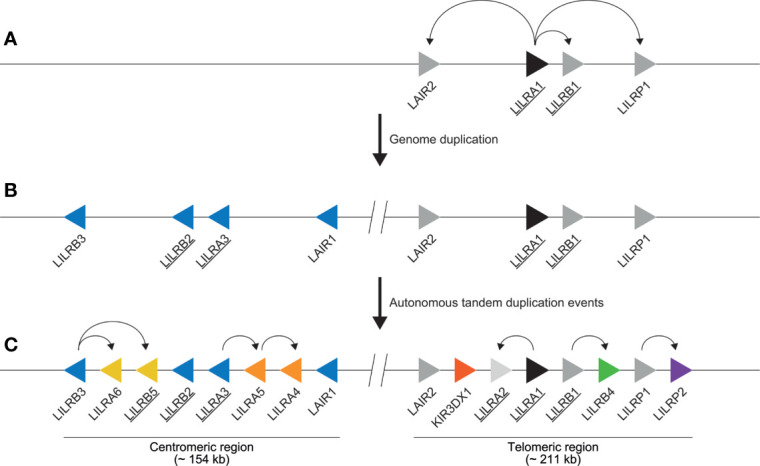
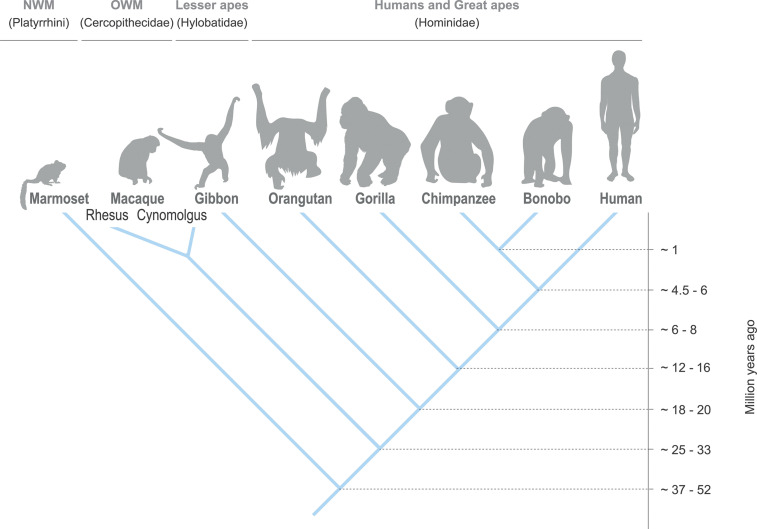
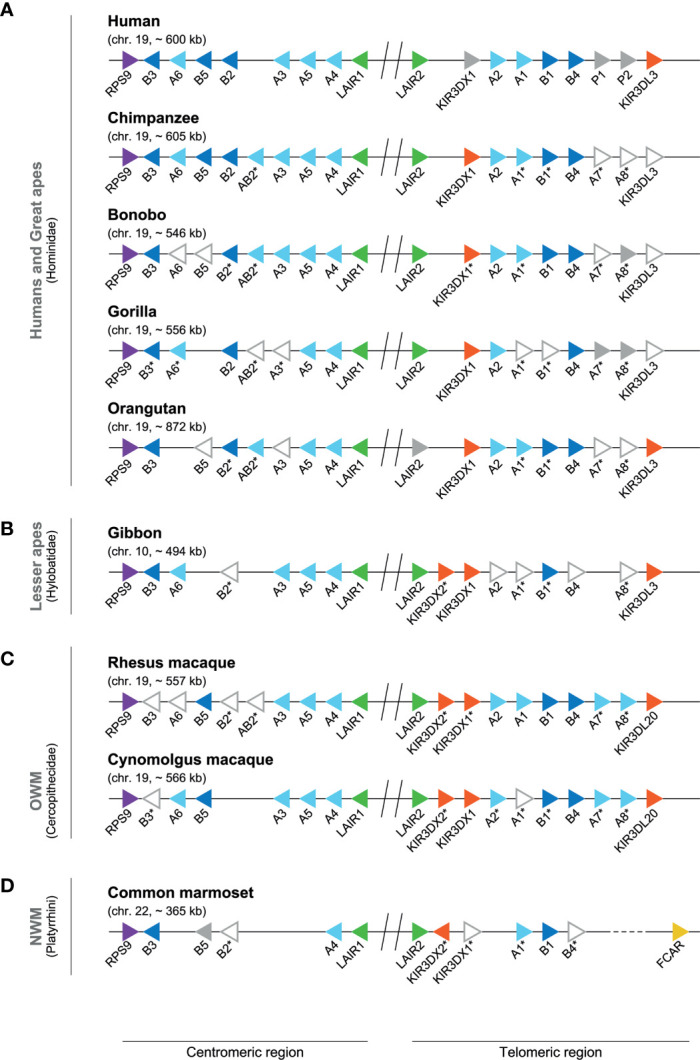
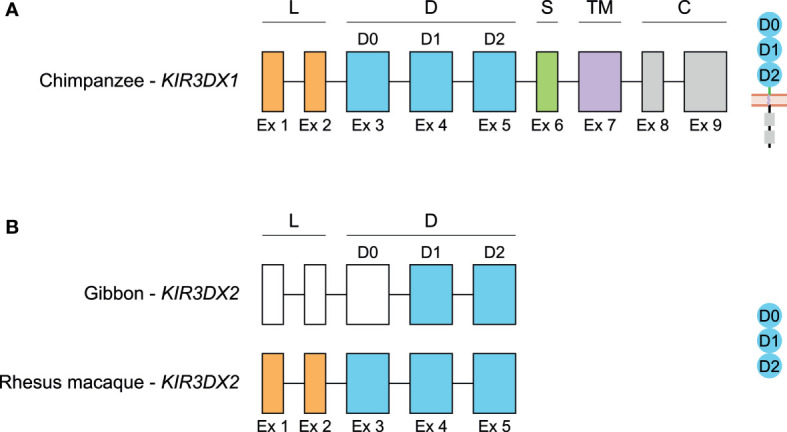
The genes of the leukocyte immunoglobulin-like receptor (LILR) family map to the leukocyte receptor complex (LRC) on chromosome 19, and consist of both activating and inhibiting entities. These receptors are often involved in regulating immune responses, and are considered to play a role in health and disease. The human region and evolutionary equivalents in some rodent and bird species have been thoroughly characterized. In non-human primates, the region is annotated, but a thorough comparison between humans and non-human primates has not yet been documented. Therefore, it was decided to undertake a comprehensive comparison of the human and non-human primate region at the genomic level. During primate evolution the organization of the region remained largely conserved. One major exception, however, is provided by the common marmoset, a New World monkey species, which seems to feature a substantial contraction of the number of genes in both the centromeric and the telomeric region. Furthermore, genomic analysis revealed that the killer-cell immunoglobulin-like receptor gene , which maps in the region, features one copy in humans and great ape species. A second copy, which might have been introduced by a duplication event, was observed in the lesser apes, and in Old and New World monkey species. The highly conserved gene organization allowed us to standardize the gene nomenclature for non-human primate species, and implies that most of the receptors encoded by these genes likely fulfill highly preserved functions.
白细胞免疫球蛋白样受体(LILR)家族的基因位于染色体 19 上的白细胞受体复合物(LRC)上,由激活和抑制两种实体组成。这些受体通常参与调节免疫反应,被认为在健康和疾病中发挥作用。人类的 区域及其在一些啮齿动物和鸟类物种中的进化等同物已经得到了充分的描述。在非人类灵长类动物中, 区域被注释,但人类和非人类灵长类动物之间的全面比较尚未记录。因此,决定在基因组水平上对人类和非人类灵长类动物的 区域进行全面比较。在灵长类动物进化过程中, 区域的组织基本保持保守。然而,一个主要的例外是新世界猴物种普通狨猴,它似乎在着丝粒和端粒区域的 基因数量上都有实质性的收缩。此外,基因组分析显示,位于 区域内的杀伤细胞免疫球蛋白样受体基因 ,在人类和大型猿类物种中只有一个拷贝。第二个拷贝可能是通过复制事件引入的,在较小的猿类以及旧大陆和新大陆猴物种中观察到。高度保守的基因组织使我们能够为非人类灵长类物种标准化 基因命名法,并意味着这些基因编码的大多数受体可能具有高度保守的功能。