Fosser Michele, Camporese Antonio
a:1:{s:5:"en_US";s:84:"Department of Orthopaedic and Trauma Surgery, Ospedale Alto Vicentino, Santorso (VI)";}.
2Department of Orthopaedic and Trauma Surgery, Policlinico Abano Terme, Abano Terme (PD), Italy.
Acta Biomed. 2021 Nov 5;92(5):e2021325. doi: 10.23750/abm.v92i5.10678.
the optimal treatment of acute type III-V acromioclavicular (A-C) Rockwood dislocations is still a matter of discussion in orthopaedic surgery.
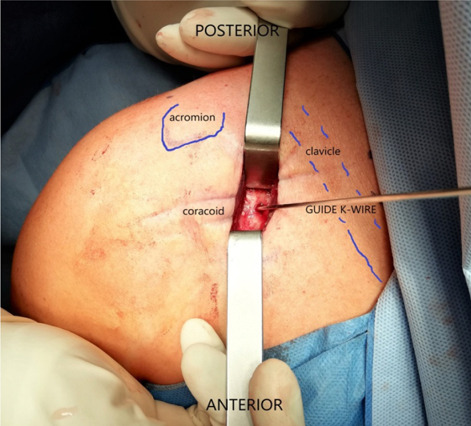
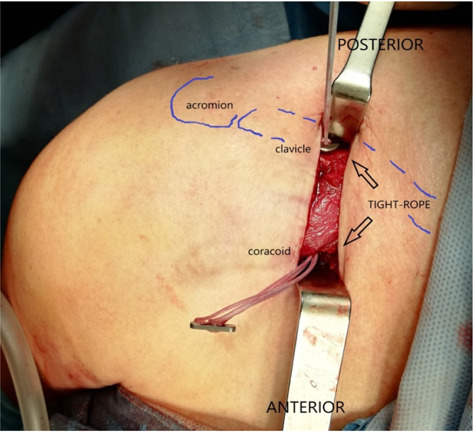
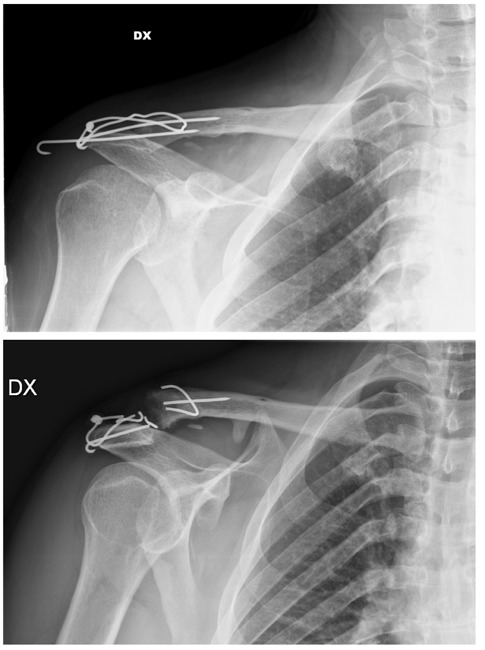
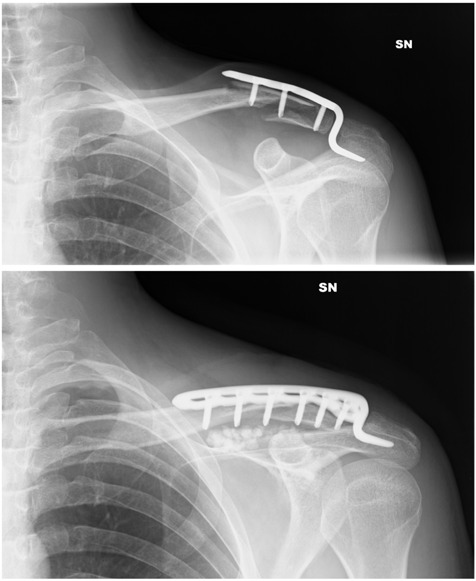
retrospective and comparative evaluation of the clinical and radiographic results of three different surgical techniques for stabilization of A-C joint using tension band wiring, hook plate and TightRope.
a consecutive series of patients, treated from January 2014 and November 2019, were divided into three groups according to the surgical method used. They were clinically and radiographically assessed and the results were compared with those present in the literature.
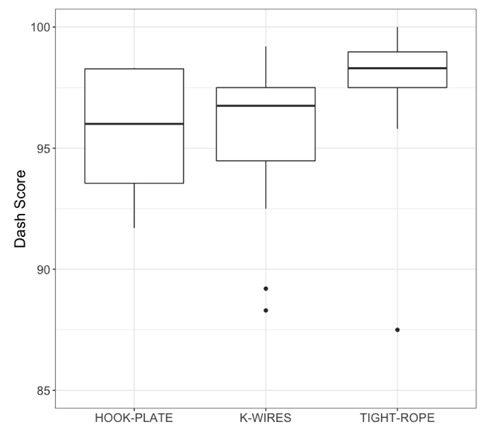
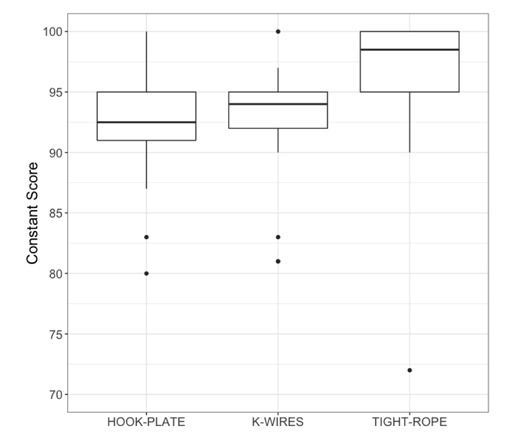
66 patients, with a mean age of 44.7 years, were enrolled with a mean follow-up of 37.7 months (range 6-58 months). All patients, regardless of the group, had satisfactory outcome. According to the DASH score, statistically significant difference favours the TightRope Group (TRG) fixation (p<0.005). The TRG showed the highest mean Constant score (96,1); there are no significative differences between the clinical scores of Hook Plate Group (HPG) and Tension Band Wiring Group (TBWG). However, these two methods showed numerous complications, especially metal-work mobilization and stiffness respectively.
good results can be overall achieved with primary fixation by the three different surgical methods under investigation. The TightRope system exhibited some advantages such as higher clinical scores, early recovery of range of movements, longitudinal surgical incision with non-keloid scar, no need for a second surgery and lower rate of complications.
急性III - V型肩锁关节(A - C)Rockwood脱位的最佳治疗方法在骨外科领域仍是一个讨论的话题。
回顾性比较评估三种不同手术技术(张力带钢丝固定、钩钢板固定和TightRope固定)用于稳定肩锁关节的临床和影像学结果。
对2014年1月至2019年11月连续收治的患者,根据所采用的手术方法分为三组。对他们进行临床和影像学评估,并将结果与文献中的结果进行比较。
纳入66例患者,平均年龄44.7岁,平均随访37.7个月(6 - 58个月)。所有患者,无论所属组别,均取得满意结果。根据DASH评分,统计学上显著差异有利于TightRope组(TRG)固定(p<0.005)。TRG组的平均Constant评分最高(96.1);钩钢板组(HPG)和张力带钢丝组(TBWG)的临床评分之间无显著差异。然而,这两种方法分别出现了许多并发症,尤其是金属部件松动和关节僵硬。
所研究的三种不同手术方法进行一期固定总体上均可取得良好效果。TightRope系统表现出一些优势,如临床评分较高、活动范围早期恢复、纵向手术切口且无瘢痕疙瘩、无需二次手术以及并发症发生率较低。