Department of Orthopedic Surgery and Shanghai Institute of Microsurgery on Extremities, Shanghai Jiao Tong University Affiliated Sixth People's Hospital, Shanghai, 200233, China.
Department of Orthopedic Trauma, Renji Hospital, School of Medicine, Shanghai Jiao Tong University, Shanghai, 200127, P. R. China.
Adv Sci (Weinh). 2022 Jan;9(1):e2104128. doi: 10.1002/advs.202104128. Epub 2021 Nov 5.
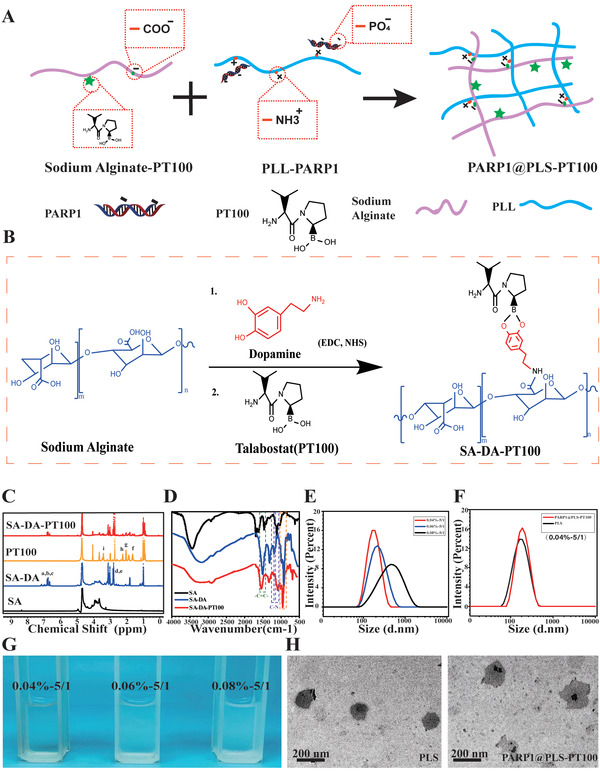
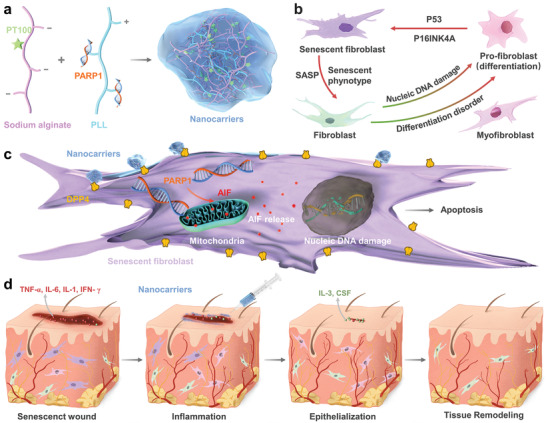
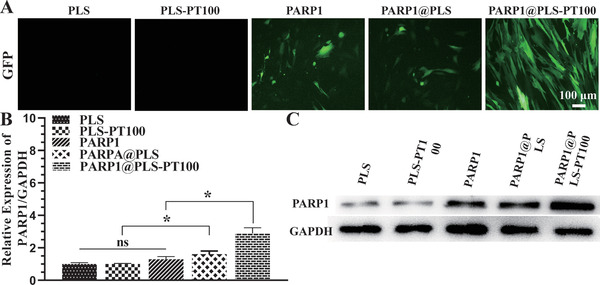
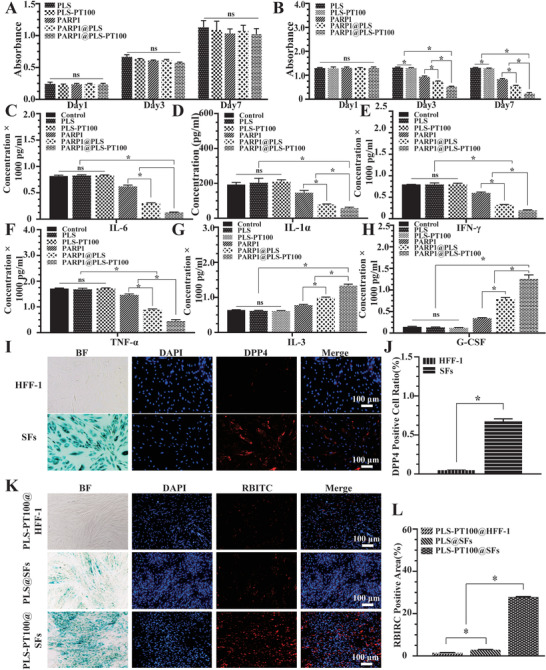
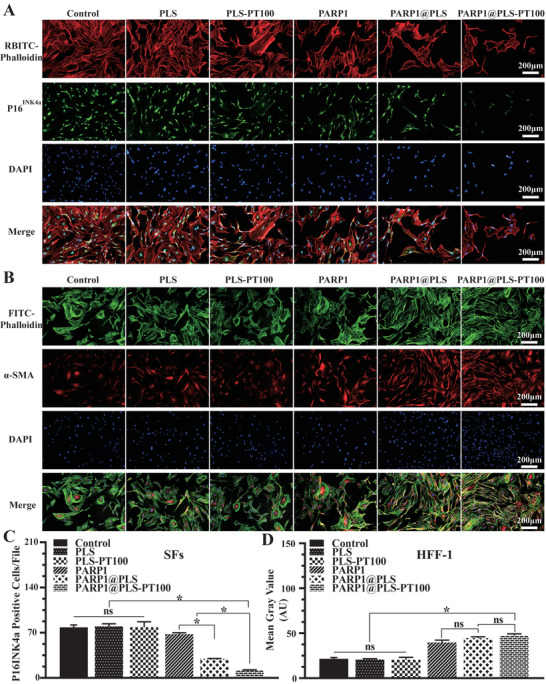
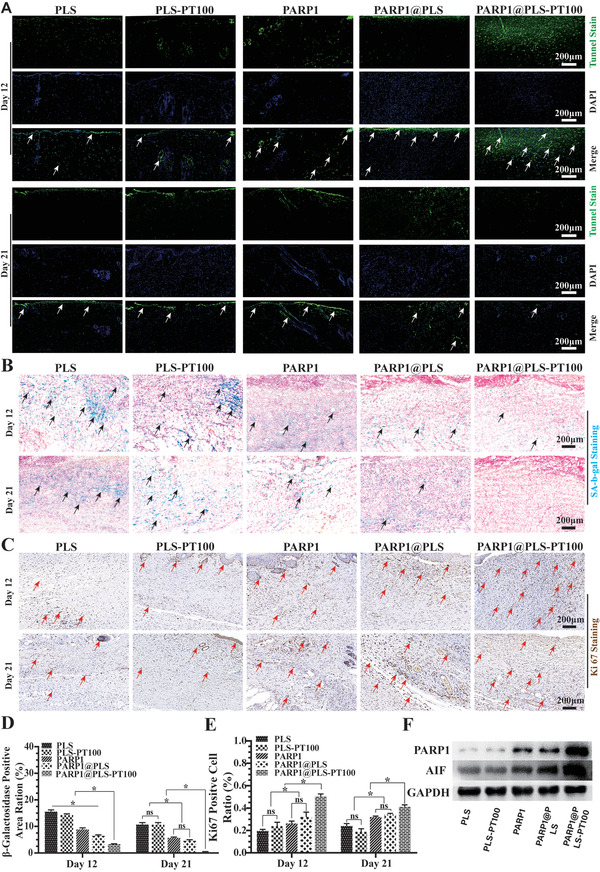
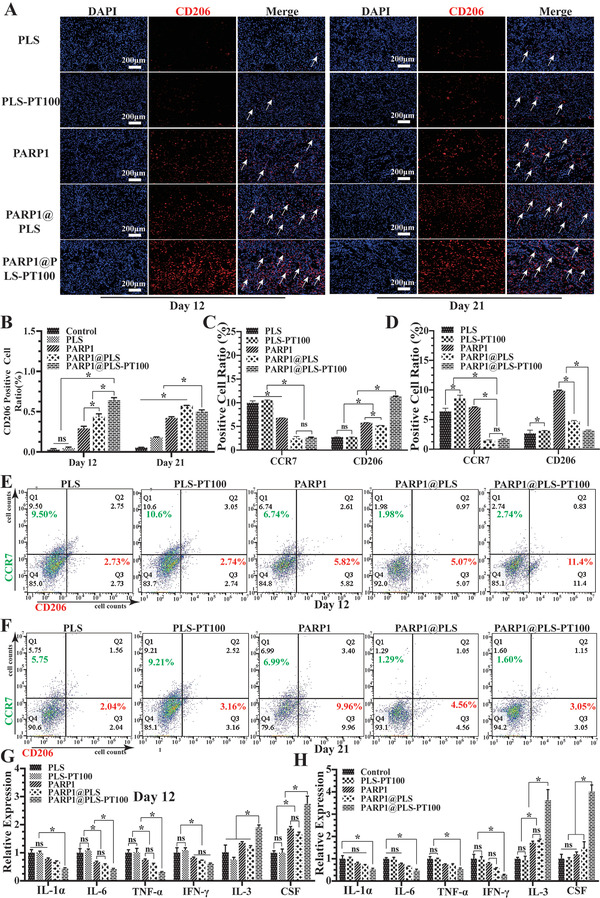
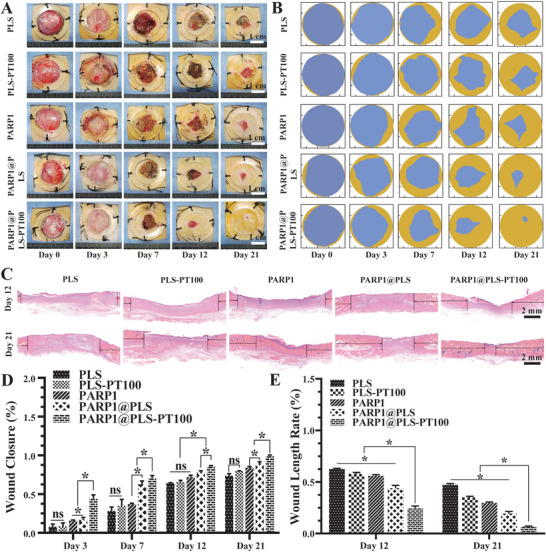
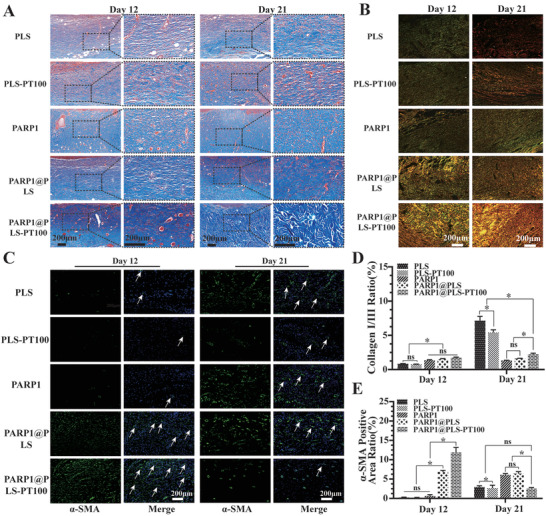
Diabetic ulcers, a difficult problem faced by clinicians, are strongly associated with an increase in cellular senescence. Few empirical studies have focused on exploring a targeted strategy to cure diabetic wounds by eliminating senescent fibroblasts (SFs) and reducing side effects. In this study, poly-l-lysine/sodium alginate (PLS) is modified with talabostat (PT100) and encapsulates a PARP1 plasmid (PARP1@PLS-PT100) for delivery to target the dipeptidyl peptidase 4 (DPP4) receptor and eliminate SFs. PARP1@PLS-PT100 releases encapsulated plasmids, displaying high selectivity for SFs over normal fibroblasts by targeting the DPP4 receptor, decreasing senescence-associated secretory phenotypes (SASPs), and stimulating the secretion of anti-inflammatory factors. Furthermore, the increased apoptosis of SFs and the disappearance of cellular senescence alleviates SASPs, accelerates re-epithelialization and collagen deposition, and significantly induces macrophage M2 polarization, which mediates tissue repair and the inflammatory response. This innovative strategy has revealed the previously undefined role of PARP1@PLS-PT100 in promoting diabetic wound healing, suggesting its therapeutic potential in refractory wound repair.
糖尿病溃疡是临床医生面临的一个难题,它与细胞衰老的增加密切相关。很少有实证研究关注通过消除衰老成纤维细胞(SFs)和减少副作用来探索治疗糖尿病伤口的靶向策略。在这项研究中,聚-l-赖氨酸/海藻酸钠(PLS)被塔拉唑宾(PT100)修饰,并包裹 PARP1 质粒(PARP1@PLS-PT100)以递送至靶向二肽基肽酶 4(DPP4)受体并消除 SFs。PARP1@PLS-PT100 释放封装的质粒,通过靶向 DPP4 受体对 SFs 表现出高选择性,降低衰老相关分泌表型(SASPs),并刺激抗炎因子的分泌。此外,SFs 的凋亡增加和细胞衰老的消失减轻了 SASPs,加速了再上皮化和胶原沉积,并显著诱导巨噬细胞 M2 极化,介导组织修复和炎症反应。这种创新策略揭示了 PARP1@PLS-PT100 在促进糖尿病伤口愈合中的先前未定义作用,表明其在难治性伤口修复中的治疗潜力。