University MS Center (UMSC) Hasselt - Pelt, Hasselt, Belgium.
BIOMED Biomedical Research Institute, Faculty of Medicine and Life Sciences, Hasselt University, Hasselt, Belgium.
J Neuroinflammation. 2021 Nov 5;18(1):255. doi: 10.1186/s12974-021-02306-9.
Multiple sclerosis (MS) is a chronic autoimmune disease driven by sustained inflammation in the central nervous system. One of the pathological hallmarks of MS is extensive free radical production. However, the subsequent generation, potential pathological role, and detoxification of different lipid peroxidation-derived reactive carbonyl species during neuroinflammation are unclear, as are the therapeutic benefits of carbonyl quenchers. Here, we investigated the reactive carbonyl acrolein and (the therapeutic effect of) acrolein quenching by carnosine during neuroinflammation.
The abundance and localization of acrolein was investigated in inflammatory lesions of MS patients and experimental autoimmune encephalomyelitis (EAE) mice. In addition, we analysed carnosine levels and acrolein quenching by endogenous and exogenous carnosine in EAE. Finally, the therapeutic effect of exogenous carnosine was assessed in vivo (EAE) and in vitro (primary mouse microglia, macrophages, astrocytes).
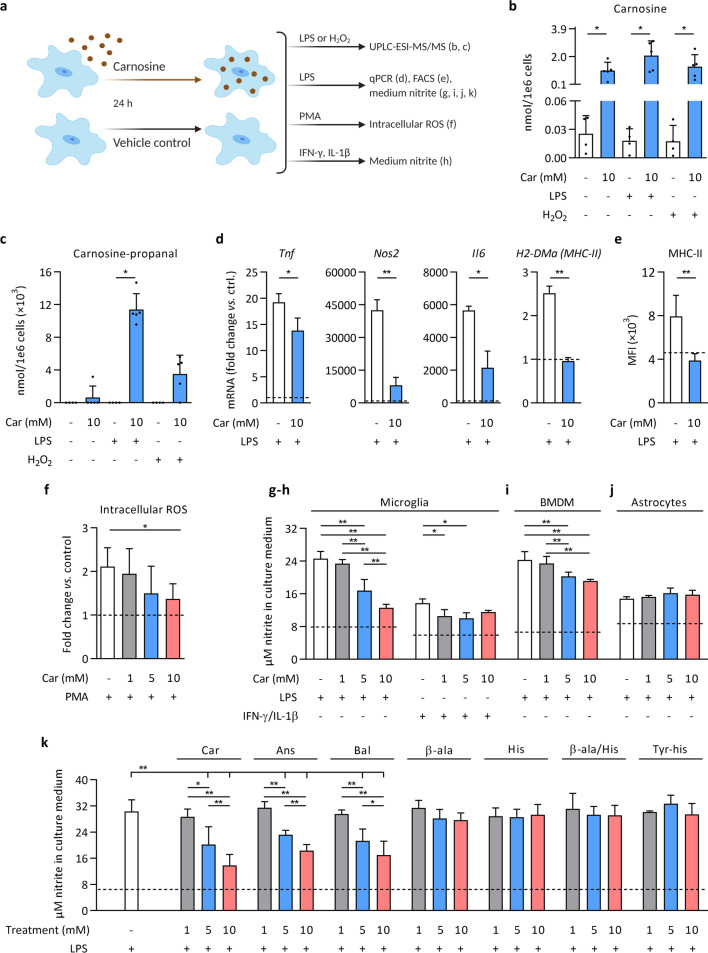
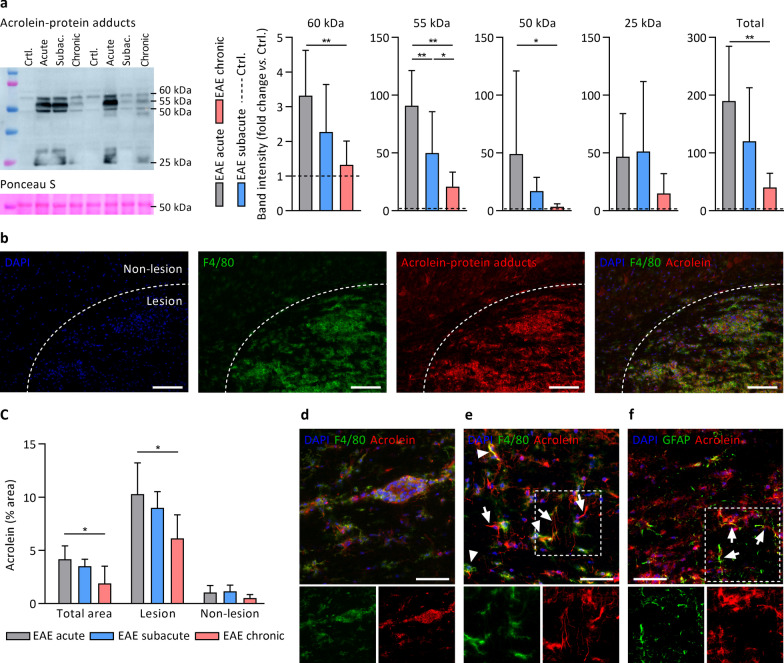
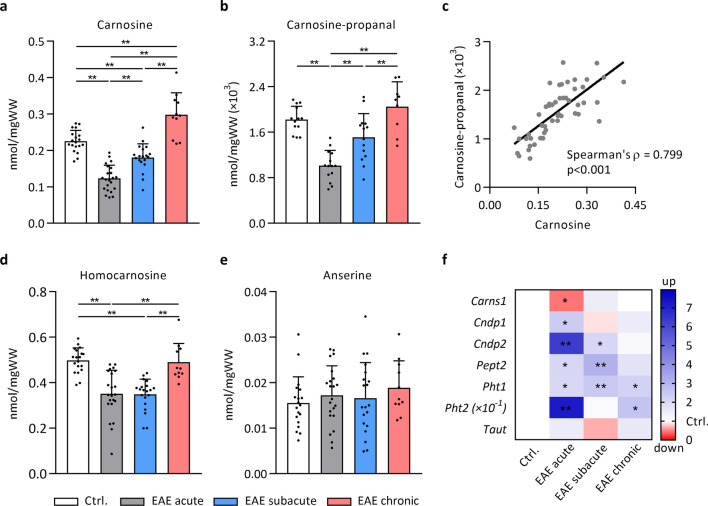
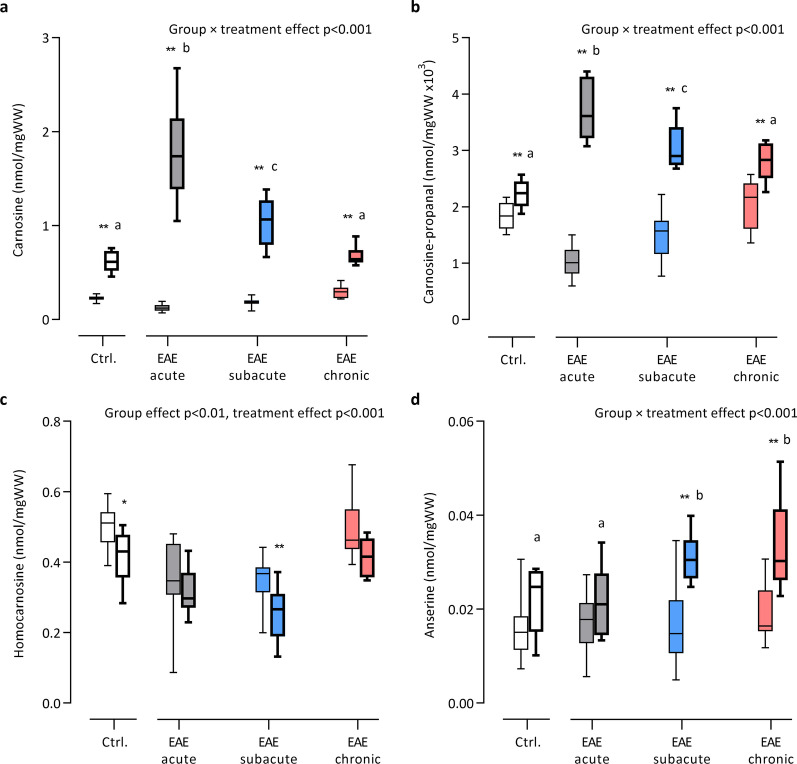
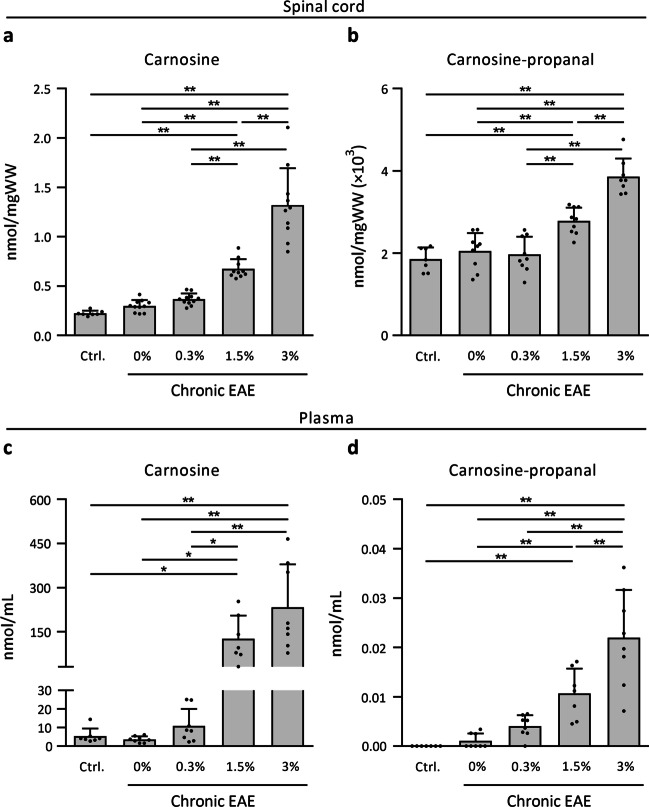
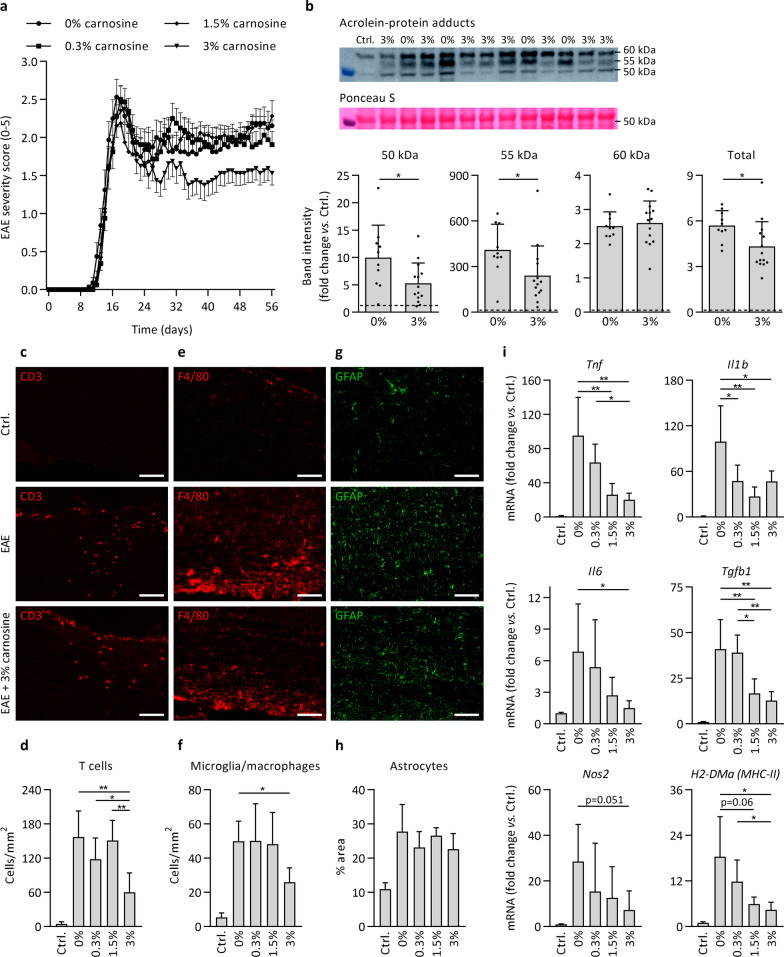
Acrolein was substantially increased in inflammatory lesions of MS patients and EAE mice. Levels of the dipeptide carnosine (β-alanyl-L-histidine), an endogenous carbonyl quencher particularly reactive towards acrolein, and the carnosine-acrolein adduct (carnosine-propanal) were ~ twofold lower within EAE spinal cord tissue. Oral carnosine treatment augmented spinal cord carnosine levels (up to > tenfold), increased carnosine-acrolein quenching, reduced acrolein-protein adduct formation, suppressed inflammatory activity, and alleviated clinical disease severity in EAE. In vivo and in vitro studies indicate that pro-inflammatory microglia/macrophages generate acrolein, which can be efficiently quenched by increasing carnosine availability, resulting in suppressed inflammatory activity. Other properties of carnosine (antioxidant, nitric oxide scavenging) may also contribute to the therapeutic effects.
Our results identify carbonyl (particularly acrolein) quenching by carnosine as a therapeutic strategy to counter inflammation and macromolecular damage in MS.
多发性硬化症(MS)是一种由中枢神经系统持续炎症驱动的慢性自身免疫性疾病。MS 的病理标志之一是大量自由基的产生。然而,在神经炎症过程中,不同脂质过氧化衍生的反应性羰基物种的后续产生、潜在的病理作用和解毒,以及羰基猝灭剂的治疗益处尚不清楚。在这里,我们研究了神经炎症过程中反应性羰基丙烯醛和(其治疗效果)肌肽对丙烯醛的猝灭作用。
在 MS 患者的炎症病变和实验性自身免疫性脑脊髓炎(EAE)小鼠中研究了丙烯醛的丰度和定位。此外,我们分析了 EAE 中的内源性和外源性肌肽的肌肽水平和丙烯醛猝灭作用。最后,在体内(EAE)和体外(原代小鼠小胶质细胞、巨噬细胞、星形胶质细胞)评估外源性肌肽的治疗效果。
丙烯醛在 MS 患者和 EAE 小鼠的炎症病变中显著增加。二肽肌肽(β-丙氨酸-L-组氨酸)的水平(一种特别能与丙烯醛反应的内源性羰基猝灭剂)和肌肽-丙烯醛加合物(肌肽-丙醛)在 EAE 脊髓组织中的水平降低了约两倍。口服肌肽治疗增加了脊髓肌肽水平(高达 10 倍以上),增加了肌肽-丙烯醛猝灭作用,减少了丙烯醛-蛋白质加合物的形成,抑制了炎症活性,并减轻了 EAE 的临床疾病严重程度。体内和体外研究表明,促炎小胶质细胞/巨噬细胞产生丙烯醛,增加肌肽的可用性可以有效地猝灭丙烯醛,从而抑制炎症活性。肌肽的其他特性(抗氧化剂、一氧化氮清除)也可能有助于治疗效果。
我们的研究结果确定了肌肽对羰基(特别是丙烯醛)的猝灭作用是一种治疗多发性硬化症中炎症和大分子损伤的策略。