Infectious Diseases Department, Prince of Wales Hospital Randwick, Sydney, New South Wales, Australia.
Centre for Social Research in Health, University of New South Wales, Sydney, New South Wales, Australia.
BMJ Glob Health. 2021 Nov;6(11). doi: 10.1136/bmjgh-2021-006909.
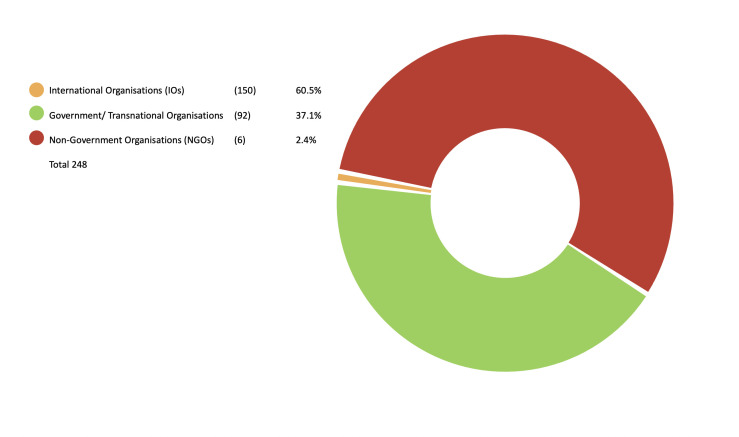
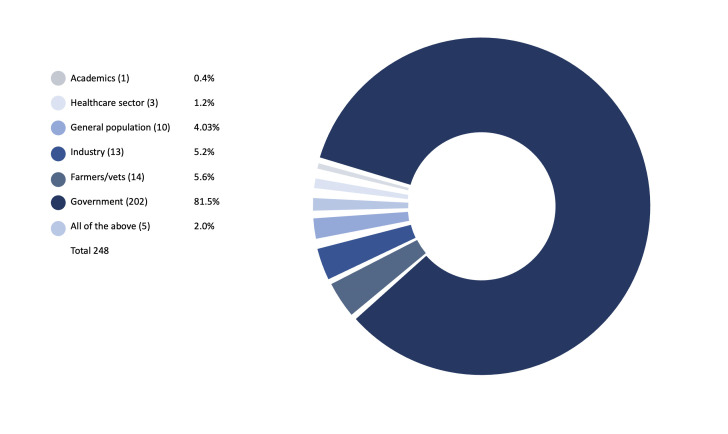
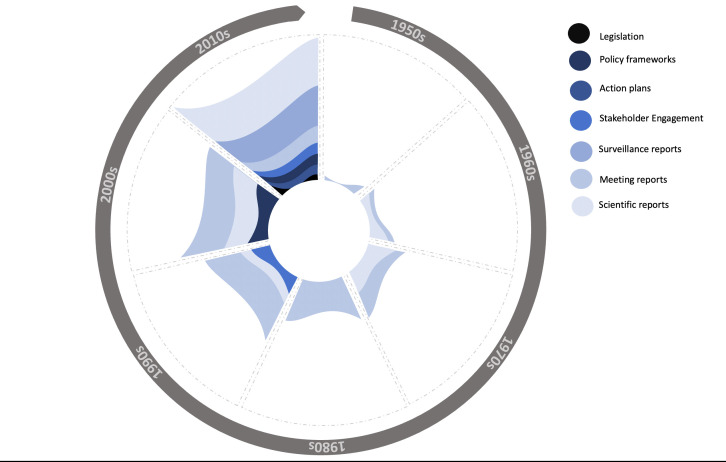
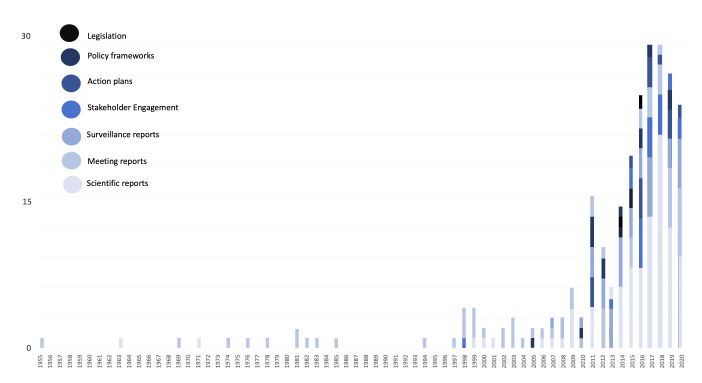
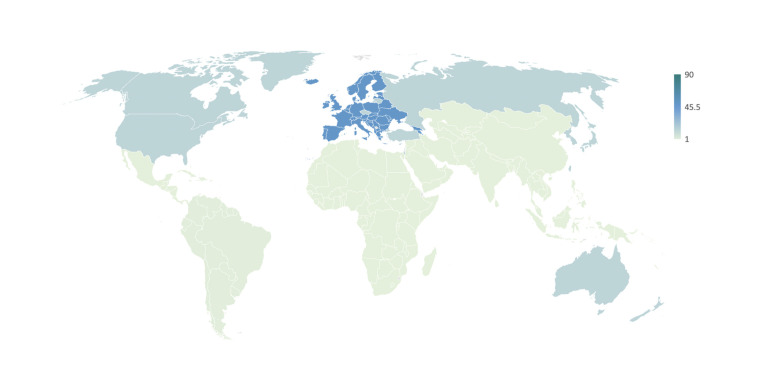
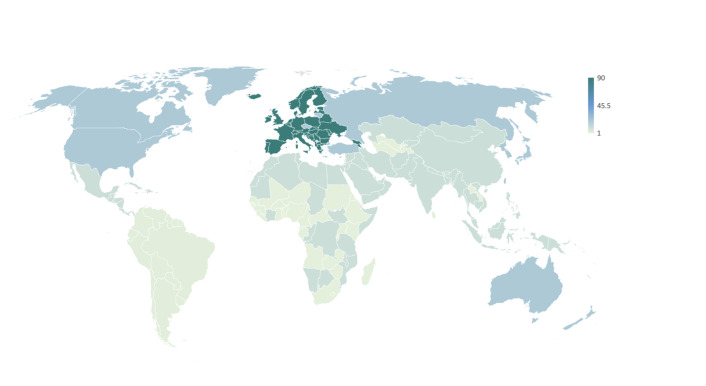
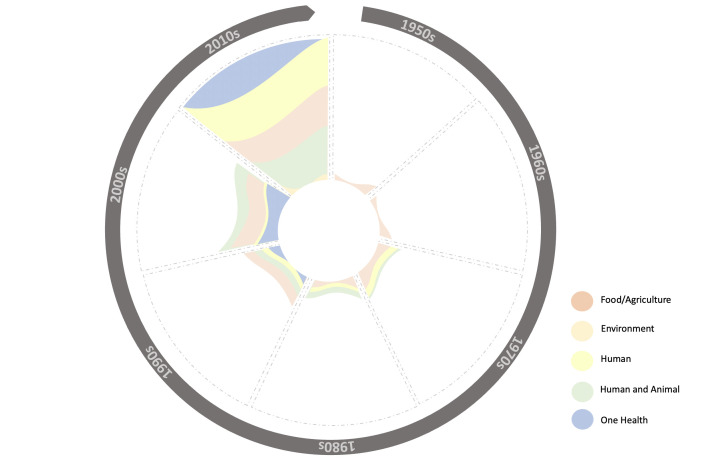
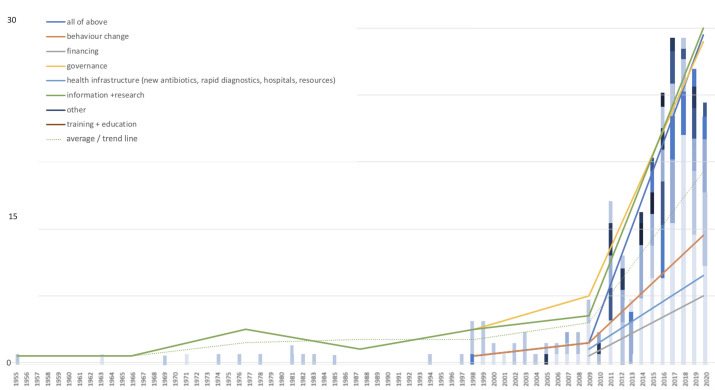
This article uses quantitative and qualitative approaches to review 75 years of international policy reports on antimicrobial resistance (AMR). Our review of 248 policy reports and expert consultation revealed waves of political attention and repeated reframings of AMR as a policy object. AMR emerged as an object of international policy-making during the 1990s. Until then, AMR was primarily defined as a challenge of human and agricultural domains within the Global North that could be overcome via 'rational' drug use and selective restrictions. While a growing number of reports jointly addressed human and agricultural AMR selection, international organisations (IOs) initially focused on whistleblowing and reviewing data. Since 2000, there has been a marked shift in the ecological and geographic focus of AMR risk scenarios. The Global South and One Health (OH) emerged as foci of AMR reports. Using the deterritorialised language of OH to frame AMR as a Southern risk made global stewardship meaningful to donors and legitimised pressure on low-income and middle-income countries to adopt Northern stewardship and surveillance frameworks. It also enabled IOs to move from whistleblowing to managing governance frameworks for antibiotic stewardship. Although the environmental OH domain remains neglected, realisation of the complexity of necessary interventions has increased the range of topics targeted by international action plans. Investment nonetheless continues to focus on biomedical innovation and tends to leave aside broader socioeconomic issues. Better knowledge of how AMR framings have evolved is key to broadening participation in international stewardship going forward.
本文采用定量和定性方法,回顾了 75 年来关于抗菌素耐药性(AMR)的国际政策报告。我们对 248 份政策报告和专家咨询进行了审查,发现政治关注度呈现出一波又一波的变化,且 AMR 被反复重新定义为政策对象。AMR 是在 20 世纪 90 年代成为国际决策的对象。在此之前,AMR 主要被定义为北方国家人类和农业领域的一个挑战,可以通过“合理”使用药物和有选择的限制来克服。尽管越来越多的报告共同解决了人类和农业 AMR 选择的问题,但国际组织(IOs)最初侧重于举报和审查数据。自 2000 年以来,AMR 风险情景的生态和地理重点发生了明显变化。南方和 One Health(OH)成为 AMR 报告的焦点。用 OH 的去领土化语言将 AMR 框定为南方风险,使全球管理对捐助者具有意义,并使中低收入国家面临采用北方管理和监测框架的压力合法化。这也使 IOs 能够从举报转变为管理抗生素管理的治理框架。尽管 OH 环境领域仍然被忽视,但对必要干预措施复杂性的认识提高了国际行动计划所针对的主题范围。然而,投资仍然集中在生物医学创新上,往往忽视了更广泛的社会经济问题。更好地了解 AMR 框架是如何演变的,对于扩大国际管理的参与至关重要。