Instituto de Agricultura Sostenible (IAS-CSIC), Alameda del Obispo s/n, 14004, Córdoba, Spain.
Laboratoire des Interactions Plantes Microbes-Environnement (LIPME), CNRS, INRAE, Université de Toulouse, Castanet-Tolosan, France.
Theor Appl Genet. 2022 Feb;135(2):501-525. doi: 10.1007/s00122-021-03979-9. Epub 2021 Nov 6.
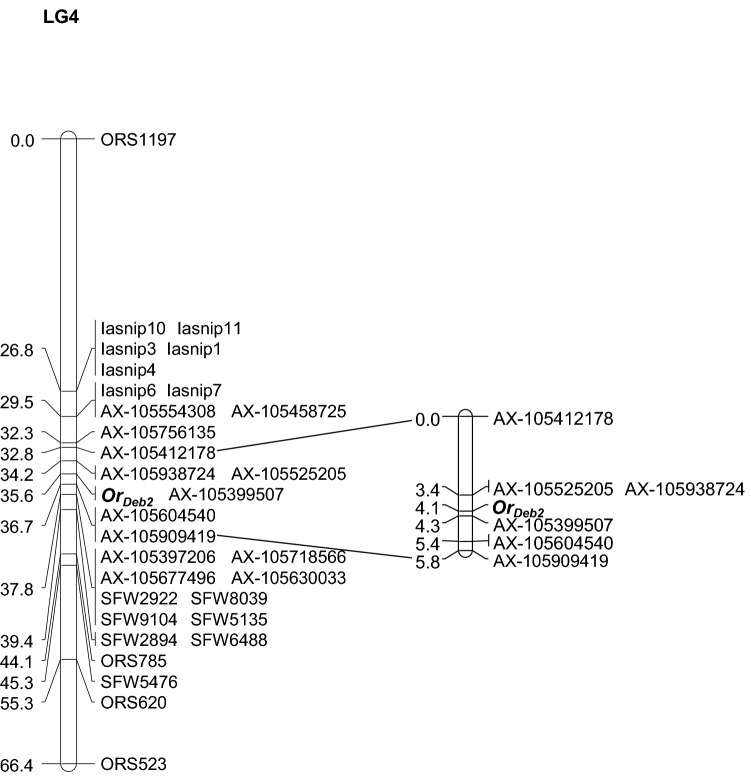
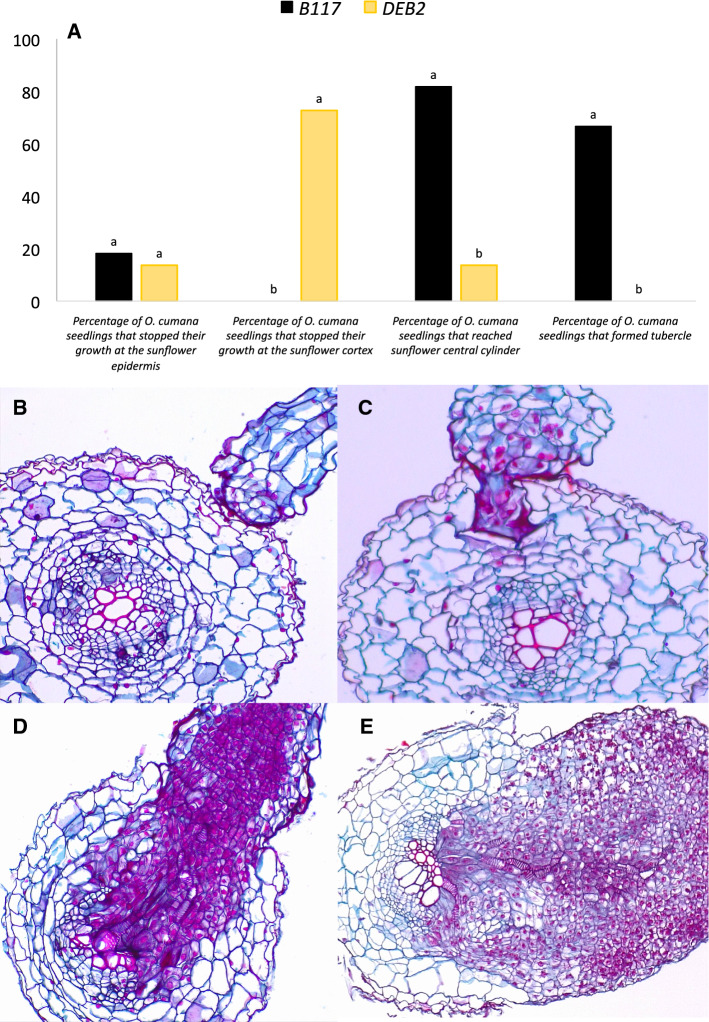
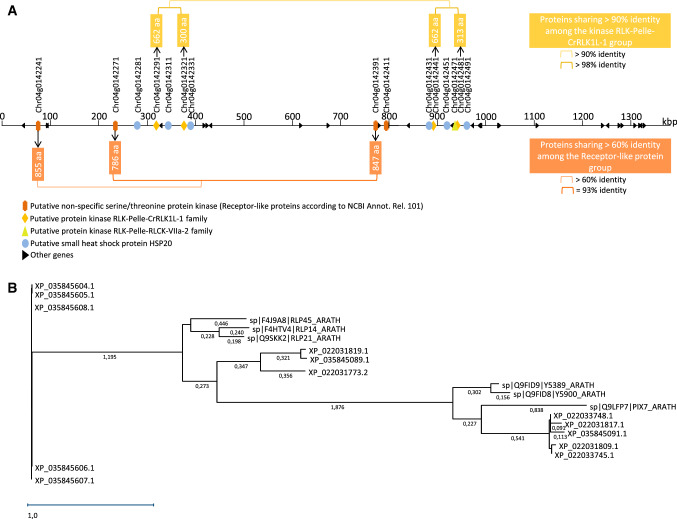
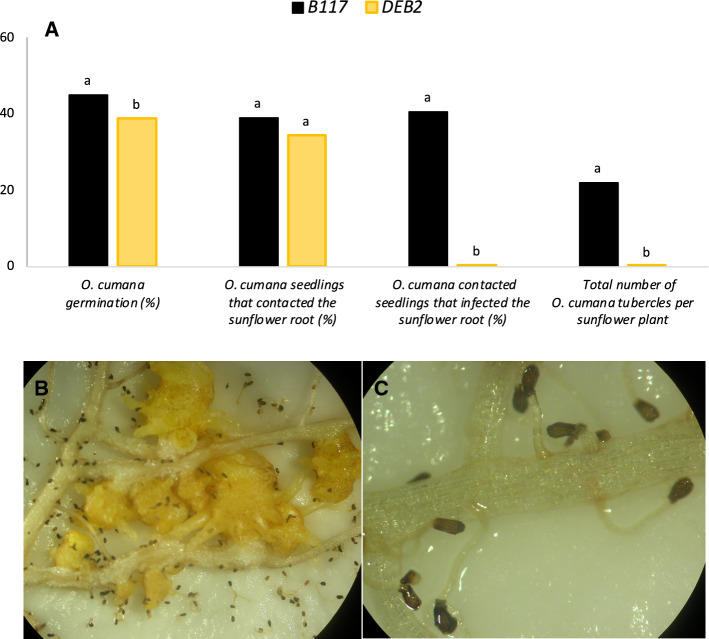
Or confers post-attachment resistance to Orobanche cumana and is located in a 1.38 Mbp genomic interval containing a cluster of receptor-like kinase and receptor-like protein genes with nine high-confidence candidates. Sunflower broomrape is a holoparasitic angiosperm that parasitizes on sunflower roots, severely constraining crop yield. Breeding for resistance is the most effective method of control. Or is a dominant resistance gene introgressed into cultivated sunflower from a wild-related species that confers resistance to highly virulent broomrape races. The objectives of this study were as follows: (i) locate Or into the sunflower genome and determine putative candidate genes and (ii) characterize its underlying resistance mechanism. A segregating population from a cross between the sunflower resistant line DEB2, carrying Or, and a susceptible line was phenotyped for broomrape resistance in four experiments, including different environments and two broomrape races (F and G). This population was also densely genotyped with microsatellite and SNP markers, which allowed locating Or within a 0.9 cM interval in the upper half of Chromosome 4. This interval corresponded to a 1.38 Mbp genomic region of the sunflower reference genome that contained a cluster of genes encoding LRR (leucine-rich repeat) receptor-like proteins lacking a cytoplasmic kinase domain and receptor-like kinases with one or two kinase domains and lacking an extracellular LRR region, which were valuable candidates for Or. Rhizotron and histological studies showed that Or determines a post-attachment resistance response that blocks O. cumana development mainly at the cortex before the establishment of host-parasite vascular connections. This study will contribute to understand the interaction between crops and parasitic weeds, to establish durable breeding strategies based on genetic resistance and provide useful tools for marker-assisted selection and Or map-based cloning.
向日葵列当是一种全寄生的被子植物,寄生于向日葵的根部,严重限制了作物的产量。培育抗性是最有效的控制方法。Or 是一个显性抗性基因,从与栽培向日葵亲缘关系密切的野生种中导入,赋予对高度毒力列当属的抗性。本研究的目的如下:(i)将 Or 定位到向日葵基因组中,并确定可能的候选基因;(ii)表征其潜在的抗性机制。利用携带 Or 的抗列当向日葵品系 DEB2 与感列当向日葵品系杂交产生的分离群体,在四个实验中对列当抗性进行表型分析,包括不同的环境和两种列当(F 和 G)。该群体还使用微卫星和 SNP 标记进行了高密度基因型分析,这使得 Or 能够定位到染色体 4 上半部的 0.9 cM 区间内。该区间对应于向日葵参考基因组的 1.38 Mbp 基因组区域,该区域包含一个编码富含亮氨酸重复(LRR)的受体样蛋白的基因簇,这些蛋白缺乏细胞质激酶结构域,以及具有一个或两个激酶结构域但缺乏细胞外 LRR 区的受体样激酶,这些都是 Or 的有价值的候选基因。根室和组织学研究表明,Or 决定了一种附着后抗性反应,主要在宿主-寄生植物血管连接建立之前,在皮层处阻止 O. cumana 的发育。本研究将有助于理解作物与寄生杂草之间的相互作用,建立基于遗传抗性的持久育种策略,并为标记辅助选择和 Or 图谱克隆提供有用的工具。