Institute of Field and Vegetable Crops, 21000 Novi Sad, Serbia.
Genes (Basel). 2020 Jan 30;11(2):152. doi: 10.3390/genes11020152.
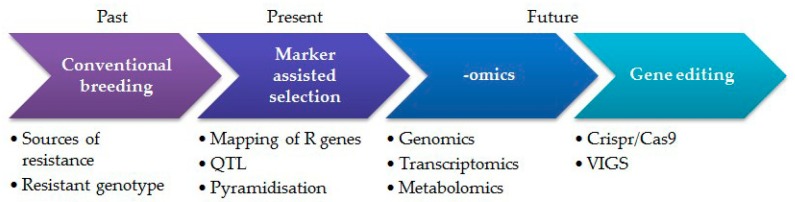
Broomrape is a root parasitic plant causing yield losses in sunflower production. Since sunflower is an important oil crop, the development of broomrape-resistant hybrids is the prime breeding objective. Using conventional plant breeding methods, breeders have identified resistant genes and developed a number of hybrids resistant to broomrape, adapted to different growing regions worldwide. However, the spread of broomrape into new countries and the development of new and more virulent races have been noted intensively. Recent advances in sunflower genomics provide additional tools for plant breeders to improve resistance and find durable solutions for broomrape spread and virulence. This review describes the structure and distribution of new, virulent physiological broomrape races, sources of resistance for introduction into susceptible cultivated sunflower, qualitative and quantitative resistance genes along with gene pyramiding and marker assisted selection (MAS) strategies applied in the process of increasing sunflower resistance. In addition, it presents an overview of underutilized biotechnological tools, such as phenotyping, -omics, and genome editing techniques, which need to be introduced in the study of sunflower resistance to broomrape in order to achieve durable resistance.
列当是一种根寄生植物,会导致向日葵生产中的产量损失。由于向日葵是一种重要的油料作物,因此培育抗列当的杂交品种是首要的育种目标。利用传统的植物育种方法,育种家已经鉴定出了抗列当的基因,并开发了许多抗列当的杂交品种,适应了世界各地不同的生长地区。然而,列当已经扩散到新的国家,并且出现了新的、更具毒性的品种。向日葵基因组学的最新进展为植物育种家提供了额外的工具,以提高抗性,并为列当的传播和毒性找到持久的解决方案。本综述描述了新的、具有毒性的生理列当品种的结构和分布、引入易感栽培向日葵的抗性来源、定性和定量抗性基因以及基因聚合和标记辅助选择(MAS)策略在提高向日葵抗性过程中的应用。此外,还概述了未充分利用的生物技术工具,如表型分析、组学和基因组编辑技术,这些工具需要引入到向日葵对列当的抗性研究中,以实现持久的抗性。