Center for Infectious Medicine, Department of Medicine Huddinge, Karolinska Institutet, Stockholm, Sweden.
Mucosal Immunol. 2022 Mar;15(3):389-397. doi: 10.1038/s41385-021-00467-7. Epub 2021 Nov 6.
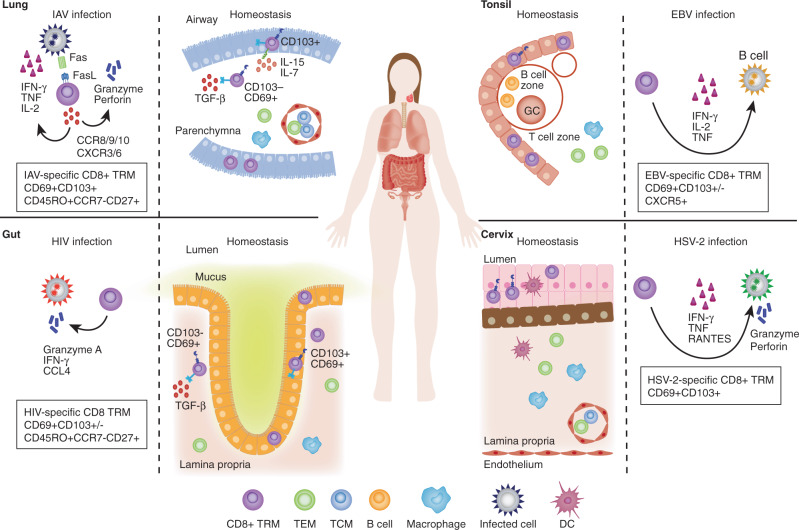
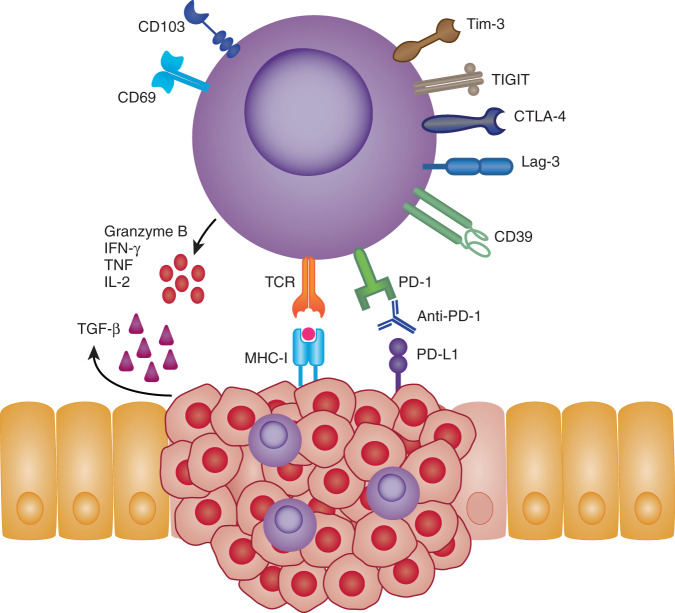
Memory T cells are fundamental to maintain immune surveillance of the human body. During the past decade, it has become apparent that non-recirculating resident memory T cells (TRMs) form a first line memory response in tissues to tackle re-infections. The fact that TRMs are essential for local immunity highlights the therapeutic potential of targeting this population against tumors and infections. However, similar to other immune subsets, TRMs are heterogenous and may form distinct effector populations with unique functions at diverse tissue sites. Further insight into the mechanisms of how TRM function and respond to pathogens and malignancies at different mucosal sites will help to shape future vaccine and immunotherapeutic approaches. Here, we review the current understanding of TRM function and biology at four major mucosal sites: gastrointestinal tract, lung, head and neck, as well as female reproductive tract. We also summarize our current knowledge of how TRM targets invading pathogens and developing tumor cells at these mucosal sites and contemplate how TRMs may be exploited to protect from infections and cancer.
记忆 T 细胞对于维持人体的免疫监视至关重要。在过去的十年中,人们已经清楚地认识到,非循环驻留记忆 T 细胞(TRM)在组织中形成了针对再感染的第一道记忆反应。TRM 对于局部免疫至关重要,这凸显了针对该群体的肿瘤和感染治疗潜力。然而,与其他免疫亚群类似,TRM 是异质的,并且可能在不同的组织部位形成具有独特功能的不同效应群体。进一步深入了解 TRM 在不同黏膜部位对病原体和恶性肿瘤的功能和反应机制,将有助于塑造未来的疫苗和免疫治疗方法。在这里,我们综述了目前对四个主要黏膜部位(胃肠道、肺部、头颈部以及生殖道)TRM 功能和生物学的理解。我们还总结了目前对 TRM 如何针对这些黏膜部位的入侵病原体和发育中的肿瘤细胞的了解,并思考了如何利用 TRM 来预防感染和癌症。