Nunes Mariana, Silva Patrícia M A, Coelho Ricardo, Pinto Carla, Resende Albina, Bousbaa Hassan, Almeida Gabriela M, Ricardo Sara
Differentiation and Cancer Group, Institute for Research and Innovation in Health (i3S) of the University of Porto/Institute of Molecular Pathology and Immunology of the University of Porto (Ipatimup), Porto, Portugal.
Institute of Biomedical Sciences Abel Salazar (ICBAS), University of Porto, Porto, Portugal.
Front Oncol. 2021 Oct 21;11:752127. doi: 10.3389/fonc.2021.752127. eCollection 2021.
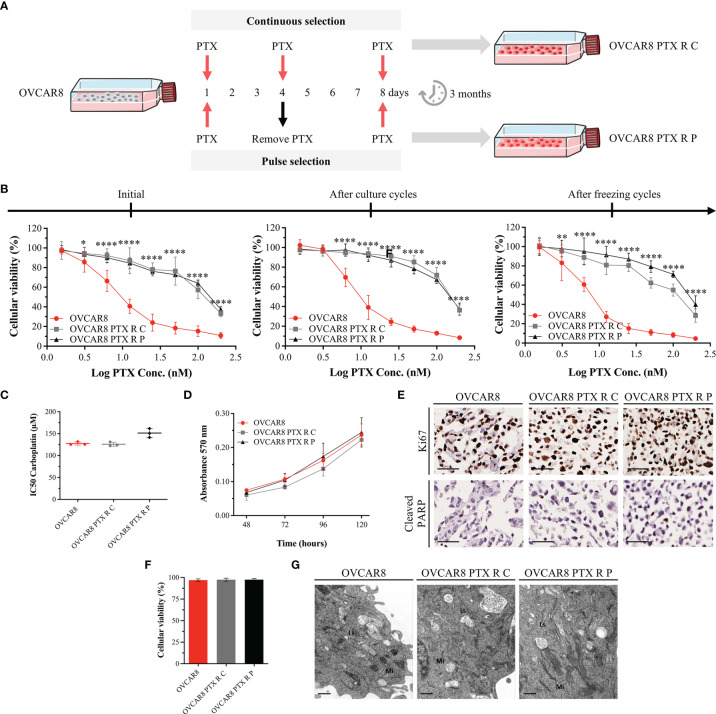
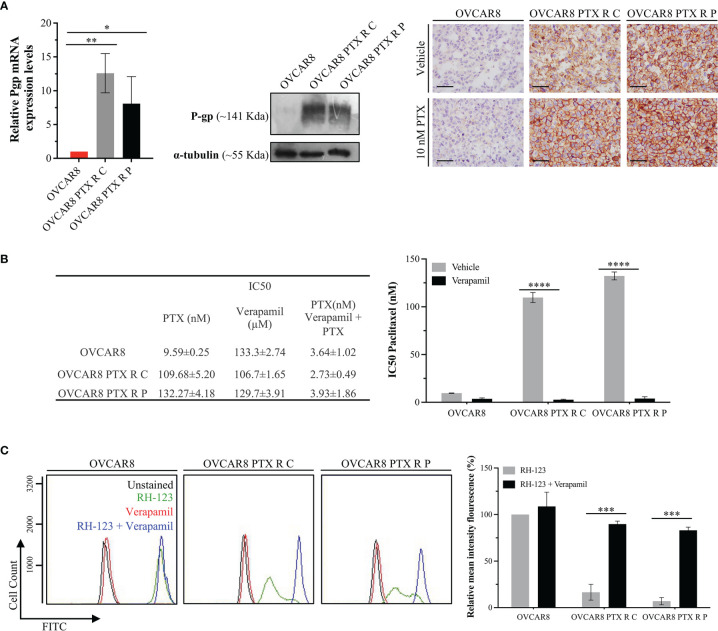
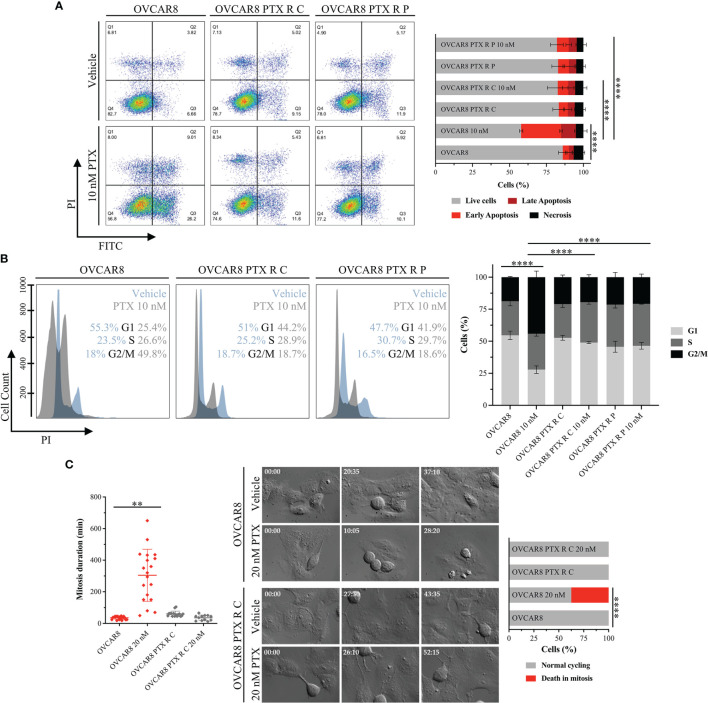
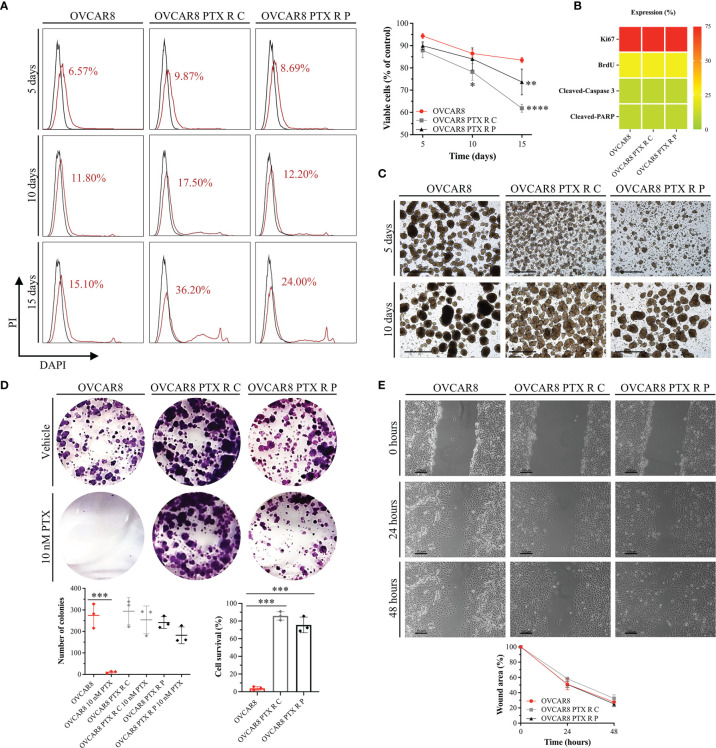
Debulking surgery followed by chemotherapy are the standard of care for high-grade serous carcinoma. After an initial good response to treatment, the majority of patients relapse with a chemoresistant profile, leading to a poor overall survival. Chemotherapy regimens used in high-grade serous carcinomas are based in a combination of classical chemotherapeutic drugs, namely, Carboplatin and Paclitaxel. The mechanisms underlying drug resistance and new drug discovery are crucial to improve patients' survival. To uncover the molecular mechanisms of chemoresistance and test drugs capable of overcoming this resistant profile, it is fundamental to use good cellular models capable of mimicking the chemoresistant disease. Herein, we established two high-grade serous carcinoma cell lines with intrinsic resistance to Carboplatin and induced Paclitaxel resistance (OVCAR8 PTX R C and OVCAR8 PTX R P) derived from the OVCAR8 cell line. These two chemoresistant cell line variants acquired an enhanced resistance to Paclitaxel-induced cell death by increasing the drug efflux capacity, and this resistance was stable in long-term culture and following freeze/thaw cycles. The mechanism underlying Paclitaxel resistance resides in a significant increase in P-glycoprotein expression and, when this drug efflux pump was blocked with Verapamil, cells re-acquired Paclitaxel sensitivity. We generated two high-grade serous carcinoma cell lines, with a double-chemoresistant (Carboplatin and Paclitaxel) phenotype that mimics the majority of tumor recurrences in ovarian cancer context. This robust tool is suitable for preliminary drug testing towards the development of therapeutic strategies to overcome chemoresistance.
减瘤手术联合化疗是高级别浆液性癌的标准治疗方案。在对治疗最初产生良好反应后,大多数患者会复发,且具有化疗耐药性,导致总体生存率较低。高级别浆液性癌使用的化疗方案是基于经典化疗药物(即卡铂和紫杉醇)的联合。耐药机制和新药发现对于提高患者生存率至关重要。为了揭示耐药的分子机制并测试能够克服这种耐药性的药物,使用能够模拟耐药疾病的良好细胞模型至关重要。在此,我们建立了两种对卡铂具有内在耐药性并诱导产生紫杉醇耐药性的高级别浆液性癌细胞系(OVCAR8 PTX R C和OVCAR8 PTX R P),它们源自OVCAR8细胞系。这两种耐药细胞系变体通过增加药物外排能力,对紫杉醇诱导的细胞死亡获得了增强的耐药性,并且这种耐药性在长期培养以及冻融循环后保持稳定。紫杉醇耐药的机制在于P -糖蛋白表达显著增加,当用维拉帕米阻断这种药物外排泵时,细胞重新获得了对紫杉醇的敏感性。我们生成了两种具有双重化疗耐药(对卡铂和紫杉醇均耐药)表型的高级别浆液性癌细胞系,该表型模拟了卵巢癌背景下大多数肿瘤复发的情况。这个强大的工具适用于针对开发克服化疗耐药性治疗策略的初步药物测试。