Tang Neng, Dou Xiaolin, You Xing, Li Yixiong, Li Xi, Liu Guodong
Department of General Surgery, Xiangya Hospital, Central South University, Changsha, China.
Department of Geriatric Surgery, Xiangya Hospital, Central South University, Changsha, China.
Front Oncol. 2021 Oct 20;11:756779. doi: 10.3389/fonc.2021.756779. eCollection 2021.
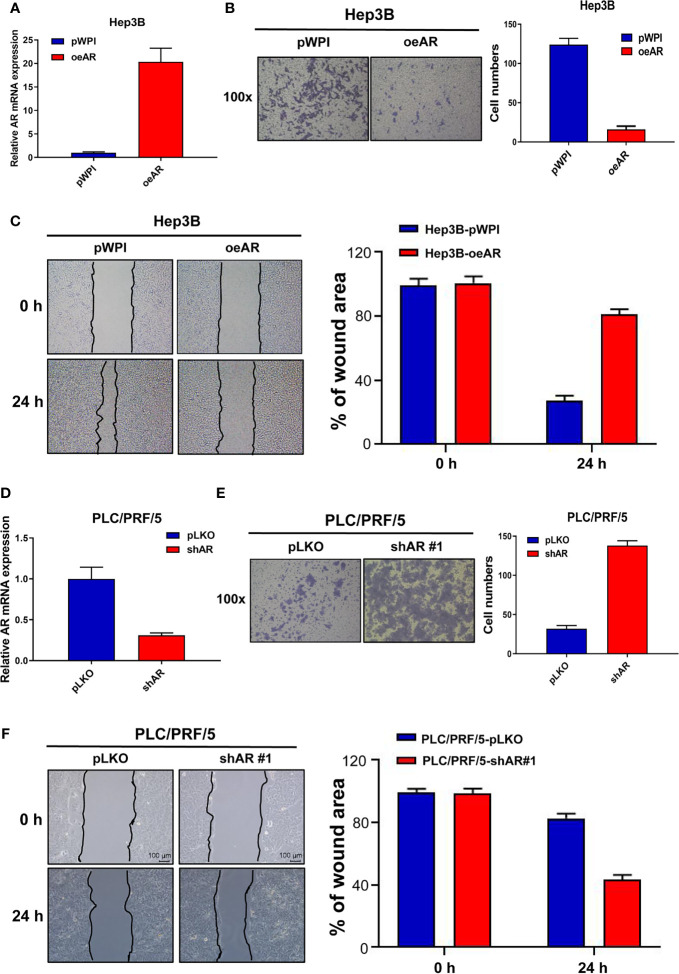
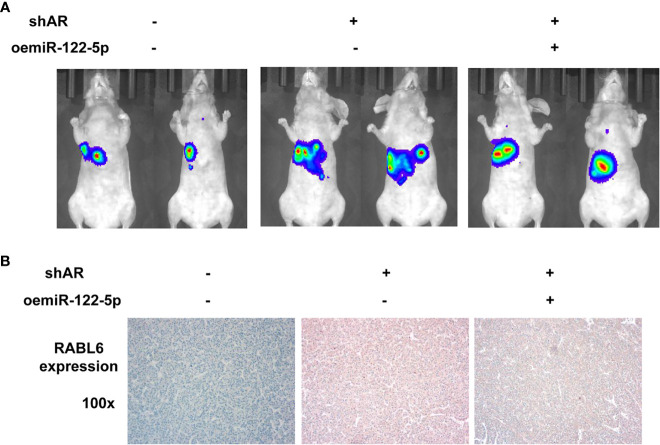
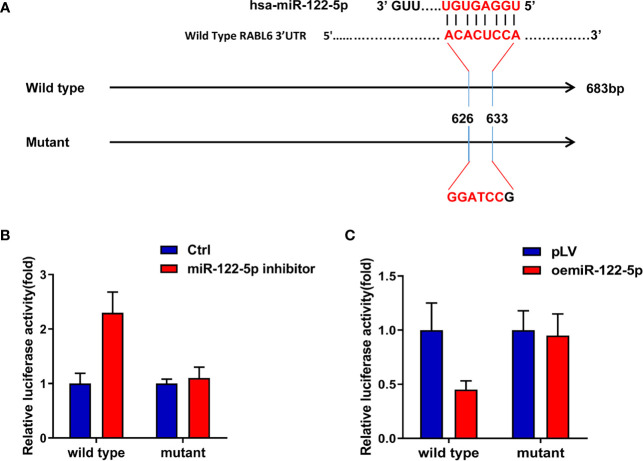
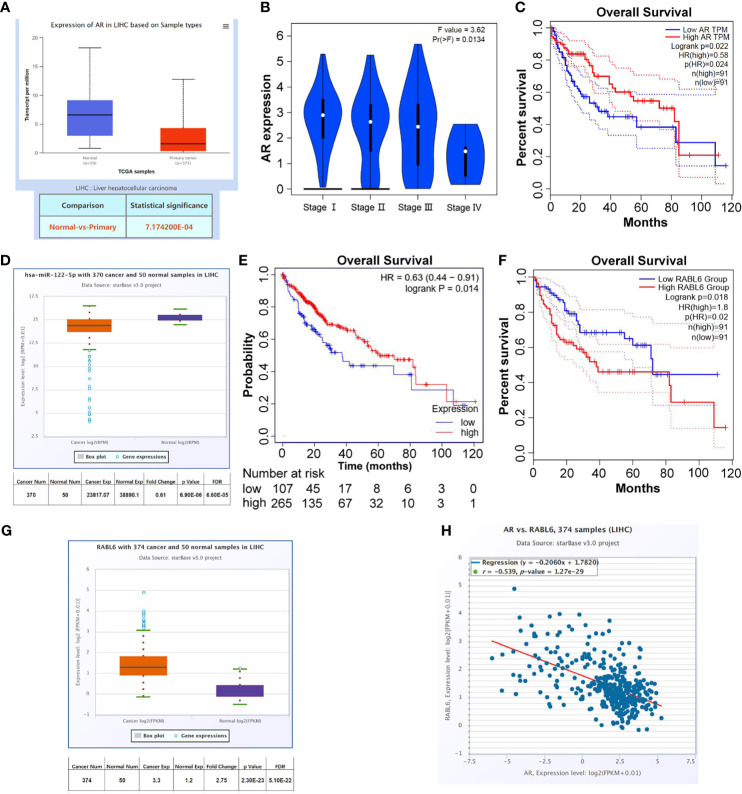
Hepatocellular carcinoma (HCC) is a malignant tumor with a high degree of malignancy and a poor prognosis. Androgen receptor (AR) has been reported to play important roles in the regulation of the progression of HCC, but the underlying mechanisms of how AR regulates HCC initiation, progression, metastasis, and chemotherapy resistance still need further study. Our study found that AR could act as a tumor suppression gene to suppress HCC cells invasion and migration capacities miR-122-5p/RABL6 signaling, and the mechanism study further confirmed that miR-122-5p could suppress the expression of RABL6 to influence HCC cells progression by directly targeting the 3'UTR of the mRNA of RABL6. The preclinical study using an mouse model with orthotopic xenografts of HCC cells confirmed the data, and the clinical data gotten from online databases based on TCGA samples also confirmed the linkage of AR/miR-122-5p/RABL6 signaling to the HCC progression. Together, these findings suggest that AR could suppress HCC invasion and migration capacities miR-122-5p/RABL6 signaling, and targeting this newly explored signaling may help us find new therapeutic targets for better treatment of HCC.
肝细胞癌(HCC)是一种恶性程度高、预后差的恶性肿瘤。据报道,雄激素受体(AR)在HCC进展的调控中发挥重要作用,但AR如何调节HCC的起始、进展、转移和化疗耐药的潜在机制仍需进一步研究。我们的研究发现,AR可作为一种肿瘤抑制基因,通过miR-122-5p/RABL6信号通路抑制HCC细胞的侵袭和迁移能力,机制研究进一步证实,miR-122-5p可通过直接靶向RABL6 mRNA的3'UTR抑制RABL6的表达,从而影响HCC细胞的进展。使用HCC细胞原位异种移植小鼠模型的临床前研究证实了这些数据,基于TCGA样本从在线数据库获得的临床数据也证实了AR/miR-122-5p/RABL6信号通路与HCC进展的关联。总之,这些发现表明,AR可通过miR-122-5p/RABL6信号通路抑制HCC的侵袭和迁移能力,针对这一新发现的信号通路可能有助于我们找到更好治疗HCC的新治疗靶点。