Department of Surgery, The Second Clinical Medical College of Zhejiang Chinese Medical University, Hangzhou 310000, China.
Department of Urology, The Affiliated Hospital of Jiaxing University, Jiaxing 314000, China.
Asian J Androl. 2022 May-Jun;24(3):323-331. doi: 10.4103/aja202157.
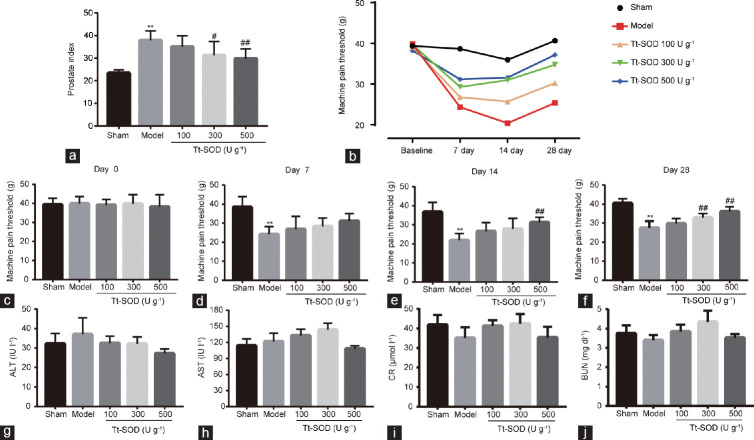
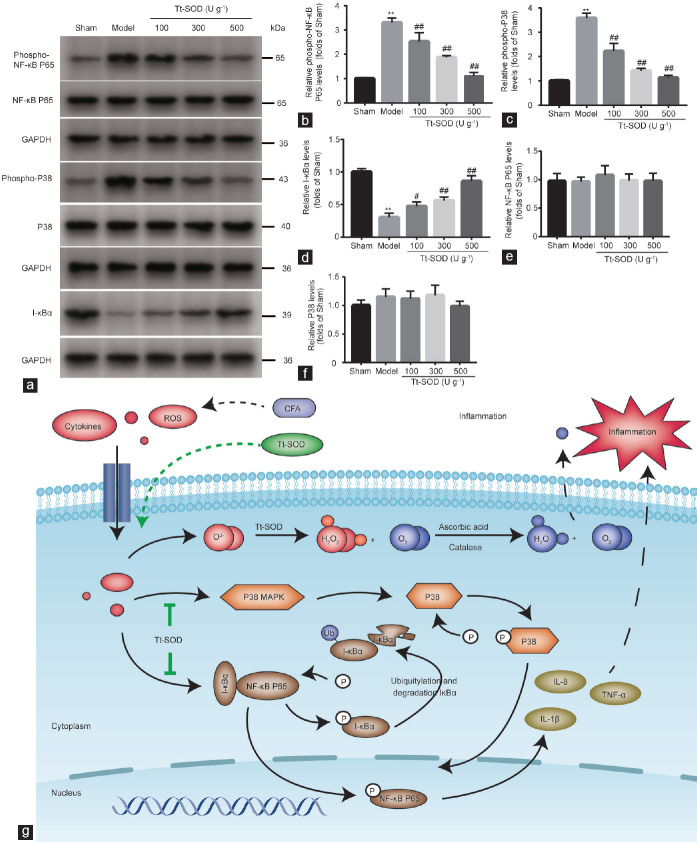
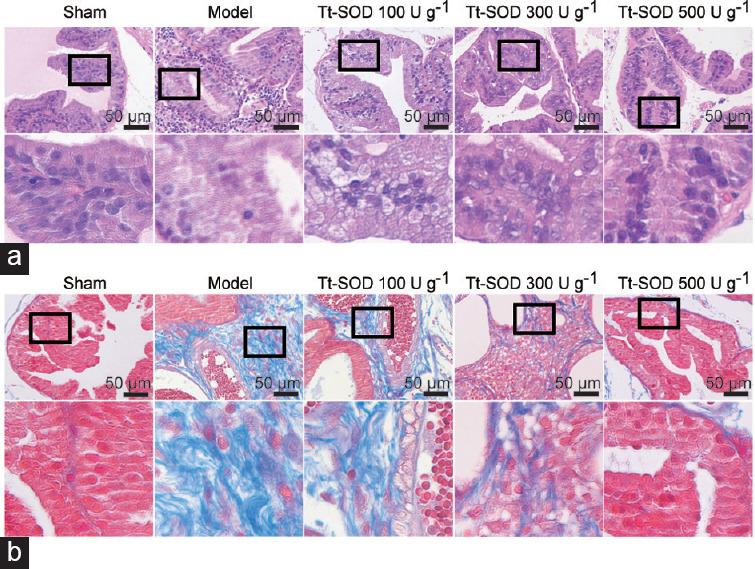
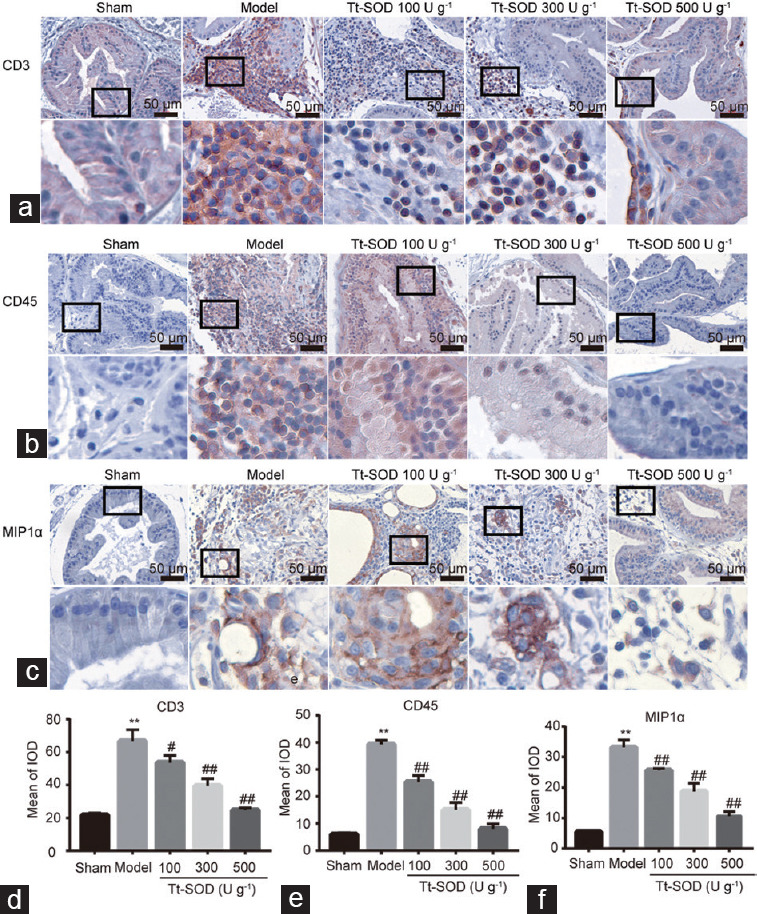
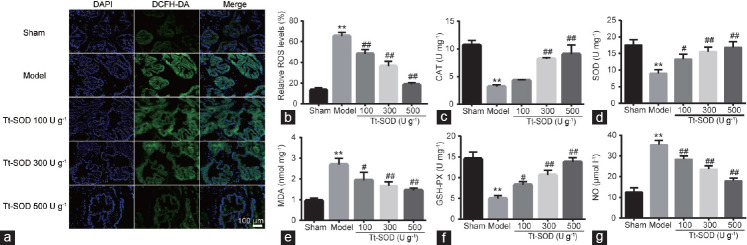
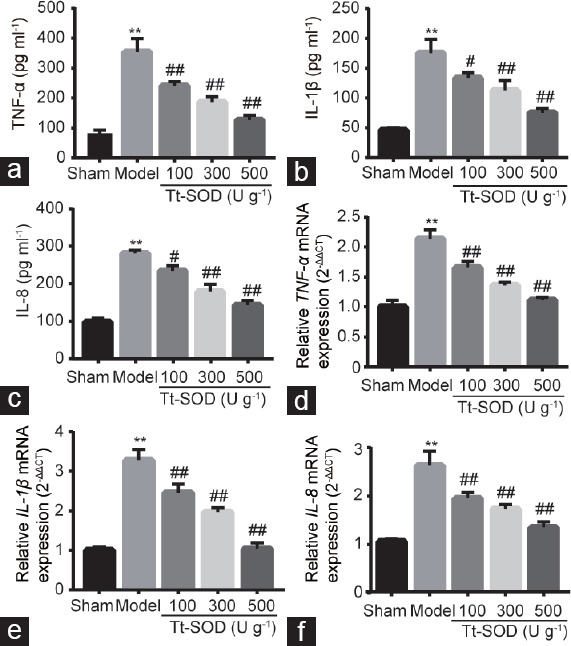
We investigated the therapeutic effects of superoxide dismutase (SOD) from thermophilic bacterium HB27 on chronic prostatitis/chronic pelvic pain syndrome (CP/CPPS) and its underlying mechanisms. A Sprague-Dawley rat model of CP/CPPS was prepared and then administered saline or Thermus thermophilic (Tt)-SOD intragastrically for 4 weeks. Prostate inflammation and fibrosis were analyzed by hematoxylin and eosin staining, and Masson staining. Alanine transaminase (ALT), aspartate transaminase (AST), serum creatinine (CR), and blood urea nitrogen (BUN) levels were assayed for all animals. Enzyme-linked immunosorbent assays (ELISA) were performed to analyze serum cytokine concentrations and tissue levels of malondialdehyde, nitric oxide, SOD, catalase, and glutathione peroxidase. Reactive oxygen species levels were detected using dichlorofluorescein diacetate. The messenger ribonucleic acid (mRNA) expression of tissue cytokines was analyzed by reverse transcription polymerase chain reaction (RT-PCR), and infiltrating inflammatory cells were examined using immunohistochemistry. Nuclear factor-κB (NF-κB) P65, P38, and inhibitor of nuclear factor-κBα (I-κBα) protein levels were determined using western blot. Tt-SOD significantly improved histopathological changes in CP/CPPS, reduced inflammatory cell infiltration and fibrosis, increased pain threshold, and reduced the prostate index. Tt-SOD treatment showed no significant effect on ALT, AST, CR, or BUN levels. Furthermore, Tt-SOD reduced inflammatory cytokine expression in prostate tissue and increased antioxidant capacity. This anti-inflammatory activity correlated with decreases in the abundance of cluster of differentiation 3 (CD3), cluster of differentiation 45 (CD45), and macrophage inflammatory protein 1α (MIP1α) cells. Tt-SOD alleviated inflammation and oxidative stress by reducing NF-κB P65 and P38 protein levels and increasing I-κBα protein levels. These findings support Tt-SOD as a potential drug for CP/CPPS.
我们研究了嗜热菌 HB27 来源的超氧化物歧化酶(SOD)对慢性前列腺炎/慢性盆腔疼痛综合征(CP/CPPS)的治疗作用及其潜在机制。建立 CP/CPPS 的 Sprague-Dawley 大鼠模型,然后给予生理盐水或嗜热硫还原杆菌(Tt)-SOD 灌胃 4 周。通过苏木精和伊红染色、Masson 染色分析前列腺炎症和纤维化。检测所有动物的丙氨酸转氨酶(ALT)、天冬氨酸转氨酶(AST)、血清肌酐(CR)和血尿素氮(BUN)水平。通过酶联免疫吸附试验(ELISA)分析血清细胞因子浓度和组织丙二醛、一氧化氮、SOD、过氧化氢酶和谷胱甘肽过氧化物酶水平。使用二氯荧光素二乙酸酯检测活性氧水平。通过逆转录聚合酶链反应(RT-PCR)分析组织细胞因子的信使核糖核酸(mRNA)表达,通过免疫组织化学检测浸润性炎症细胞。使用蛋白质印迹法测定核因子-κB(NF-κB)P65、P38 和核因子-κB 抑制物α(I-κBα)蛋白水平。Tt-SOD 显著改善 CP/CPPS 的组织病理学变化,减少炎症细胞浸润和纤维化,增加疼痛阈值,降低前列腺指数。Tt-SOD 治疗对 ALT、AST、CR 或 BUN 水平无显著影响。此外,Tt-SOD 降低前列腺组织中炎症细胞因子的表达,增加抗氧化能力。这种抗炎活性与 CD3、CD45 和巨噬细胞炎症蛋白 1α(MIP1α)细胞数量的减少相关。Tt-SOD 通过降低 NF-κB P65 和 P38 蛋白水平和增加 I-κBα 蛋白水平缓解炎症和氧化应激。这些发现支持 Tt-SOD 作为 CP/CPPS 的潜在药物。