Division of Pediatric Infectious Diseases, Inova Children's Hospital, Falls Church, Virginia, United States of America.
Division of Pediatric Infectious Diseases, Pediatric Specialists of Virginia, Fairfax, Virginia, United States of America.
PLoS One. 2021 Nov 8;16(11):e0259823. doi: 10.1371/journal.pone.0259823. eCollection 2021.
Pediatric SARS-CoV-2 data remain limited and seropositivity rates in children were reported as <1% early in the pandemic. Seroepidemiologic evaluation of SARS-CoV-2 in children in a major metropolitan region of the US was performed.
Children and adolescents ≤19 years were enrolled in a cross-sectional, observational study of SARS-CoV-2 seroprevalence from July-October 2020 in Northern Virginia, US. Demographic, health, and COVID-19 exposure information was collected, and blood analyzed for SARS-CoV-2 spike protein total antibody. Risk factors associated with SARS-CoV-2 seropositivity were analyzed. Orthogonal antibody testing was performed, and samples were evaluated for responses to different antigens.
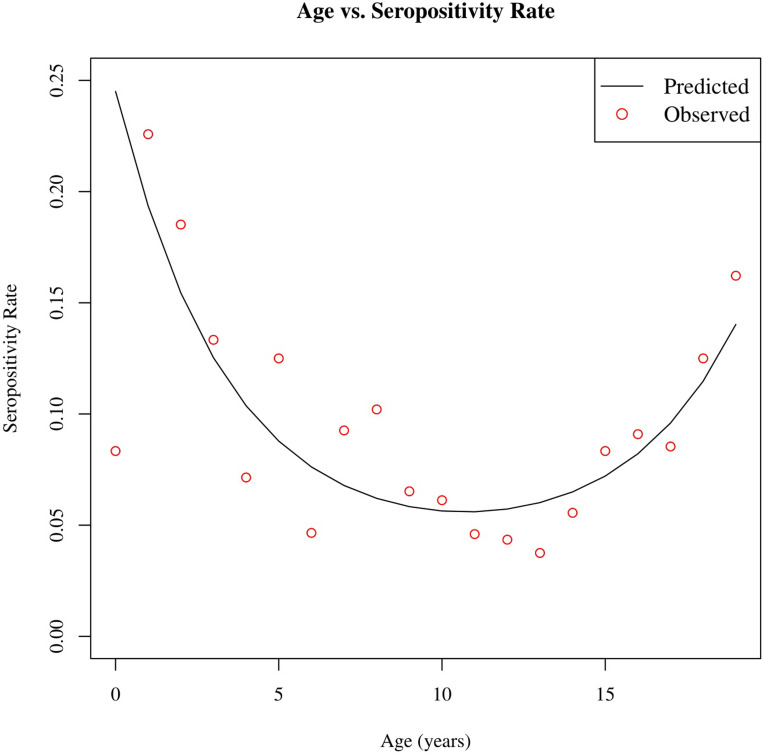
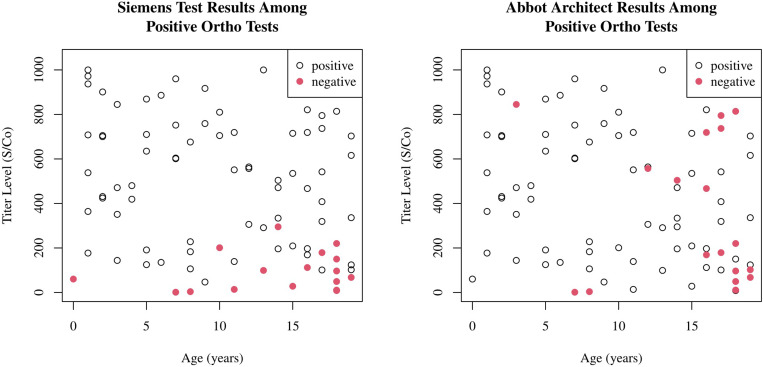
In 1038 children, the anti-SARS-CoV-2 total antibody positivity rate was 8.5%. After multivariate logistic regression, significant risk factors included Hispanic ethnicity, public or absent insurance, a history of COVID-19 symptoms, exposure to person with COVID-19, a household member positive for SARS-CoV-2 and multi-family or apartment dwelling without a private entrance. 66% of seropositive children had no symptoms of COVID-19. Secondary analysis included orthogonal antibody testing with assays for 1) a receptor binding domain specific antigen and 2) a nucleocapsid specific antigen had concordance rates of 80.5% and 79.3% respectively.
A much higher burden of SARS-CoV-2 infection, as determined by seropositivity, was found in children than previously reported; this was also higher compared to adults in the same region at a similar time. Contrary to prior reports, we determined children shoulder a significant burden of COVID-19 infection. The role of children's disease transmission must be considered in COVID-19 mitigation strategies including vaccination.
儿科 SARS-CoV-2 数据仍然有限,并且在大流行早期,儿童的血清阳性率报告<1%。对美国主要大都市区儿童的 SARS-CoV-2 血清流行病学进行了评估。
2020 年 7 月至 10 月,在美国弗吉尼亚州北部,对 19 岁以下儿童进行了 SARS-CoV-2 血清阳性率的横断面观察性研究。收集了人口统计学、健康和 COVID-19 暴露信息,并对 SARS-CoV-2 刺突蛋白总抗体进行了血液分析。分析了与 SARS-CoV-2 血清阳性相关的危险因素。进行了正交抗体检测,并评估了样本对不同抗原的反应。
在 1038 名儿童中,抗 SARS-CoV-2 总抗体阳性率为 8.5%。多变量逻辑回归后,显著的危险因素包括西班牙裔、公共或无保险、有 COVID-19 症状史、接触 COVID-19 患者、家庭中有人感染 SARS-CoV-2 以及多家庭或公寓居住无私人入口。66%的血清阳性儿童没有 COVID-19 症状。进一步的分析包括对 1)受体结合域特异性抗原和 2)核衣壳特异性抗原的正交抗体检测,其一致性率分别为 80.5%和 79.3%。
通过血清阳性率发现,儿童 SARS-CoV-2 感染的负担比以前报告的要高得多;与同一地区同时期的成年人相比,这一数字也更高。与先前的报告相反,我们确定儿童感染 COVID-19 的负担很大。在包括疫苗接种在内的 COVID-19 缓解策略中,必须考虑儿童传播疾病的作用。