Institute for Human Infections and Immunology, University of Texas Medical Branch, Galveston, Texas, USA.
Center for Tropical Diseases, University of Texas Medical Branch, Galveston, Texas, USA.
mBio. 2021 Dec 21;12(6):e0273821. doi: 10.1128/mBio.02738-21. Epub 2021 Nov 9.
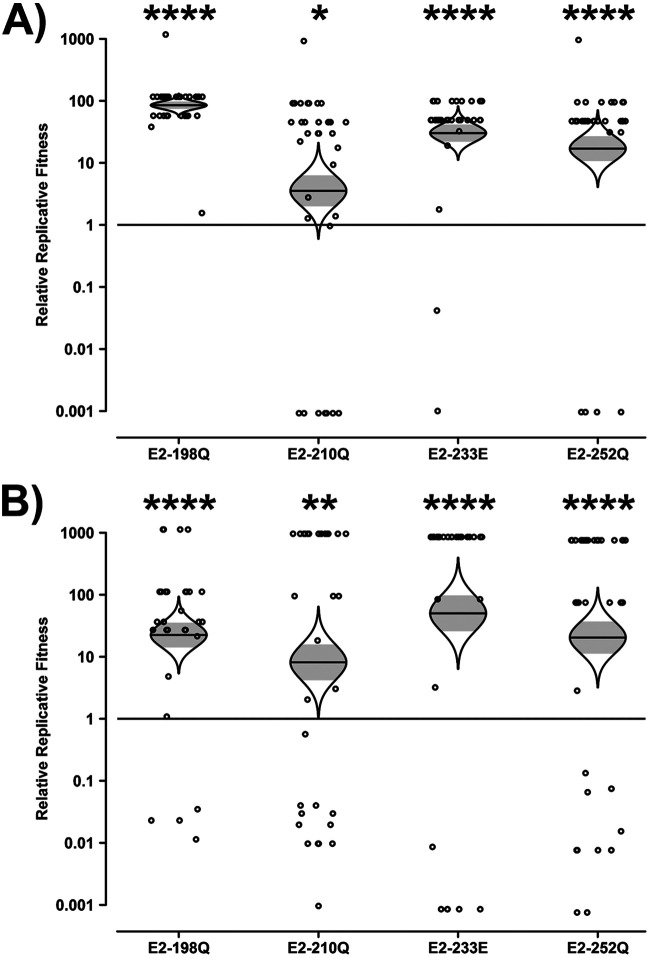
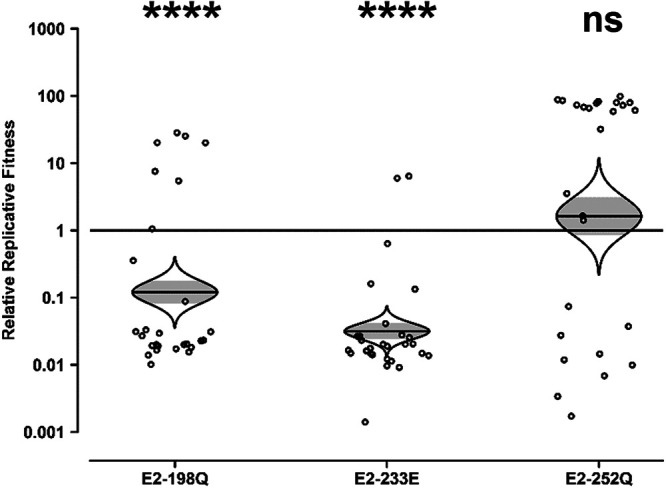
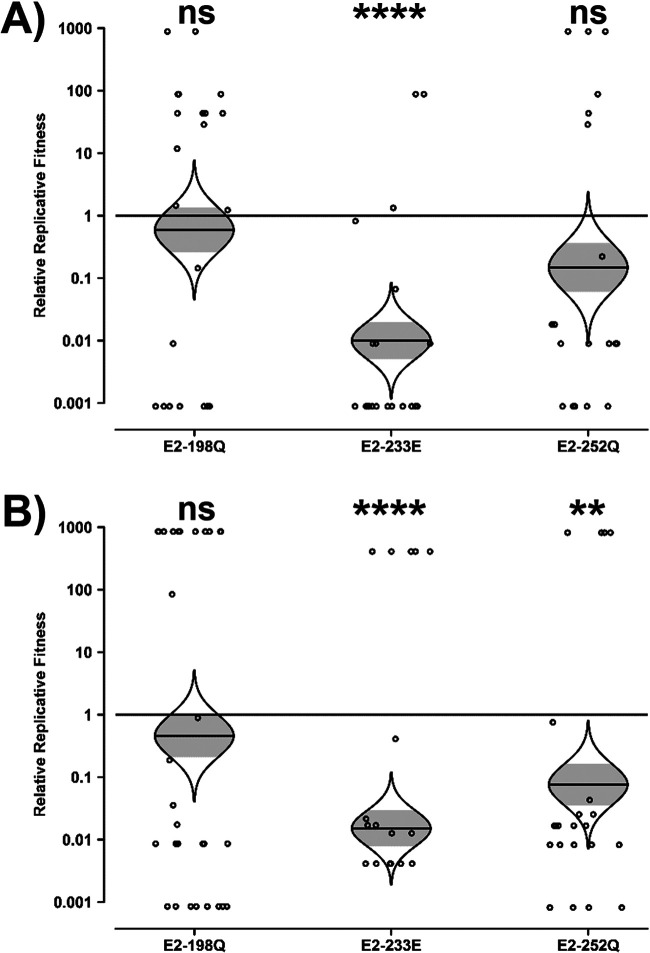
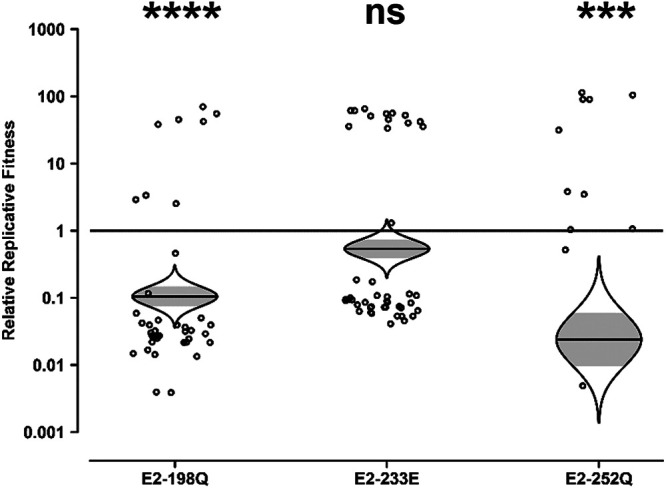
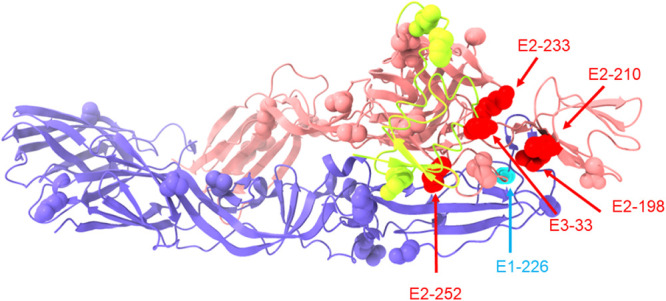
Previous studies have shown that the adaptation of Indian Ocean lineage (IOL) chikungunya virus (CHIKV) strains for Aedes albopictus transmission was mediated by an E1-A226V substitution, followed by either a single substitution in E2 or synergistic substitutions in the E2 and E3 envelope glycoproteins. Here, we examined whether Asian lineage strains, including those that descended from the 2014 Caribbean introduction, are likely to acquire these A. albopictus-adaptive E2 substitutions. Because Asian lineage strains cannot adapt through the E1-A226V substitution due to an epistatic constraint, we first determined that the beneficial effect of these E2 mutations in IOL strains is independent of E1-A226V. We then introduced each of these E2 adaptive mutations into the Asian lineage backbone to determine if they improve infectivity for . Surprisingly, our results indicated that in the Asian lineage backbone, these E2 mutations significantly decreased CHIKV fitness in . Furthermore, we tested the effects of these mutations in Aedes aegypti and observed different results from those in , suggesting that mosquito species-specific factors that interact with the envelope proteins are involved in vector infection efficiency. Overall, our results indicate that the divergence between Asian lineage and IOL CHIKVs has led them onto different adaptive landscapes with differing potentials to expand their vector host range. Since its introduction into the Caribbean in October 2013, CHIKV has rapidly spread to almost the entire neotropical region. However, its potential to further spread globally, including into more temperate climates, depends in part on its ability to be transmitted efficiently by Aedes albopictus, which can survive colder winters than A. aegypti. We examined in an Asian lineage backbone -adaptive mutations that arose from 2005 to 2009 in Indian Ocean lineage (IOL) strains. Our results predict that the Asian CHIKV lineage now in the Americas will not readily adapt for enhanced transmission via the same mechanisms or adaptive mutations used previously by IOL strains. The vector species- and CHIKV lineage-specific effects caused by adaptive CHIKV envelope glycoprotein substitutions may elucidate our understanding of the mechanisms of mosquito infection and spread.
先前的研究表明,适应 Aedes albopictus 传播的印度洋谱系(IOL)基孔肯雅病毒(CHIKV)株是由 E1-A226V 取代介导的,随后 E2 中的单个取代或 E2 和 E3 包膜糖蛋白中的协同取代。在这里,我们研究了亚洲谱系株,包括那些源自 2014 年加勒比引入的株,是否可能获得这些适应 A. albopictus 的 E2 取代。由于亚洲谱系株由于上位性限制而不能通过 E1-A226V 取代进行适应,因此我们首先确定了 IOL 株中这些 E2 突变的有益效应独立于 E1-A226V。然后,我们将这些 E2 适应性突变引入亚洲谱系骨架中,以确定它们是否提高了感染性。令人惊讶的是,我们的结果表明,在亚洲谱系骨架中,这些 E2 突变显著降低了 CHIKV 在中的适应性。此外,我们测试了这些突变在埃及伊蚊中的作用,观察到与不同的结果,表明与包膜蛋白相互作用的蚊种特异性因素参与了载体感染效率。总体而言,我们的结果表明,亚洲谱系和 IOL CHIKV 之间的差异导致它们进入不同的适应景观,具有不同的扩大其载体宿主范围的潜力。自 2013 年 10 月引入加勒比地区以来,CHIKV 已迅速传播到几乎整个新热带地区。然而,它在全球进一步传播的潜力,包括进入更温和的气候,部分取决于它能够被 Aedes albopictus 有效传播,Aedes albopictus 可以在比 A. aegypti 更冷的冬季生存。我们在亚洲谱系骨架中检查了 2005 年至 2009 年在印度洋谱系(IOL)株中出现的适应性突变。我们的结果预测,目前在美洲的亚洲 CHIKV 谱系不会轻易通过 IOL 株先前使用的相同机制或适应性突变来适应增强的传播。适应性 CHIKV 包膜糖蛋白取代引起的载体种和 CHIKV 谱系特异性效应可能阐明我们对蚊子感染和传播机制的理解。