Key Laboratory of Physical Fitness and Exercise Rehabilitation of the Hunan Province, College of Physical Education, Hunan Normal University, No. 529 Lushan South Road, Yuelu District, Changsha, 410012, Hunan, China.
J Physiol Sci. 2021 Nov 8;71(1):33. doi: 10.1186/s12576-021-00818-w.
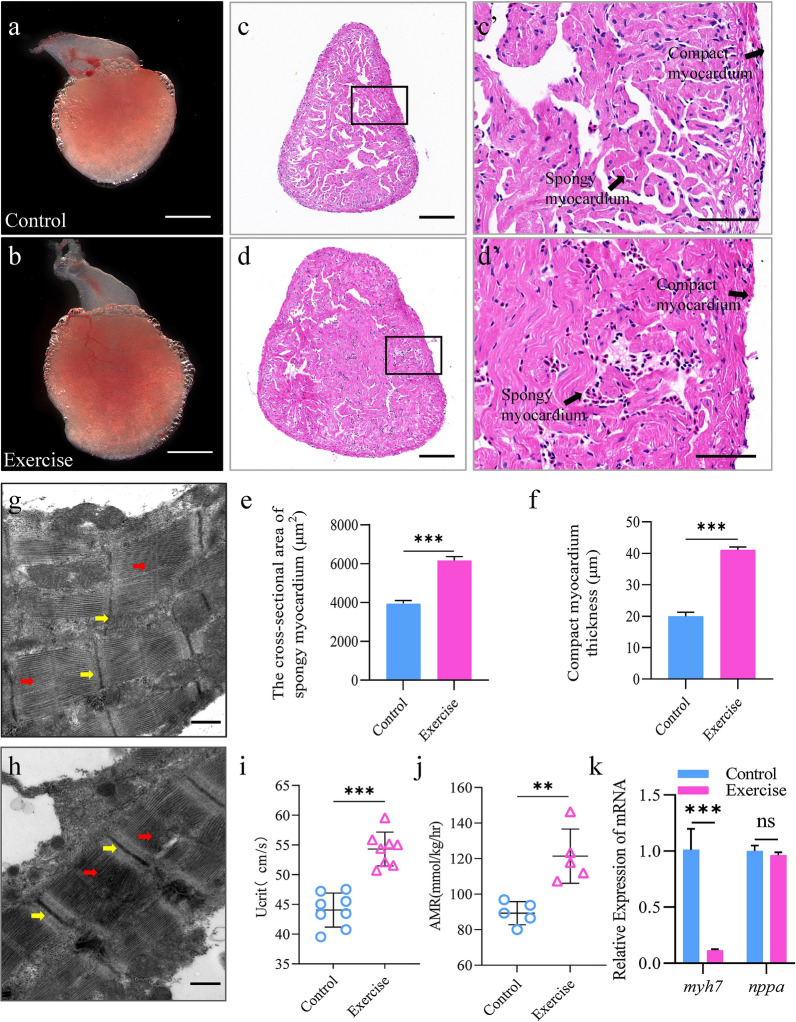
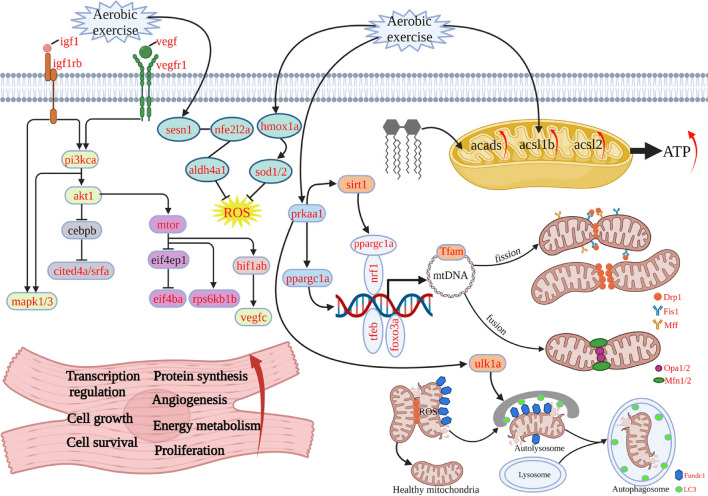
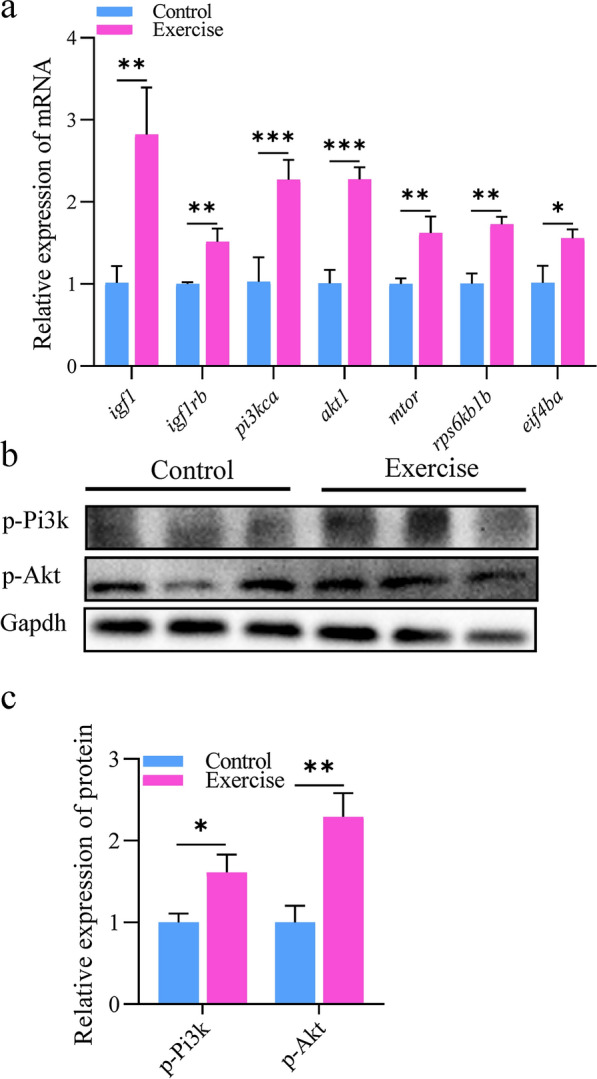
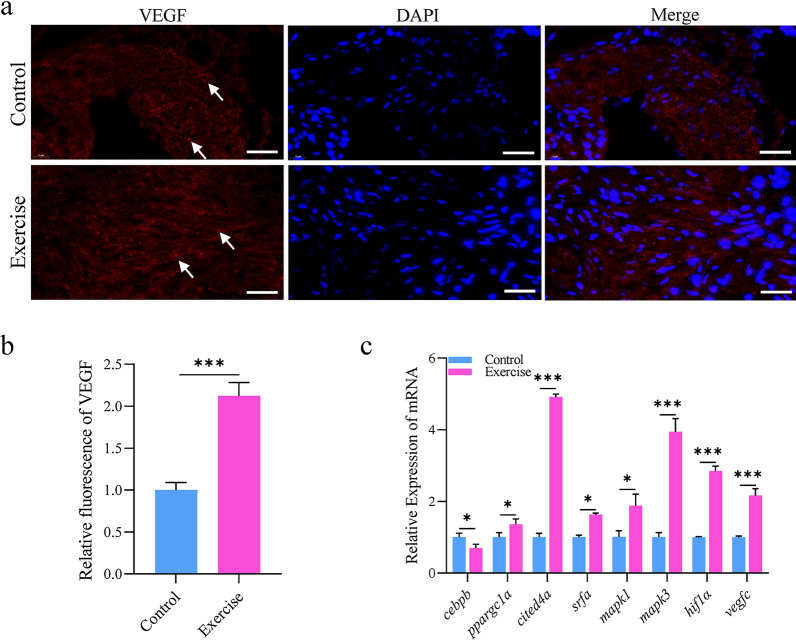
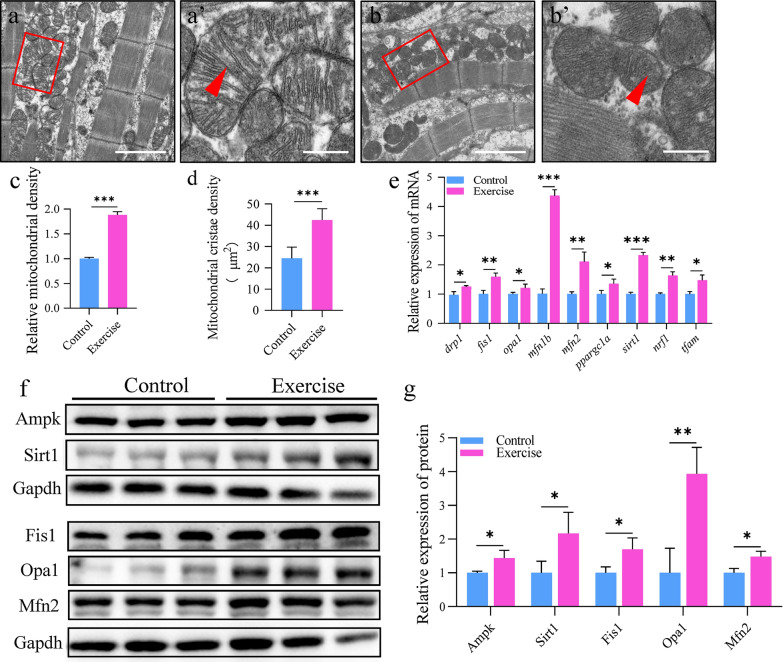
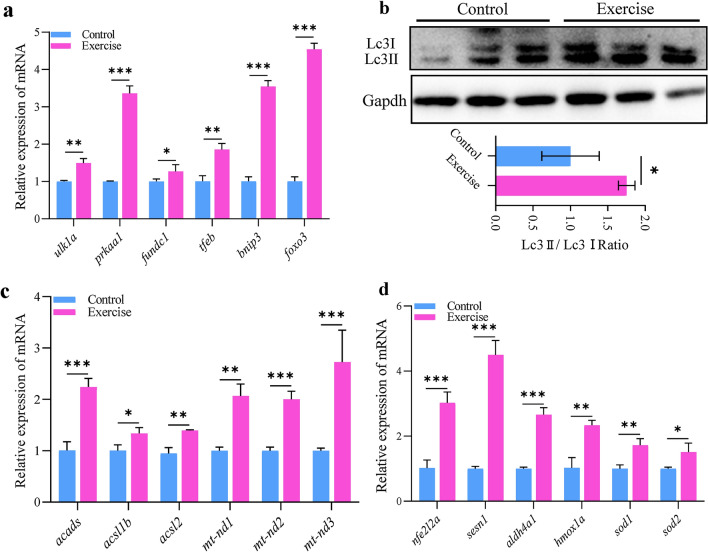
Herein, we aimed to establish an aerobic exercise-induced physiological myocardial hypertrophy zebrafish (Danio rerio) model and to explore the underlying molecular mechanism. After 4 weeks of aerobic exercise, the AMR and U of the zebrafish increased and the hearts were enlarged, with thickened myocardium, an increased number of myofilament attachment points in the Z-line, and increased compaction of mitochondrial cristae. We also found that the mTOR signaling pathway, angiogenesis, mitochondrial fusion, and fission event, and mitochondrial autophagy were associated with the adaptive changes in the heart during training. In addition, the increased mRNA expression of genes related to fatty acid oxidation and antioxidation suggested that the switch of energy metabolism and the maintenance of mitochondrial homeostasis induced cardiac physiological changes. Therefore, the zebrafish heart physiological hypertrophy model constructed in this study can be helpful in investigating the cardioprotective mechanisms in response to aerobic exercise.
在这里,我们旨在建立一个有氧运动诱导的生理心肌肥厚斑马鱼(Danio rerio)模型,并探讨其潜在的分子机制。经过 4 周的有氧运动后,斑马鱼的 AMR 和 U 增加,心脏增大,心肌变厚,Z 线处肌丝附着点增多,线粒体嵴的致密化增加。我们还发现,mTOR 信号通路、血管生成、线粒体融合和裂变事件以及线粒体自噬与训练过程中心脏的适应性变化有关。此外,与脂肪酸氧化和抗氧化相关的基因的 mRNA 表达增加表明,能量代谢的转换和线粒体动态平衡的维持诱导了心脏的生理变化。因此,本研究构建的斑马鱼心脏生理肥厚模型有助于研究有氧运动的心脏保护机制。